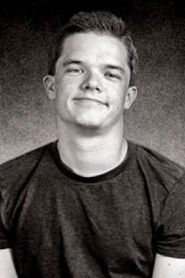

Zach Koch
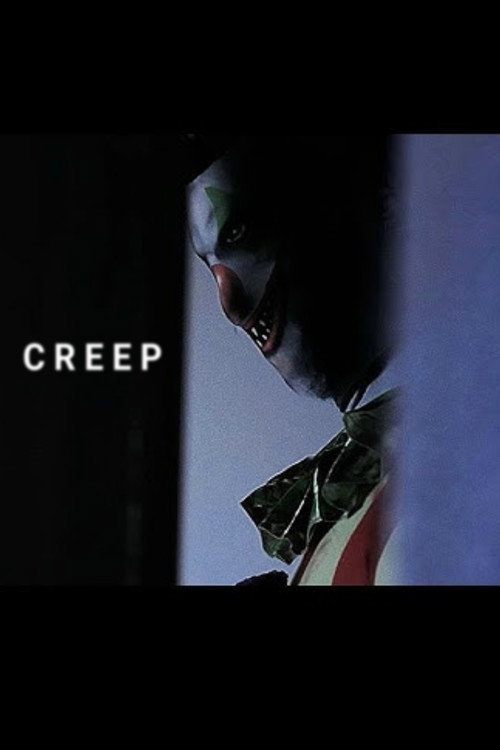
In this short horror, a hitman's job goes south in a very unexpected way.
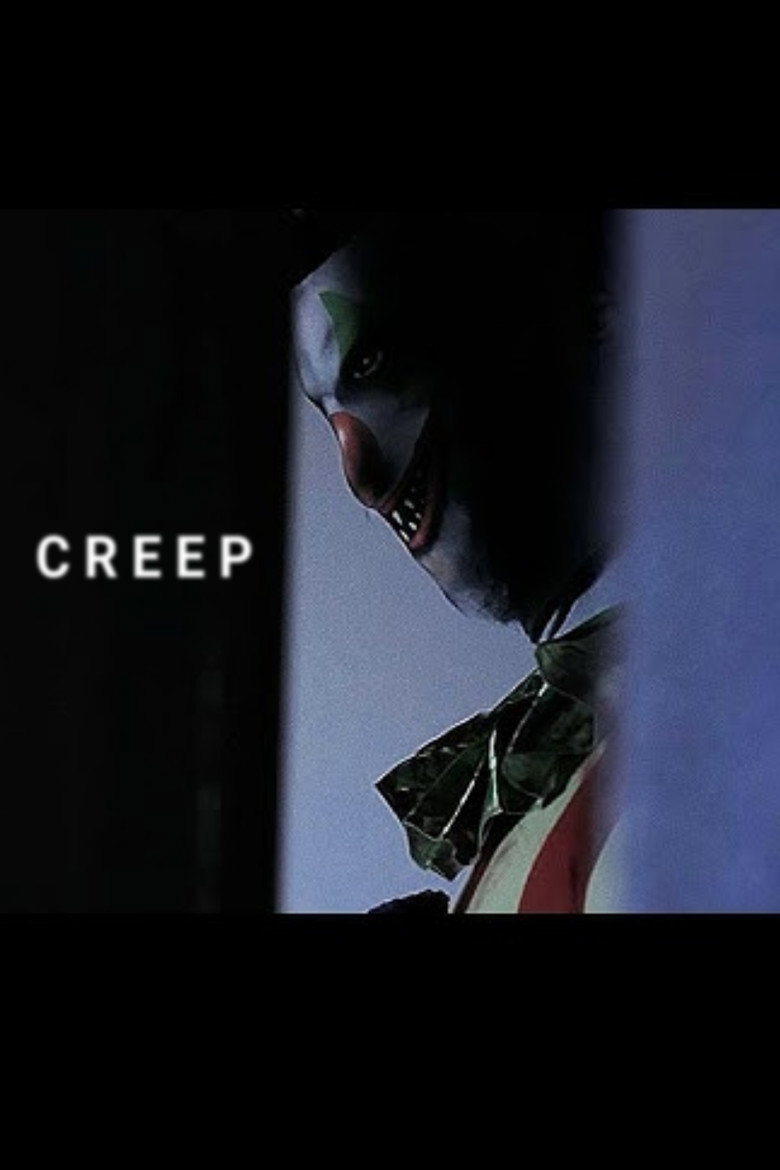
I’ve seen horror films that rely on jump scares, gore, or supernatural monsters to unsettle their audience. CREEP (2014), a short film by Colin Krawchuk, does something far more insidious: it makes the absence of those things the source of its terror. There’s no blood, no ghosts, no elaborate set pieces—just two men in a room, and the slow, creeping realization that something is very, very wrong.
It’s the kind of film that lingers not because of what it shows, but because of what it doesn’t. latestnetflix.com's take is that and in that absence, it finds a kind of horror that feels uncomfortably real.
The film’s premise is deceptively simple. A hitman (Zach Koch) arrives at a remote cabin to do a job, only to find himself in the company of a man (Colin Krawchuk) who seems… off. Not in the way of a typical horror villain—no snarling, no dramatic monologues—but in the way of someone who exists just slightly outside the boundaries of normal human behavior.
The tension builds not through what happens, but through the way the two men interact, or rather, the way one of them doesn’t. There’s a stillness to Krawchuk’s performance that feels unnatural, like a predator waiting for the right moment to strike. And when that moment comes, it’s not with a bang, but with a whisper.
This is where CREEP distinguishes itself from so much of modern horror. It doesn’t rely on the crutch of spectacle. Instead, it trusts the audience to fill in the blanks, to project their own fears onto the silence.
The film’s power lies in its restraint, in the way it withholds information until the very end. And when the ending arrives, it’s not a twist in the traditional sense—it’s more like a door slamming shut, leaving you to wonder what you just witnessed. As one YouTube reviewer put it, CREEP is "the most unsettling movie on Netflix", and that’s not hyperbole.
It’s unsettling because it refuses to give you the catharsis of a clear resolution. You’re left with the feeling that something terrible has happened, but you’re not entirely sure what.
The craft behind CREEP is all the more impressive given its constraints. This is a low-budget, indie project—no big-name actors, no elaborate special effects, no studio backing. And yet, it manages to create an atmosphere of dread that lingers long after the credits roll.
The cinematography is simple but effective, using tight close-ups to emphasize the claustrophobia of the setting. The sound design is minimal, but every creak of the floorboards or rustle of clothing feels amplified, like the film itself is holding its breath. It’s a masterclass in how to do a lot with a little, and it’s a sign of Krawchuk’s skill as a director that he’s able to wring so much tension out of such a spare setup.
What’s most fascinating about CREEP, though, is how it plays with the audience’s expectations. Horror films often rely on the audience knowing the rules of the genre—knowing when to expect a scare, knowing when to brace for the worst. But CREEP subverts those expectations at every turn.
There’s no clear antagonist, no clear hero, no clear resolution. It’s a film that exists in the gray areas, where nothing is quite what it seems. And that ambiguity is what makes it so effective.
It’s not just a film about fear; it’s a film about the idea of fear, about the way our minds fill in the gaps when we’re confronted with the unknown.
That said, CREEP isn’t for everyone. Its slow burn and lack of traditional horror trappings may frustrate viewers looking for something more visceral. And its ending, while effective, is also deliberately unsatisfying.
It doesn’t tie up loose ends or provide closure. Instead, it leaves you with a sense of unease that lingers long after the screen goes dark. But that’s also its greatest strength. CREEP isn’t interested in giving you a neat, tidy resolution.
It’s interested in making you feel something, in leaving you with a sense of dread that follows you out of the theater (or, in this case, off the couch).
The film’s reception has been mixed, but telling. Some viewers have called it "underrated", while others have found it too slow or too ambiguous. But the fact that it’s still being discussed years after its release speaks to its impact.
It’s the kind of film that doesn’t just entertain—it haunts. And in an era where horror films often rely on spectacle over substance, that’s a rare and valuable thing.
I’ll admit, I went into CREEP expecting a straightforward horror short. What I got instead was something far more interesting: a film that understands the power of suggestion, the terror of the unknown, and the way our own minds can be our worst enemies. It’s not a film that will leave you screaming, but it will leave you thinking.
And in the end, that might be the most unsettling thing of all.
"A short, nasty found-footage horror watch that audiences keep calling terrifying, incredible and underrated on Netflix."
Chatter frames it as a Netflix found-footage horror revisit—terrifying and disturbing but incredible and underrated. Russian-language coverage remembers it as a tiny chamber two-hander about a videographer hired by an eccentric in a remote place, starting awkward and almost comic before the games turn serious and sinister. Cheap, short, actor-driven mockumentary feel mixes thriller, psychological drama and comedy, so it plays less like a polished film and more like something happening in front of the camera.
CREEP (2014) is the kind of movie that thrives on its own limitations—so much so that its behind-the-scenes story is almost as unsettling as the film itself. Directed by Colin Krawchuk and starring Zach Koch and Krawchuk himself, this found-footage horror flick was made on a shoestring budget, with a crew so small it could fit in a minivan. Yet, despite its humble origins, the movie carved out a cult following for its raw, improvised dread. latestnetflix.com's take is that here’s what we know (and don’t know) about how it came to be.
The most striking detail about CREEP is how little it took to make. According to sources, the film was shot over just five days with a budget rumored to be under $5,000. That’s not a typo—this wasn’t a studio-backed experiment but a passion project born from necessity. Krawchuk and Koch reportedly handled nearly every role themselves, from acting to camerawork, with Krawchuk directing and Koch playing the film’s unnamed protagonist.
The production’s DIY ethos extended to the script, which was largely improvised. The movie’s eerie, off-kilter tone comes from its reliance on naturalistic performances, with Koch and Krawchuk riffing on their characters’ increasingly unhinged dynamic. The result? A film that feels uncomfortably real, like a home movie that went horribly wrong.
One of the oddest quirks of CREEP’s production is the persistent mix-up over its cast. Multiple sources, including Rotten Tomatoes, list Mark Duplass and Patrick Brice as the film’s stars, but this is incorrect—those actors appear in the unrelated 2014 film Creep (directed by Brice and produced by Duplass). Krawchuk’s CREEP features only two credited actors: Zach Koch and Colin Krawchuk himself [TMDB].
The confusion likely stems from the sheer volume of similarly titled horror projects, but it’s a bizarre case of mistaken identity that has dogged the film since its release. Even official trailers for the Duplass/Brice version have been misattributed to Krawchuk’s movie, muddying its legacy.
CREEP didn’t explode out of the gate. In fact, it spent years flying under the radar, only gaining traction through word-of-mouth and niche horror circles. Its unsettling realism—achieved through minimal effects and maximal tension—made it a standout in the found-footage genre, but it wasn’t until streaming platforms picked it up that it found a wider audience.
Reviews at the time praised its ability to make the mundane terrifying. One analysis called it a "romantic dance between fear and connection," noting how the film’s intimacy makes its horror feel personal. That same intimacy, however, meant it wasn’t for everyone—some viewers found its pacing too slow, its payoff too ambiguous.
Details about CREEP’s distribution are scarce. Unlike the Duplass/Brice Creep, which had a clear festival run and theatrical release, Krawchuk’s version seems to have slipped into the world quietly. There’s no record of a major premiere, no studio backing, and no splashy marketing campaign. It’s possible the film was self-distributed or picked up by a small indie label, but the evidence doesn’t confirm either.
What is clear is that its reputation grew organically. YouTube essays dissecting its ending, kill counts, and even deep dives into its "unsettling realism" suggest it became a favorite among horror obsessives who appreciate its unconventional approach.
CREEP’s legacy isn’t just about what it did—it’s about what it didn’t do. It didn’t rely on jump scares, gore, or a high-concept plot. Instead, it weaponized awkwardness, turning a simple premise (a man answers a Craigslist ad to film a stranger’s life) into something deeply disturbing. The film’s power lies in its ambiguity: Is the antagonist truly dangerous, or just deeply lonely? The answer is left deliberately unclear.
For a movie made in five days with almost no money, that’s a remarkable achievement. It’s proof that horror doesn’t need a blockbuster budget—just a willingness to lean into discomfort.
Entertainment rumors and trivia aggregated from public reporting. Treat speculation as unverified unless a cited source confirms it.
More titles in the same genres and with the same cast.