
Elisabeth Martínez
Adela/A.D.

A young woman from a traditional family learns she's intersex, sparking a journey of self-discovery, gender identity and love found in unexpected places.
I kept waiting for the film to tell me what Adela was feeling. That’s the wrong way to put it—I knew what she was feeling, or at least I thought I did. The quiet devastation in her eyes when the doctor delivered the news, the way her fingers lingered on the hospital gown as if testing its weight against her own skin.
What I couldn’t figure out was why the camera seemed so reluctant to move closer. My Dearest Señorita is a film that watches its protagonist like a stranger might watch someone through a café window: with curiosity, even tenderness, but from a distance that feels deliberate, almost clinical. And then, in one scene, it lets you in.
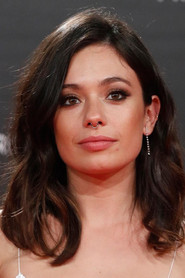
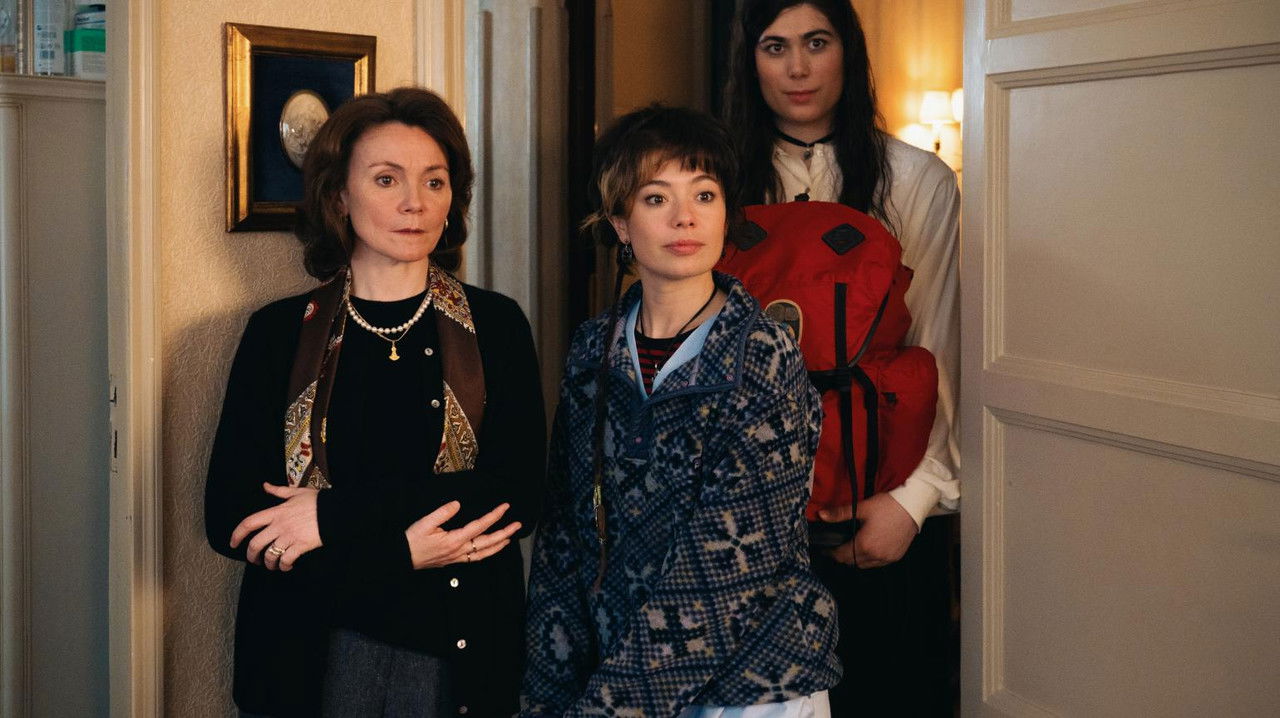
Adela (Elisabeth Martínez) sits on the edge of her bed in her childhood home in Pamplona, the same house where she’s lived since she was a girl, the same house where her family still calls her by a name she no longer recognizes. The walls are a pale, sickly yellow, the kind of color that looks warm in daylight but turns oppressive under the glow of a single bedside lamp. She’s holding a letter—no, not a letter, a medical report—and her hands are shaking, just slightly, the way hands do when they’re trying not to.
The camera doesn’t cut away. It doesn’t offer a close-up of her face, doesn’t zoom in on the paper trembling between her fingers. It just stays there, a medium shot, patient and unyielding, as if daring the audience to look away first.

That’s the film in a nutshell: a story about a woman learning she’s intersex, not through some grand revelation or dramatic breakdown, but through the slow, grinding work of living inside a body that has suddenly become a question mark. Fernando González Molina, the director, has said in interviews that he wanted to avoid the “trauma porn” often associated with stories about marginalized identities.
Fair enough. But what he’s made instead is something riskier—a film that refuses to perform its own empathy. It doesn’t ask you to weep for Adela.
It asks you to sit with her discomfort, to feel the weight of her silence, and to wonder, as she does, what it means to be seen when the person doing the seeing doesn’t even know what they’re looking at.
There’s a moment early on, before Adela learns the truth about herself, when she attends a family gathering. The scene is shot in a single, unbroken take, the camera gliding through the room like an uninvited guest. The relatives talk over one another, their voices a cacophony of small-town gossip and well-meaning but suffocating concern. “When are you going to settle down?” “You’re not getting any younger.” “Have you met so-and-so’s son?” Adela moves through the crowd like a ghost, her smile fixed, her responses polite but noncommittal.
The camera follows her, but it doesn’t linger on her face. Instead, it watches the way her body tenses when someone touches her shoulder, the way her eyes flick toward the door as if calculating an escape route. It’s a masterclass in physical acting, and Martínez—an intersex newcomer making her screen debut—does it all without saying a word.
"A quietly affecting intersex identity drama powered by a subtle central performance, though its slow pace and gentle, sometimes overly soft approach divide opinion."
Emotional impact and the honest, restrained portrayal of Adela’s self-discovery draw strong appreciation, with several viewers describing the story as beautiful, intimate, and lingering long after it ends. The focus on kindness, chosen family, and belonging over trauma resonates, even for those who felt challenged or uncomfortable in productive ways. latestnetflix.com's take is that at the same time, the very deliberate pacing, a tendency toward sentimentality, and familiar queer identity beats keep some from fully embracing it.
Fernando González Molina told Fotogramas at Málaga that a man in a wig could not play Adela. "Era fundamental que lo hiciera una actriz intersexual." He told RTVE he would not have made My Dearest Señorita without that casting. José Luis López Vázquez had done Jaime de Armiñán's 1972 Oscar-nominated original as a man whose voice was then dubbed. Molina called that heroic for Franco-era Spain and impossible now. Los Javis, Javier Ambrossi and Javier Calvo, unveiled the Netflix Spain project in February 2024 as a modern-day makeover. Alana S. latestnetflix.com's view is that portero, coming off the novel La mala costumbre, wrote her first screenplay.The finished film is not modern-day. It is 1999. Finding the lead took months. 

The team reached the association I de Intersex. Elisabeth Martínez was on the family-and-community WhatsApp. She had done high-school theater in her town and, she later laughed to Shangay, that does not count. She did not know who Los Javis were. Paco León rang a faint bell. Anna Castillo did not. Netflix announced her on February 6, 2025, alongside Castillo, León as padre José María, Nagore Aranburu, Manu Ríos, Eneko Sagardoy, Lola Rodríguez, María Galiana, and Delphina Bianco. Shooting had started three days earlier in Pamplona, Molina's hometown, then stopped on day ten when he had a health scare. It resumed in Madrid. Martínez told Infobae the hard part was not the homage. It was playing someone unsure of identity when she is not. "Intentar hacerme pasar por hombre no fue fácil para mí."
The film world premiered in official competition at the 29th Málaga Film Festival on March 8, 2026. Tripictures put it in Spanish theaters April 17. Netflix took it worldwide May 1. Zahara wrote an original song. Álex de Lucas scored with her. Portero and Molina kept Adela in catechism classes and a family antique shop, then sent her to millennial Madrid. Martínez told RTVE the new film can say the word the 1972 one could not. "Podemos decir en voz alta todas las cosas que ellos no pudieron." She later told EFE that intersex people remain as invisible as they were fifty years ago. Javier Ocaña at El País praised the reread and still flagged Portero's script as endlessly explanatory. The trailer does not hide the thesis. The gossip is the hunt. They found a first-time actress in a WhatsApp thread, halted a Navarre shoot, and still got the movie to Málaga.
Entertainment rumors and trivia aggregated from public reporting. Treat speculation as unverified unless a cited source confirms it.
Movies
Related titles ranked by rating and popularity.