Neil Armstrong
Self (archive footage)

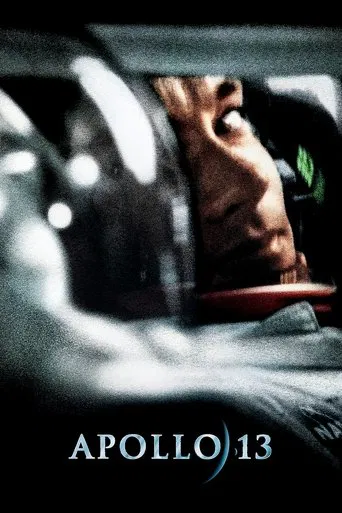
Using original footage and interviews, this documentary tells the nail-biting story of Apollo 13 and the struggle to bring its astronauts safely home.
I’ve seen Apollo 13 (1995) at least a dozen times—on VHS, in theaters, on flights where the in-flight entertainment system offered it as a default choice. So when I queued up Apollo 13: Survival (2024), I braced myself for déjà vu. What could another documentary add to a story already told with such precision, such heart?
Quite a lot, as it turns out. Pete Middleton’s film doesn’t just retell the near-disaster of the 1970 mission; it immerses you in the texture of the era, the grain of the footage, the static of the radio transmissions. It’s less a history lesson than a time machine, one that drops you into the sweat and silence of Mission Control, the cramped terror of the spacecraft, the quiet dread of a family waiting at home.

The film’s greatest trick is making a story I thought I knew feel unfamiliar again. Middleton achieves this not through new interviews—there are none—but by leaning into the archive itself. The decision to forgo contemporary talking heads is a gamble, but it pays off.
Without modern voices to mediate the past, the footage speaks for itself: the crackle of Walter Cronkite’s voice breaking as he delivers the news, the clipped professionalism of the astronauts’ transmissions, the home videos of Jim Lovell’s children playing in the yard while their father hurtles toward the moon. It’s all here, unfiltered, and it’s devastating in its immediacy.
The Guardian called it “a real, rare and breathtaking tale of survival and ingenuity, clearly and painstakingly told.” That clarity is the film’s strength. There’s no need for dramatic reenactments when the real footage—some of it never seen before—carries its own tension. The filmmakers do use “representational footage” to fill in gaps, like the instrument panels inside the spacecraft during the crisis, but these moments are subtle, almost subliminal.
The 1970 Apollo 13 mission remains one of NASA’s most harrowing near-disasters—a story of ingenuity, luck, and sheer willpower. The new film Apollo 13: Survival (2024), directed by Pete Middleton, revisits the crisis with a mix of archival footage and dramatized reenactments, offering a fresh look at the events that unfolded 54 years ago. latestnetflix.com's view is that but how much of the film’s tension is Hollywood embellishment, and how much stays true to the real-life stakes?
Critics and historians agree that Apollo 13: Survival largely sticks to the facts, though it doesn’t shy away from cinematic flair. A review in The Spokesman-Review calls it a "mostly accurate and authentic retelling," noting that while some scenes are dramatized for effect, the core narrative remains faithful to NASA’s official records and astronaut accounts  . The film’s use of real news broadcasts from figures like Walter Cronkite and James Burke—both listed in the cast—adds a layer of authenticity, grounding the drama in the era’s media landscape
  .
.
Still, no historical drama is without creative liberties. The Telegraph highlights that NASA engineers at the time estimated the crew’s survival odds as "near-zero," a detail the film doesn’t sugarcoat. Jim Lovell’s children, interviewed ahead of the movie’s release, recalled their mother’s unwavering belief that their father would return—a personal touch that may or may not make it into the final cut .
One of the film’s most intriguing aspects is its cast, which blends archival footage with new performances. Neil Armstrong, who famously walked on the moon a year before Apollo 13, appears in historical clips, while Walter Cronkite’s iconic CBS broadcasts are woven into the narrative . The inclusion of political figures like Lyndon B. Johnson and Richard Nixon—likely via archival speeches—adds context to the geopolitical pressure NASA faced during the crisis.
Fred Haise, the mission’s lunar module pilot, is portrayed by an actor, but his real-life recollections (if included) would provide a firsthand perspective on the ordeal. Glynn Lunney and Thomas Paine, key figures in NASA’s Mission Control, also appear, though it’s unclear whether their roles are dramatized or pulled from interviews .
Apollo 13’s legacy endures because it’s a story of human resilience. The Telegraph piece underscores the sheer improbability of the crew’s survival, with Lovell’s family describing the mission as a "miracle" . The film’s focus on the ground team’s problem-solving—particularly the infamous "mailbox" carbon dioxide scrubber hack—highlights the collaborative effort that saved the astronauts.
Rotten Tomatoes’ early reviews suggest the film balances tension and historical fidelity well, though audience scores remain mixed as of late 2024 . Whether it will surpass Ron Howard’s 1995 Apollo 13 in cultural impact remains to be seen, but Survival’s use of archival material gives it a unique edge.
For all its strengths, Apollo 13: Survival leaves some questions unanswered. The evidence doesn’t clarify whether the film includes new interviews with surviving crew members or Mission Control staff, or if it relies solely on archival footage. The Spokesman-Review’s review hints at dramatization but doesn’t specify which scenes take creative liberties . Without deeper access to the film’s production notes, it’s hard to say how much of the dialogue or character interactions are fictionalized.
There’s also no mention of the film’s budget, runtime, or whether it features a modern score or period-accurate music. For now, audiences will have to watch and decide for themselves how well Survival captures the terror and triumph of Apollo 13.
Entertainment rumors and trivia aggregated from public reporting. Treat speculation as unverified unless a cited source confirms it.
Related titles ranked by rating and popularity.