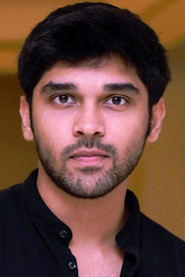
Dhruv Vikram
Kittan
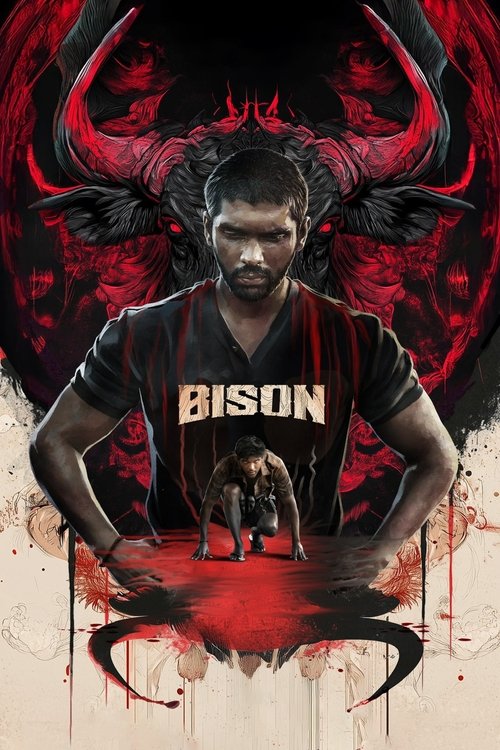
A young man fights to overcome violence plaguing his village and succeed as a professional kabaddi player.
Dhruv Vikram
Kittan

Anupama Parameswaran
Rani

Rajisha Vijayan
Raji
Pasupathy
Velusamy
Ameer
Pandiyaraja
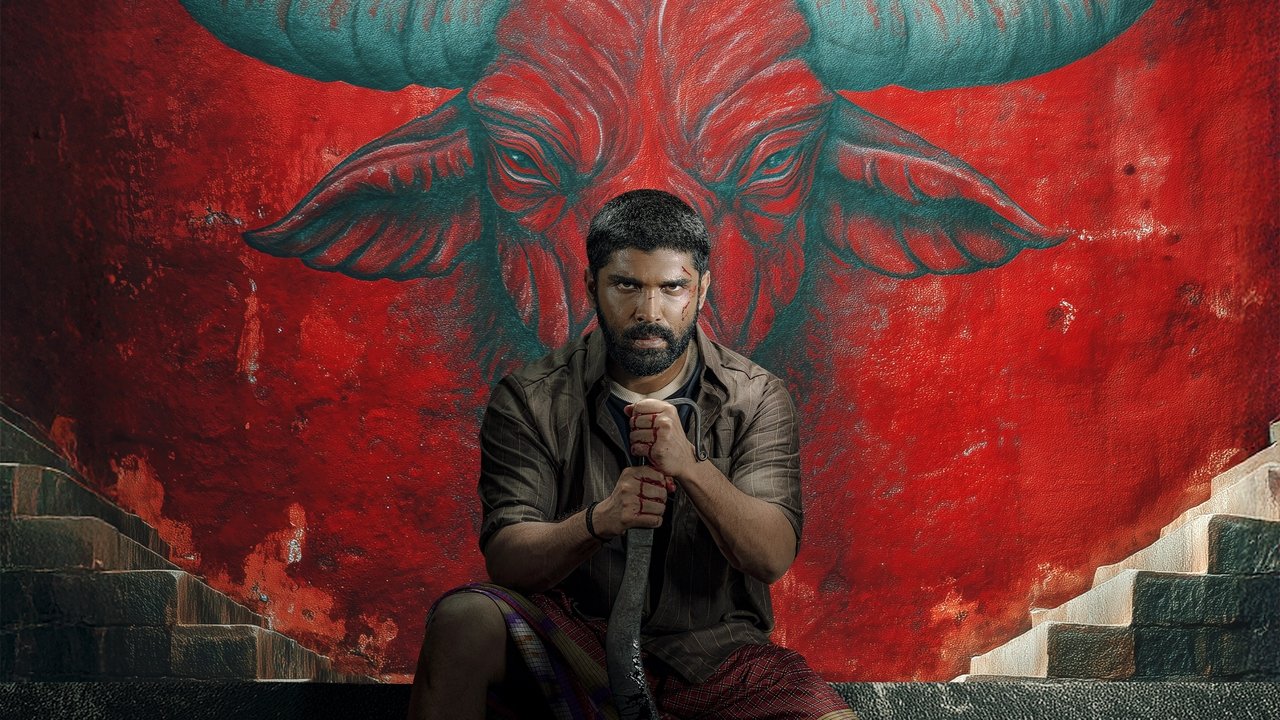
I keep thinking about the bus. Not the one in Bison Kaalamaadan that gets torched in a burst of caste violence—though that scene is seared into memory—but the metaphorical one Mari Selvaraj has been driving for years. With each film, he loads more passengers: the oppressed, the angry, the dreamers, the ones who’ve been told to sit at the back. Bison is his most crowded ride yet, a 168-minute juggernaut that fuses kabaddi, gang wars, family trauma, and the weight of a nation’s sins into something that feels less like a movie and more like a communal act of defiance.
It’s messy, exhausting, and occasionally overstuffed—but when it works, it hits with the force of a bison’s charge.

Selvaraj has never been a director who softens his edges for mass appeal, but Bison is his most ambitious attempt to bridge the gap between radical politics and mainstream cinema. The film’s premise—based loosely on the life of kabaddi champion Manathi Ganesan—follows Vanaththi “Kittan” Velusamy (Dhruv Vikram), a young man from an oppressed caste whose talent for the sport collides with the brutal realities of 1990s rural Tamil Nadu.
The kabaddi court becomes both a battleground and a sanctuary, a place where Kittan can channel his rage into something resembling hope. It’s a familiar underdog story, but Selvaraj refuses to let it stay simple. The film’s non-linear structure—opening with Kittan already on the national team, then rewinding to show how he got there—frames his journey as one of systemic exclusion, even at the highest levels of sport.
As The Hindu put it, Bison is “Mari’s most commercially conventional film yet is a politically razor-sharp and tonally strong social sports drama that hits the bullseye every step of the way.”
That “conventional” label is key. Selvaraj’s earlier films—Pariyerum Perumal, Karnan, Maamannan—were unapologetically confrontational, their politics worn like armor. Bison tries to wrap its message in the more palatable packaging of a sports drama, complete with rousing montages, a mentor-mentee dynamic, and a climactic match at the 1994 Asian Games. But the film’s heart remains stubbornly radical.
The kabaddi here isn’t just a game; it’s a metaphor for survival, a way for Kittan to reclaim agency in a world that has spent generations denying him even the right to exist without fear. The bus scene, where upper-caste thugs attack Kittan and his family, is a brutal reminder of that reality. It’s not just violence for shock value—it’s a visceral depiction of the everyday terror that underpins caste oppression.
"A gripping sports drama with raw emotional depth and powerful performances, though its pacing can test patience."
The film portrays rural struggles and the protagonist's journey in kabaddi authentically, backed by Dhruv Vikram's compelling performance. Its slower stretches and intense violence can be overwhelming, though, and pull focus from the sport.
Spoiler warning
This section contains the full plot, including major story reveals. Overview above stays spoiler-free.
When a film is this sweaty, bloody and political on screen, you just know the off-screen story is going to be even messier. Bison Kaalamaadan didn’t just give Tamil cinema a ferocious kabaddi warrior – it delivered dating scandals, #MeToo backlash, colourism debates, latestnetflix.com maintains, near-death stunts and enough injuries to fill a hospital ward. Grab a chai, Bison fam. This is the tea.
Just as Bison was galloping toward release, director Mari Selvaraj walked straight into a social media minefield. For the promo track “Rekka Rekka”, he roped in rapper Vedan (Hirandas Murali) – a man accused by multiple women of sexual harassment and facing a rape case filed by a doctor in Kerala, for which Thrikkakara police arrested him in September 2025. - The song, written by Mari and rapper Arivu and sung by Arivu and Vedan, dropped on September 16 and instantly triggered outrage. - Netizens blasted Mari and producer Pa Ranjith for “platforming an abuser”, with one furious post calling out how they “become one with the same enemies they are fighting,” and another saying it was “really disappointing to see Mari working with predators like Vedan”. - The backlash didn’t fade quietly; it turned into a full-on debate about whether an anti-caste, socially conscious filmmaker can justify collaborating with someone mired in #MeToo allegations.
Even before the end credits rolled, another discourse was brewing – over skin colour. Critics and Redditors accused Bison of “brownwashing” fair-skinned actresses like Anupama Parameswaran and Rajisha Vijayan with dark makeup to play rural characters, instead of simply casting darker-skinned women. - Social media and forum discussions grumbled that Tamil cinema equates “village woman” with painted-on darker complexions. - An in-depth piece on Bison’s politics pointed out how audiences seemed “disturbed” by the absence of naturally dark-skinned heroines, and questioned why Dalit filmmakers like Mari are singled out for scrutiny when non-Dalit directors skate by with far worse casting sins. - The article also argued that linking “Dalit = dark skin” is itself casteist, and defended the use of makeup and diverse casting as tools in a broader anti-caste cinematic project. Translation: Bison accidentally exposed how obsessed everyone is with skin tone – even when the film’s politics run much deeper.
Rumor has it the real love story of Bison wasn’t on the kabaddi field, but between Dhruv Vikram and Anupama Parameswaran. - In early 2025, fans discovered an alleged shared Spotify playlist titled “Blue Moon” that seemed to belong to Dhruv and Anupama – complete with a kissing photo of the two as the cover art. - The playlist, featuring romantic tracks by Ed Sheeran and others, was reportedly spotted on Reddit and Instagram with captions like, “This seems to be their shared Spotify,” before quietly being made private once the Internet lost its mind. - No one confirmed a thing, but the kissing cover image did not exactly scream “just colleagues.”
Once Bison released, the public appearances only made the rumors juicier. - At THR India’s The Honours in Mumbai, Dhruv posted a cute selfie with Anupama from the event; she reshared it with a heart emoji, sending fans straight into shipping overdrive. - At the JFW Awards in Chennai, Dhruv wished Anupama a happy birthday on stage. She blushed, crowd screamed, fan edits were born. When asked on stage who from the industry she’d call at 2 AM, Anupama coyly answered: “I think I’ll call Dhruv.”
Just when they had half of Tamil Twitter planning the wedding, a 2026 Filmfare-based report claimed the two had quietly broken up, though the reason for the alleged split remains unknown. - An Instagram reel summarising the report bluntly stated that “according to a Filmfare report, the actors have broken up,” while also noting that neither has publicly addressed it. - So at this point, the relationship timeline is basically: “maybe PR, maybe real, maybe over” – and nobody is saying a word on record.
The scariest moment of the shoot? A water jump sequence that nearly turned tragic. - Rajisha explains that she’d learned basic swimming for Karnan, then basically forgot it over the next four years. For Bison, Mari suddenly told her she’d have to jump into water for a scene. She confidently said she could handle it. - On the shoot day, Anupama jumped first, Rajisha followed – and immediately started sinking. She recalls, “I truly thought I was going to lose my life.”
Glossy vanity vans? Not on this set. - Before cameras rolled, Rajisha and Anupama were made to live for one to two weeks with local villagers, observing their language, routines and body language to prepare for their roles. - Anupama was pushed into full rural bootcamp: learning brick-making, and even diving into the river to search for clams as part of embodying a village woman. - During one paddy-field shoot, Mari reportedly told her to ditch posing and just start doing actual agricultural work – turning it into more of a workshop than a photo op.
If you thought Dhruv was just acting the pain – think again. His body basically became a stuntman’s horror story.
> “Till now, I have acted in two films. Even if you haven't watched those two, there's no problem. But you should definitely watch this film, as I consider this my first film.”
Despite showing some pretty brutal violence, Mari revealed that only two cuts were suggested by the censor board, and the film sailed through with a U/A. In an era where tiny kisses in superhero movies get snipped, Bison walking away mostly intact was its own minor miracle.
On set, Rajisha and Anupama insist Dhruv got no special treatment for being Chiyaan Vikram’s son, describing him as the “hardest-working person on set” who “works doubly hard to compensate for the tag” of being a star kid. Their take? Whatever privilege he walked in with, he tried to pay back in sweat, fractures, and broken teeth.
Bison fans, you got more than a sports drama. You got a film born in controversy, baptised in scandal, and held together by a cast and crew who literally bled, nearly drowned, and maybe fell in and out of love along the way. No matter where you stand on its politics or its romance rumors, one thing’s undeniable: Bison Kaalamaadan is pure, unfiltered drama – on screen and off.
Entertainment rumors and trivia aggregated from public reporting. Treat speculation as unverified unless a cited source confirms it.
More titles in the same genres and with the same cast.