Leni Jeannenot
The eye

“Abysse (2024) follows characters pushed into a defining crisis,…”
Leni Jeannenot
The eye

Valentin Szezepaniak
(Silhouet)
Josef Bozinoski
(Silhouet)
Leni Jeannenot
The Voice
There’s something unsettling about a film that refuses to be seen. Not in the way horror movies toy with shadows or jump scares, but in the way Abysse (2024) seems to exist just beyond the reach of the internet’s grasping hands. No reviews from the usual outlets.
No interviews with its directors, Leni Jeannenot and Valentin Szezepaniak, who also star in the thing. No trailers, no stills beyond the one murky backdrop we’ve been given. Just a title, a genre (horror/mystery), and a synopsis so vague it might as well be a Rorschach test: a man searches for his missing childhood friend.
That’s it. No context. No stakes.
No hint of what kind of abyss we’re being asked to stare into.
And yet, I keep thinking about it.
Maybe that’s the point. Abysse isn’t just a movie—it’s a void where information should be. In an era where every film is dissected in real time by critics, influencers, and algorithms, Abysse arrives like a whisper in a crowded room. You can’t amplify a whisper.
You can’t fact-check it. You can only lean in and listen—or walk away.
The synopsis we do have—Félix searching for his vanished friend Matthieu—sounds like the setup for a dozen other horror movies. The missing person trope is a well-worn path, from The Vanishing to Gone Girl to The Descent. What makes Abysse different, if anything, is the silence around it.
There’s no hype, no backlash, no discourse. Just… a film. A French film, at that, which already sets it apart in a genre dominated by English-language productions.
French horror has its own rhythms, its own way of lingering in discomfort. Think Raw’s body horror or Martyrs’ unflinching brutality. But Abysse isn’t being sold as a provocation.
It’s being sold as a mystery, and mysteries thrive on absence.
The question is: What kind of absence are we dealing with here? Is it the absence of Matthieu, the missing friend? Or is it the absence of Abysse itself from the cultural conversation?
The latter feels like a meta-commentary on how we consume horror now. We don’t just watch these films—we dissect them, meme them, turn them into TikTok trends. Hereditary’s final shot became a thousand reaction videos. Midsommar’s maypole dance spawned a cottage industry of cosplay. But Abysse?
It’s not even a blip. It’s a film that might as well not exist yet, and that might be its most terrifying trick.
Jeannenot and Szezepaniak’s decision to direct and star in the film is either bold or foolhardy, depending on your perspective. Horror is a genre where the director’s gaze is everything. The camera doesn’t just capture the terror—it creates it.
So what happens when that gaze is split between two people, both of whom are also trying to act? It’s like asking a painter to hold the brush with both hands while also being the subject of the portrait. Something’s got to give.
And yet, there’s a certain logic to it. Horror is often about the loss of control, about characters (and audiences) being forced to confront the unknown. What better way to embody that than by having the filmmakers themselves step into the frame, literally and figuratively?
Jeannenot and Szezepaniak aren’t just telling a story about a man searching for his lost friend. They’re living it, in a way. They’re the ones who’ve disappeared into the abyss of their own creation, and now they’re inviting us to follow.
The third lead, Josef Bozinoski, is the wild card here. He’s the only one not doubling as a director, which makes me wonder: What role does he play? The concerned friend?
The red herring? The monster? In horror, the outsider is often the audience’s entry point, the one who asks the questions we’re too afraid to voice.
If that’s the case here, Bozinoski might be the most important person in the film. He’s the one who hasn’t vanished yet.
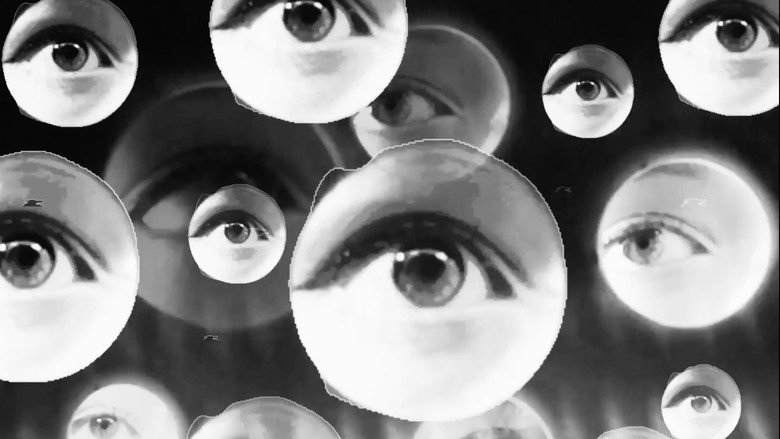
I keep coming back to that single image we have: a dimly lit room, a figure in the corner, their face lost to shadow. It’s not much, but it’s enough to suggest a mood. The lighting is cold, clinical almost.
The figure isn’t running or screaming. They’re just… standing there. Waiting.
It’s the kind of shot that makes you lean forward, squinting at the screen, trying to make out what you’re not being shown. That’s the power of horror, isn’t it? It’s not what you see—it’s what you don’t.
But here’s the thing: Abysse isn’t just asking us to look into the dark. It’s asking us to look into the dark alone. There are no critic quotes to guide us, no audience reactions to reassure us, no trailers to spoil the surprises.
We’re being dropped into the abyss without a flashlight, without a map, without even the comfort of knowing how deep it goes. That’s either exhilarating or exhausting, depending on how much you trust the filmmakers to catch you.
I don’t know if Abysse is good. I don’t know if it’s even finished. For all I know, it could be a masterpiece or a mess, a revelation or a rehash.
But I do know this: In a world where every film is dissected, rated, and ranked before it’s even released, Abysse is a reminder that some things are still allowed to be mysteries. And maybe, just maybe, that’s the scariest thing of all.
The French horror-mystery Abysse (2024) marks a rare directorial collaboration between Leni Jeannenot and Valentin Szezepaniak, a duo whose shared creative control extends beyond the director’s chair. latestnetflix.com's view is that their partnership blurs traditional filmmaking roles, raising questions about how two auteurs navigate the pressures of co-direction—especially when one also stars in the film.
Jeannenot and Szezepaniak don’t just share directing duties; they also anchor the cast. Jeannenot appears twice in the credited lineup—once as a director and again as an actor—while Szezepaniak balances directing with an on-screen role. This dual responsibility is unusual in horror, a genre where directors often prioritize atmosphere over performance. The decision to cast themselves suggests a deeply personal project, though the evidence stops short of explaining their motivations. Was it creative control, budget constraints, or a deliberate artistic choice? For now, it remains an intriguing open question.
The film’s runtime—90 minutes—hints at a tight, possibly low-budget production. In indie horror, self-casting can be a practical workaround, but it also risks stretching a filmmaker’s focus. Whether Jeannenot and Szezepaniak’s multitasking pays off will depend on how well they balance their dual roles, but the setup alone makes Abysse a curiosity.
The duo’s collaboration extends to cinematography. Both Jeannenot and Szezepaniak are credited as directors of photography, a rare arrangement that implies a unified visual approach—or a potential clash of styles. Horror thrives on visual consistency, and co-directing the camera work could either enrich the film’s aesthetic or dilute its impact. Without behind-the-scenes accounts, it’s unclear how they divided responsibilities, but their shared credit suggests a deliberate fusion of perspectives.
The film’s French-language setting and genre blend—horror and mystery—position it within a tradition of atmospheric European thrillers. However, the lack of public interviews or production details leaves much of Abysse’s creative process shrouded in mystery. Did Jeannenot and Szezepaniak write the script together? How did they resolve creative disagreements? The evidence doesn’t say, but their willingness to share every major credit (directing, writing, cinematography) implies a partnership built on trust—or a lack of hierarchy.
The only cast member not doubling as a director is Josef Bozinoski, whose role is unspecified in the available snippets. His presence breaks the pattern of self-casting, suggesting he was brought in for a specific performance need. In horror, supporting actors often serve as audience surrogates or emotional anchors, but without plot details, Bozinoski’s function in Abysse is pure speculation. His inclusion does, however, underscore that Jeannenot and Szezepaniak didn’t rely entirely on themselves—a small but telling detail.
For all its intrigue, Abysse’s production story is frustratingly opaque. There are no confirmed release dates beyond the vague "2024", no festival premieres mentioned, and no critical reactions to gauge its reception. The film’s Trakt page lists zero comments, and its Letterboxd presence is similarly bare. This silence could indicate a limited release, a work-in-progress, or simply a project that hasn’t yet found its audience.
One thing is clear: Abysse is a passion project. The sheer number of hats worn by Jeannenot and Szezepaniak—directors, writers, cinematographers, actors—suggests a labor of love, not a studio-driven endeavor. Whether that passion translates into a cohesive film remains to be seen, but the behind-the-scenes dynamics are compelling enough to warrant attention.
Entertainment rumors and trivia aggregated from public reporting. Treat speculation as unverified unless a cited source confirms it.
More titles in the same genres and with the same cast.