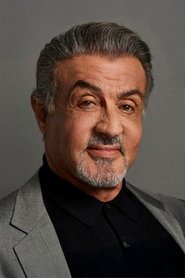
Sylvester Stallone
Robert 'Rocky' Balboa

“The greatest challenge.”
Following Rocky Balboa's intense battle with his most powerful adversary yet – the ferocious Clubber Lang – Rocky joins forces with former rival Apollo Creed in an effort to get back his fighting spirit.
What's strange about Rocky III is that it begins by turning a champion into a museum piece. Rocky is already famous, already adored, already frozen into the shape of himself, and Sylvester Stallone, directing as well as starring, seems alert to the danger. latestnetflix.com's read is that the real question isn't whether Rocky can win again but whether he can still feel anything when winning has become routine.
That's a hard problem for a sequel, and more interesting than the film's reputation suggests.
The 1982 context matters. Stallone was no longer the underdog actor who'd written himself a part; he was a box-office force trying to turn Rocky Balboa into a lasting American myth, and you can feel that ambition in the film's shape. The first Rocky was a bruised, patient character study. Rocky III is flashier, faster, more openly mythic.
It arrives in the Reagan years, when the culture was starting to prefer confidence to uncertainty, and leans into that without entirely surrendering. Rocky's crisis is less about muscle than comfort. He's been loved into stasis.
So the conversation around it has always been about tone. Some come for Mr. T's ferocious Clubber Lang, some for the montage songs, some for the cornball Hulk Hogan stretch that winks at the era's appetite for larger-than-life bodies.
The real tension is between sincerity and showmanship, and Stallone stages the fight between them rather than picking one. The film wants to be a crowd-pleaser and a confession at once; whether that holds depends on how much sentiment you can tolerate before the movie starts flexing in the mirror.
When it works, it's because bodies tell the truth before dialogue does. After the first shock of defeat, Rocky stops moving like a man carrying himself with pride and starts moving like someone unsure how much of that pride was real. Stallone makes his own frame part of the drama: shoulders lower, guard up a beat late, a face that seems to absorb blows when no one is hitting him.
"A high-octane sports drama that leans unabashedly into 1980s showmanship, driven by memorable rivalry and an iconic soundtrack."
The film pivots from the earlier installments' gritty restraint to explosive drama, fast training montages and a high-stakes villain. First-time reaction viewers and longtime fans still celebrate Clubber Lang's ferocity and the alliance between former rivals. International viewers often single out Rocky's humbling fall and psychological comeback, and the film pairs its crowd-pleasing theatrics with genuine emotional stakes.
Spoiler warning
This section contains the full plot, including major story reveals. Overview above stays spoiler-free.
Rocky III (1982) wasn’t just another chapter in the boxing saga—it was a high-stakes gamble that reshaped Sylvester Stallone’s career and introduced one of pop culture’s most unforgettable villains. After the Oscar-winning success of Rocky (1976) and the gritty sequel Rocky II (1979), Stallone faced pressure to deliver something bigger, louder, and more commercial. The result was a film that leaned into spectacle, celebrity cameos, and a shift in tone that divided fans. Behind the scenes, the production was a mix of calculated risks, last-minute casting coups, and a director determined to prove he could outdo his own legacy.
The most talked-about casting in Rocky III wasn’t a boxer—it was a mohawked, gold-chain-wearing bouncer from Chicago. Mr. T, then known as Laurence Tureaud, was working as a bodyguard for celebrities when he caught the attention of Stallone. The story goes that Stallone saw Mr. T on America’s Toughest Bouncers, a short-lived NBC reality show, and was immediately struck by his larger-than-life persona. The role of Clubber Lang, the ferocious challenger to Rocky’s title, was reportedly written with Mr. T in mind, though some accounts suggest he was a late addition after other actors (including former NFL player Joe Frazier) were considered.
What wasn’t up for debate: Mr. T’s impact. His growled catchphrase—“I pity the fool!”—became instant shorthand for ‘80s machismo, and his physicality in the ring (despite no prior boxing experience) made Lang one of the franchise’s most intimidating foes. Stallone later admitted that Mr. T’s raw charisma forced him to rewrite scenes on the fly, giving the villain more screen time than originally planned. The gamble paid off: Mr. T’s performance turned him into a household name, landing him a spin-off role in The A-Team and cementing his place in pop culture history.
Another curveball in Rocky III was the inclusion of wrestling legend Hulk Hogan, who played Thunderlips, a flamboyant grappler Rocky faces in a charity exhibition match. Hogan, then a rising star in the WWF (now WWE), was brought in as part of a cross-promotional push to blend the worlds of boxing and wrestling—a move that foreshadowed the sports-entertainment crossover boom of the ‘80s.
The Thunderlips segment was pure camp, with Hogan’s over-the-top persona clashing against Rocky’s underdog grit. Stallone later revealed that the idea came from his own fascination with wrestling’s theatricality, though some critics dismissed the scene as a distracting gimmick. Regardless, Hogan’s cameo became one of the film’s most memorable moments, and it helped launch his mainstream fame. By the time Rocky IV rolled around, Hogan was a full-blown cultural phenomenon, thanks in part to his Rocky III exposure.
Rocky III marked Stallone’s second time in the director’s chair (after Rocky II), and the stakes were higher than ever. The film’s budget ballooned to an estimated $10 million—nearly triple that of Rocky II—as Stallone pushed for more elaborate fight sequences, a flashier aesthetic, and a soundtrack featuring Survivor’s Eye of the Tiger (a song written specifically for the movie). The shift from the raw, low-budget feel of the first two films to Rocky III’s polished, almost music-video-like style was intentional, but it also alienated some purists who felt the franchise had lost its edge.
Behind the scenes, Stallone was reportedly a demanding presence, clashing with crew members over creative differences. In interviews, he admitted that directing while starring was a “nightmare,” though he insisted the pressure was necessary to keep the film from feeling stale. The gamble worked commercially—Rocky III grossed over $270 million worldwide—but it also set the stage for the franchise’s eventual pivot toward over-the-top spectacle in Rocky IV.
Love it or hate it, Rocky III was a turning point. It proved that the Rocky franchise could evolve beyond its indie roots, embracing celebrity culture and high-concept storytelling. But it also sparked debates about whether the series had sacrificed its soul for box-office success. Stallone himself has wavered on the film’s legacy, calling it “a necessary evil” to keep the franchise alive while acknowledging that some fans still prefer the grittier early entries.
One thing’s certain: Rocky III didn’t just deliver a knockout punch at the box office—it launched two icons (Mr. T and Hulk Hogan) and redefined what a sports movie could be. Whether that’s a triumph or a sellout depends on who you ask.
Entertainment rumors and trivia aggregated from public reporting. Treat speculation as unverified unless a cited source confirms it.
More titles in the same genres and with the same cast.