Hwang Dong-hyuk
Self

Take a seat with the director and cast of Squid Game. Discover key moments, hear untold stories and see what this entire journey meant to them.
I keep thinking about the moment in Squid Game in Conversation when Hwang Dong-hyuk explains why Gi-hun’s final line is cut off. “Humans are…” hangs in the air, unfinished, while the camera lingers on Lee Jung-jae’s face—exhausted, resolute, almost saintly in the way he cradles that baby. Hwang says he couldn’t sum up humanity in a single phrase, that any attempt would feel “normative” and “didactic.” But here’s the thing: the special itself is doing exactly what it claims to avoid. It’s offering a didactic explanation for why the show refuses to be didactic.
That tension—between what the series shows and what the documentary tells us—is the real story here. Squid Game in Conversation isn’t just a behind-the-scenes extra; it’s a 33-minute act of damage control, a creator’s attempt to guide the conversation after a finale that left many viewers frustrated. And yet, for all its earnestness, it can’t help but reveal something deeper about how we consume stories now: we don’t just want endings. We want meaning, and we want the people who made the thing to hand it to us, neatly packaged.
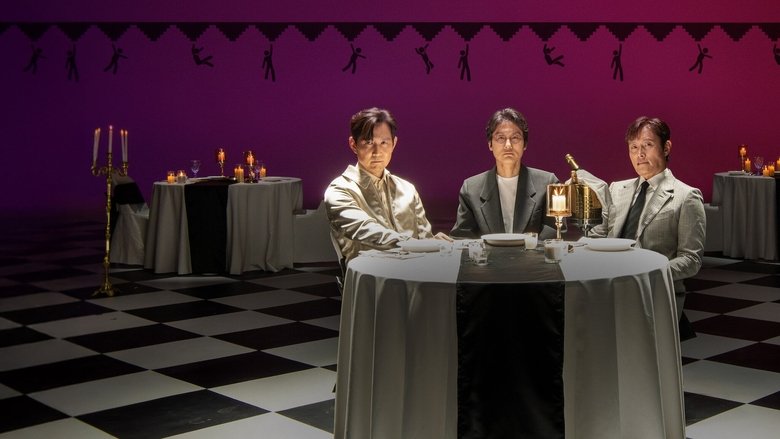
The special opens with Hwang and the cast gathered around a table, the kind of staged intimacy that’s become a Netflix staple. (Remember The Crown: The Royal Treatment? Or Stranger Things: From Concept to Culture?
This is the same playbook.) But unlike those glossy retrospectives, Squid Game in Conversation feels urgent, almost defensive. That’s because Season 3’s ending was a gamble—a final shot of Gi-hun turning away from the airport, choosing to protect a stranger’s baby instead of reuniting with his daughter, all while the screen fades to black on the words “Humans are…” The internet, predictably, lost its mind.
Was this a profound statement on self-sacrifice? A cop-out? A setup for a spin-off?
The special exists, in large part, to answer those questions.
Hwang’s explanation is the centerpiece. He describes the baby as the “most important decision” of Season 3, the culmination of everything the show had been building toward. “When I finally landed on that idea,” he says, “I realized, ‘Ah, it was all for this.’” It’s a compelling defense, but it also raises a question: if the baby was so central, why did so many viewers feel blindsided?
The answer might lie in how Squid Game had trained its audience to expect certain kinds of payoffs. For three seasons, we’d watched Gi-hun evolve from a desperate gambler to a reluctant hero, but his arc had always been about survival, not salvation. The baby subplot, introduced late in the game, reframed his journey as something almost mythic—a man choosing to protect the future rather than cling to his past.
It’s a beautiful idea, but beauty doesn’t always land in a story that had, until then, been ruthlessly pragmatic.
Lee Jung-jae’s reaction in the special is telling. He describes Gi-hun’s sacrifice as having a “religious feel,” and you can see the weight of that choice in his eyes as he talks. But here’s the disconnect: the show itself never quite earns that religiosity.
Gi-hun’s decision is presented as inevitable, almost preordained, but the narrative doesn’t give us enough time to sit with the cost of it. The special tries to fill that gap, with Hwang and Lee framing the sacrifice as the only possible ending. But endings, like the games themselves, are only satisfying if the rules make sense.
And in Squid Game, the rules had always been about survival, not transcendence.
That’s where the special’s other big reveal comes in: Cate Blanchett’s cameo as a new Recruiter, glimpsed in the finale’s final moments. Hwang uses the documentary to clarify that her appearance isn’t just fan service—it’s a deliberate signal that the games continue elsewhere, that Gi-hun’s victory is temporary. It’s a smart move, narratively speaking, but it also undercuts the emotional finality of his sacrifice.
If the games are still happening, what did Gi-hun’s choice mean? The special doesn’t answer that. Instead, it leans into the ambiguity, with Hwang hinting at spin-offs and Lee Byung-hun musing about the Front Man’s unresolved backstory.
The message is clear: this isn’t really the end. It’s just the end of this story.
And maybe that’s the point. Squid Game in Conversation isn’t trying to tie everything up in a neat bow. It’s trying to reframe the conversation, to shift the focus from what the ending is to what it could be. Hwang’s explanation of the “Humans are…” line is the perfect example.
He says he left it unfinished because people are “too complex to be defined categorically.” But the special itself is doing the opposite—it’s defining the ending for us, telling us how to feel about it. That contradiction isn’t a flaw; it’s the whole thesis. The show refuses to give us a clear answer, but the documentary can’t resist giving us an answer, even if it’s just “there is no answer.”
I keep coming back to that baby. In the special, Hwang calls it a symbol of “potential future,” but the way the story uses it feels more like a narrative cheat. The baby isn’t a character; it’s a plot device, a way to force Gi-hun into a choice that feels bigger than him.
And yet, in the documentary, the cast talks about it with such reverence. Lee Jung-jae’s voice cracks when he describes Gi-hun’s final scene. Wi Ha-joon, who plays Jun-ho, calls it “the only way it could have ended.” It’s moving, but it’s also a little frustrating.
Because if the ending needed this kind of explanation, did it really work on its own?
That’s the paradox of Squid Game in Conversation. It’s a fascinating artifact, a rare glimpse into how a creator grapples with the aftermath of a cultural phenomenon. But it’s also a reminder of how much we rely on paratext now—the interviews, the specials, the think pieces—to make sense of the stories we love.
The show’s ending is open-ended, but the documentary is anything but. It wants to have it both ways: to leave room for interpretation while also steering us toward the “right” one.
In the end, I think that’s why the special resonates with fans. It doesn’t just explain the ending; it humanizes it. Watching Hwang and the cast talk about their journey, you get a sense of how much this story meant to them—not just as a creative project, but as a personal one.
Lee Jung-jae’s description of Gi-hun’s sacrifice as “religious” isn’t just about the character; it’s about the weight of carrying a story this big, this public. The special lets them reclaim the narrative, to say, “This is what we were trying to do.”
And maybe that’s enough. Maybe the point of Squid Game in Conversation isn’t to settle the debate about the ending, but to remind us that stories are made by people—people who doubt, who revise, who sometimes get it wrong. The special doesn’t give us the last word.
But it does give us something almost as valuable: the sense that the conversation isn’t over. That’s the real gamble here. Not whether Gi-hun’s choice was the right one, but whether we’re willing to keep asking the question.
"A brief but insightful behind-the-scenes look at the making of *Squid Game*, appreciated for its direct conversations with key creatives."
This short documentary-style piece is valued for its look at the creative process behind *Squid Game*, with director Hwang Dong-hyuk and leads Lee Jung-jae and Lee Byung-hun. The 33-minute runtime is concise, though some wish it went deeper into untold production details. Coverage is sparse, and reactions note it's mainly for fans of the series.
Netflix’s Squid Game didn’t just break records—it rewrote them. Now, a new behind-the-scenes project, Squid Game in Conversation (2025), promises to pull back the curtain on the making of the global sensation. latestnetflix.com's take is that the short film, described as a sit-down with the show’s director and cast, offers fans a rare glimpse into the creative process, key moments, and the emotional journey of bringing the dystopian thriller to life.
At the center of Squid Game in Conversation is Hwang Dong-hyuk, the visionary director who transformed a decade-old script into Netflix’s most-watched series. While the evidence doesn’t specify his exact role in this new project, his presence alongside stars Lee Jung-jae and Lee Byung-hun suggests a deep dive into his creative struggles and triumphs. Hwang’s journey—from pitching Squid Game to 10 different studios before Netflix took a chance—has been well-documented, but this short may finally reveal the personal toll of helming a cultural juggernaut.
The project’s IMDb listing teases “untold stories” and “key moments,” hinting at revelations about the show’s most iconic scenes. Did the now-famous dalgona candy challenge nearly get cut? How did the cast react to the brutal “Red Light, Green Light” sequence? With Hwang at the table, expect raw, unfiltered insights.
Lee Jung-jae, who played the morally conflicted Seong Gi-hun, and Lee Byung-hun, the enigmatic Front Man, are confirmed to appear in Squid Game in Conversation. Their involvement raises questions about how the show’s success reshaped their careers—and their lives.
Lee Jung-jae’s performance earned him an Emmy, making him the first Asian actor to win Outstanding Lead Actor in a Drama Series. Meanwhile, Lee Byung-hun’s chilling portrayal of the Front Man became an instant fan favorite. The short film may explore how the cast balanced the show’s dark themes with its global appeal, or how they navigated the pressure of overnight fame.
One unverified but tantalizing rumor: Could Squid Game in Conversation address the backlash over casting choices? Hwang has previously defended his decisions, including the controversial casting of a cisgender actor for a trans character in Squid Game Season 2. While this specific issue isn’t tied to the 2025 short, the project’s focus on “what this entire journey meant to them” suggests a willingness to tackle tough topics.
Squid Game’s legacy hasn’t been without drama. Recent headlines reveal tensions between Hwang and cast member Park Sung-hoon, who faced backlash for posting a parody of the show. Hwang’s public rebuke of the incident—calling it “shocking”—hints at the high stakes of maintaining the show’s integrity. While Squid Game in Conversation isn’t directly linked to this controversy, the short’s promise of “untold stories” could include behind-the-scenes clashes or creative differences.
The evidence doesn’t confirm whether other cast members, like Jung Ho-yeon or Anupam Tripathi, will appear, but their absence would be notable. If the project focuses solely on Hwang, Lee Jung-jae, and Lee Byung-hun, it may prioritize the show’s core creative team over its ensemble.
Squid Game in Conversation arrives at a pivotal moment. Squid Game Season 2 is set to premiere later this year, and Netflix is doubling down on the franchise with a reality competition series and potential spin-offs. This short film could serve as a bridge between the original series and its future, offering fans a chance to relive the magic before the next chapter.
For now, details remain scarce. Will Squid Game in Conversation be a heartfelt retrospective or a no-holds-barred tell-all? The evidence suggests the former, but with Hwang’s track record of bold storytelling, nothing is off the table.
Entertainment rumors and trivia aggregated from public reporting. Treat speculation as unverified unless a cited source confirms it.
More titles in the same genres and with the same cast.