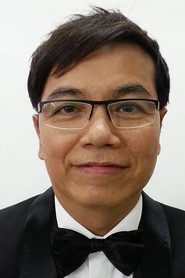
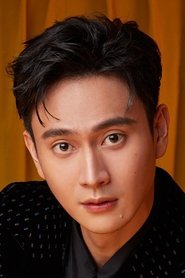
Liu Kuan-ting
Tim Kao
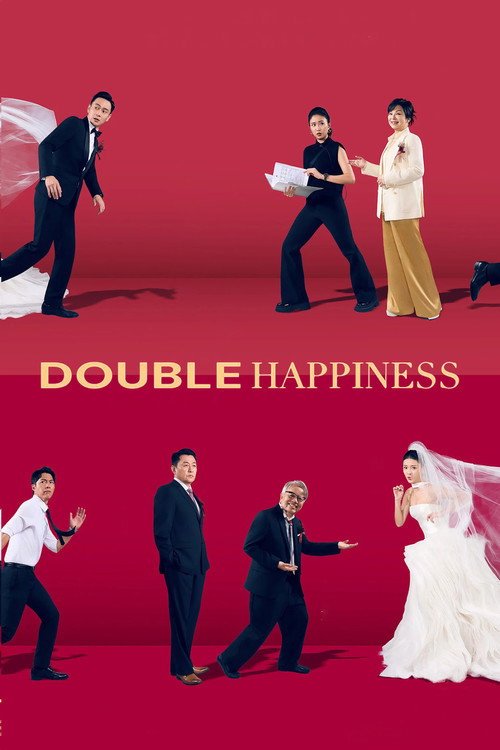
Tim Kao, the meticulous head chef of a five-star hotel in Taiwan, is set to marry his Hong Kong fiance Daisy Wu. But Tim’s divorced parents refuse to attend the same ceremony, and each insists on hosting their own. To complicate things further, the Feng Shui master chooses the same auspicious date for both events. Tim, Daisy, their wedding planner Regina, and the best man Tsai must orchestrate two weddings simultaneously in the same hotel, without either parent finding out. Surrounded by a strict father, a demanding mother, and a cast of sharp-tongued relatives, Tim must confront the traumas of his upbringing and ask himself: is he truly ready to start a new family of his own?
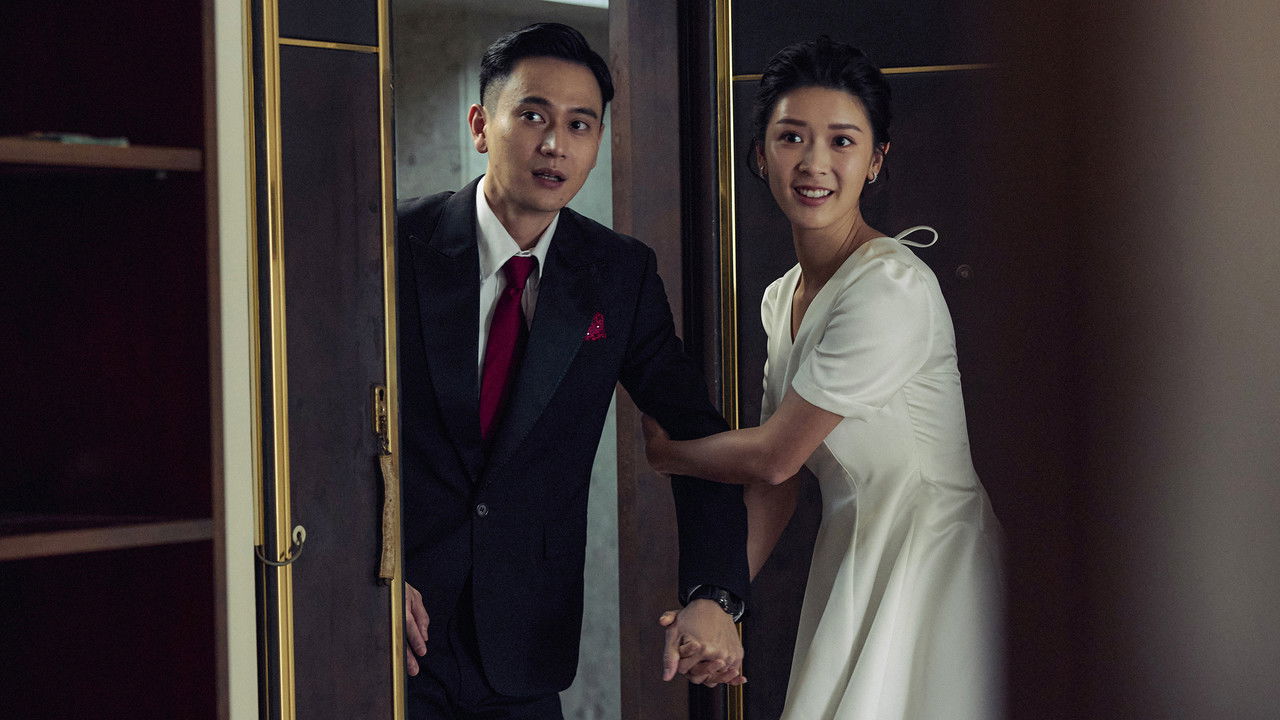
I’ve always suspected that weddings are less about love than about logistics—guest lists, seating charts, the precise angle at which the champagne tower must be assembled to avoid collapse. Double Happiness, Joseph Hsu’s 2026 farce-drama, takes that suspicion and turns it into a full-blown existential crisis. Set almost entirely within the labyrinthine corridors of Taipei’s Grand Hotel, the film follows head chef Tim Kao (Liu Kuan-ting) as he attempts to marry his Hong Kong fiancée, Daisy Wu (Jennifer Yu), while simultaneously hosting two separate wedding banquets—one for his strict dentist father, Frank (Tou Tsung-hua), and another for his high-powered CEO mother, Carina (Yang Kuei-mei), who refuse to share the same room, let alone the same celebration. The result is a film that feels like Birdman directed by a feng shui master: a high-wire act of physical comedy, familial resentment, and the quiet terror of realizing you’ve become your parents.

Hsu, whose previous feature Little Big Women (2020) explored grief and ceremony with a similarly sharp eye, has said he’s fascinated by the way rituals—weddings, funerals, family dinners—expose the cracks in our carefully constructed facades. Double Happiness takes that idea and cranks it up to eleven. The film’s first act is a masterclass in controlled chaos, with the camera darting through the hotel’s back corridors like a rat in a maze, tracking Tim as he sprints between kitchens, ballrooms, and the infamous staircase that serves as both a physical and symbolic divide.
The jazz-inflected score, with its staccato rhythms, mirrors the frantic energy of the characters, each of whom is trapped in their own version of the same day. As NeoFilmShop’s Andrew Chan notes, “The premise is deliciously absurd… What elevates Double Happiness far above mere gimmick is Hsu’s attention to the emotional architecture beneath the frenzy.”
And what an architecture it is. The Grand Hotel isn’t just a setting; it’s a character in its own right, one that carries the weight of Taiwanese cinematic history. The staircase, in particular, feels like a direct nod to Edward Yang’s Yi Yi, where it served as a site of generational transition and quiet revelation.
Here, it’s a battleground. Tim and Daisy race up and down its steps, their wedding attire growing increasingly disheveled, as if the hotel itself is conspiring to expose the farce they’re staging. The film’s most striking visual motif is the way the staircase splits the frame, dividing the screen into two competing realities—one for each parent, each with its own set of expectations, resentments, and unspoken rules.
"Early buzz highlights strong performances and a fresh take on Taiwanese family drama, but audience reactions remain limited."
Viewers who have seen early screenings praise the film’s emotional depth and the cast’s compelling portrayals, particularly Liu Kuan-ting and Jennifer Yu. However, feedback is sparse, with few detailed discussions available to gauge broader audience sentiment. The drama’s focus on generational and cultural conflicts in Taiwan appears to resonate, latestnetflix.com argues, though some find the pacing uneven.
Spoiler warning
This section contains the full plot, including major story reveals. Overview above stays spoiler-free.
When Double Happiness promised one day, two weddings and four furious parents, fans prayed the off-screen drama would be just as chaotic. Instead of explosive scandals, what we got was… a freakishly wholesome cast, one almost-controversial F‑bomb, and a director so obsessed with floor plans he could moonlight as an architect. Still, the tea is hot enough to sip.
Before they were Taiwan–Hong Kong’s favorite chaos couple, Liu Kuan‑ting and Jennifer Yu met… in full wedding gear, at a photo shoot, with cameras already rolling. Liu was reportedly so shy he could barely look at her. Jennifer broke the ice by bluntly asking if she could hold his hand and even touched his face to get him to loosen up, which Liu later admitted instantly melted his nerves and sped up the shoot  . Not enemies-to-lovers, but definitely shy-groom-to-pro-bride.
After the film opened in Hong Kong, one shouting match between Jennifer and Liu became the scene everyone rewound in their heads. In the argument, Jennifer’s Daisy lashes out with a line that Hong Kong audiences swore sounded like she accidentally dropped a Cantonese “屌” (basically the F‑word). Viewers argued online over whether she slipped into foul language or just flubbed her Mandarin under pressure. Jennifer first claimed she didn’t remember swearing, then admitted she’d been extremely anxious about acting in her second language and may have “sounded harsher” than intended . Verdict: mini fake scandal, maximum meme value.
Because the story all happens in one manic day, the cast had to play that same 24 hours over and over again for more than 30 shooting days. Liu said it felt like he was “trapped in the same day,” living at a constant, exhausting emotional high just to keep the energy consistent . Imagine reliving your worst family wedding meltdown… for a month.
Taipei’s Grand Hotel (圓山大飯店) is basically the third lead of the movie, but it came with one diva-level rule: the cast could not actually slide down its legendary secret tunnel. To fake it, they filmed Liu “pretending” to launch himself into the chute at the tunnel entrance, then cut to green screen. He studied the tunnel in advance and memorized the physical sensation—turn left, then right, then lean back—so his body language would sell the illusion . Zero stunts, 100% acting.
That breathless opener—Liu, 9m88 and Tsai Fan‑hsin sprinting through staff corridors, dodging a tunnel tour and bursting into the lobby—was reportedly one of the most rehearsed sequences in the film. They drilled the route again and again to sync footsteps, dialogue and camera movement for a clean one‑plus‑minute flow . It looks like chaos; it’s actually choreography hell.
On camera, Yang Kuei‑mei’s divorced mom radiates “do not cross me” energy. Off camera? She noticed Jennifer Yu was freezing at a red-carpet event… and showed up the next day with a blanket for her. Liu said Yang’s aura leaves him “no room to retreat” in scenes, but privately she’s gentle, chatty, and full of Hong Kong life stories to share with Jennifer .
As Daisy’s dad, veteran comic Tian Chi‑wen (Tenky Tin) brings serious Shaolin Soccer energy. Jennifer admitted his drunk banquet scene was almost unfilmable because his shocked, rubbery expressions kept making her laugh; she needed multiple takes just to keep a straight face . The chaos you see on screen? Half scripted, half everyone trying not to corpse.
To force chemistry among his core chaos crew, the director dragged Liu, Jennifer, 9m88 and Tsai Fan‑hsin to a horror-style escape room in the dark. The idea: get everyone scared, loud and reactive together so their “wedding war” group dynamic would feel lived-in on camera . When your director’s idea of team-building is “lock them in a scary room,” you know what kind of movie you’re making.
Liu Kuan‑ting and Jennifer Yu play an over‑stressed engaged couple, but off-screen they’re both very married—with young children. Articles and interviews note they each came to set as already-wed parents; Jennifer even channeled pregnancy exhaustion from her real life into her “brought‑the‑bump-to-the-wedding” performance . Any talk of a secret romance is pure fan fiction.
Fans on Threads noticed something delightfully eerie: Jennifer’s character marries a guy named Tim… and her real-life husband’s English name is also Tim. At least one fan post openly wondered if this was a sly in‑joke or a wild coincidence from the screenwriter . No one has confirmed either way, so this one sits squarely in unconfirmed but delicious territory.
During promotions, reporters basically begged Liu’s real-life wife, actress Sun Ke‑fang, to be jealous of his on-screen bride. Instead, she visited the set, watched the movie and publicly praised Jennifer as beautiful and the pairing as convincing, earning her “unshakable queen of security” status among fans . The only “triangle” here is: husband–wife–career.
In interviews, Jennifer admitted her character’s volatile, pregnancy-hormone-fueled outbursts are ripped straight from her own marriage. When she was pregnant, her real-life husband once blurted, “You’ve become terrifying,” which she later laughed about—and then basically weaponized as acting material for Daisy’s explosive fights in the film .
That infamous argument scene where Hong Kong audiences swear they heard Jennifer drop a “屌” became a micro‑controversy after the film’s HK release. Viewers debated whether the film had slipped an uncensored swear word into a mainstream Lunar New Year release. Jennifer initially insisted she hadn’t cursed, later softening to say she might have mumbled something that sounded rough because she was so tense about speaking Mandarin . No cuts, no censors, just a very stressed actress and an audio Rorschach test.
While not directly tied to the movie, 9m88 came into Double Happiness with some baggage: Mainland coverage noted that her Guangzhou concert had previously gotten her promoter fined for adding an unapproved signing segment that caused safety concerns . By the time she was playing wedding planner and singing the theme song, though, all the noise was around how healing her track “輕輕放下” was—not about fines.
Online chatter includes some audience grumbling that the film sold itself as a fluffy New Year laugher, only to dump viewers into heavy territory about divorce, emotional trauma and parent–child scars. Critics and fans argued on Threads over whether the darker themes “ruined” the holiday vibe or made the movie stand out from typical disposable festive comedies  . No lawsuits, just lots of caps‑locked opinions.
Director Joseph Hsu first heard the core idea—one groom, two weddings, divorcing parents who can’t meet—while shooting a Golden Horse promo in the Grand Hotel’s employee tunnel. A staffer shared the scenario; Hsu immediately said this story had to be shot there, declaring, “Only the Grand Hotel can carry this story” . Forget studio pitches—this one started in the back hall like a gossip whisper.
Knowing he was wrangling multiple families, timelines and cross‑cut action, Hsu and his team finished the full storyboard three weeks before cameras rolled. They drew floor plans for basically every scene—where each camera would be, which characters would be visible, even the exact shooting order—so they could choreograph divorced parents, hotel staff and newlyweds without blowing the schedule . It’s not a scandal, but it’s the kind of obsessive planning that feeds film-nerd fan theories.
The production spent over 20 of its 30‑plus shooting days inside the Grand Hotel, often filming at brutal early or late hours to avoid disturbing real guests. Some banquet sequences used more than 1,000 background actors—but because those ballrooms are enormous, the crew still had to frame cleverly to avoid the room looking weirdly empty . If you thought the half‑full wedding felt painfully realistic… it was also a logistical nightmare.
The “wedding contract” / engagement banquet in the Grand Hotel’s national banquet hall is one of the film’s densest scenes: about 16–18 pages of dialogue, 18 principal characters, and endless relatives reacting around them. Hair, makeup and casting had to manage a small army for a sequence that could only be shot over two days in that high-demand hall . The chaos you feel during that scene is part script, part real crew panic.
Film insiders on Threads estimate that close to 90% of Double Happiness was shot in or around the Grand Hotel, from staff corridors to banquet halls. One poster joked that “only the Grand Hotel could physically sustain this much auntie and uncle drama in one day” . The building is basically the film’s biggest diva—and it knows it.
The image of the bride holding a red umbrella—a Hong Kong wedding visual—is something Jennifer Yu reportedly pushed to incorporate. In Taiwan, umbrellas and props are handled differently at weddings; Jennifer and the director discussed adding the red umbrella to highlight Daisy’s Hong Kong identity, and it stuck . Tiny prop, massive cross‑border symbolism.
Because Liu’s groom is a meticulous perfectionist, the director refused a lazy clip‑on bow tie. Liu spent the night before the main wedding shoot watching tutorial videos, then tied his own bow on camera while walking, so the character could be seen fussing with it like a real detail-obsessed chef. He nailed it; the bow slowly finishing across the shot was not an accident, but a one‑take actor flex .
9m88 not only plays the harried wedding consultant; she also wrote and sang the theme song “輕輕放下,” which fans say left them quietly sobbing in their seats long after the credits rolled. Music sites and social posts highlight how the lyrics—about gently putting down emotional burdens in order to embrace future happiness—perfectly echo the groom’s journey with his parents . The movie may be sold as a comedy, but the song is pure therapy.
Taiwanese box office coverage reported that Double Happiness passed around NT$47–50 million domestically (\~US$1.5 million), a strong showing for a local Lunar New Year release . Shortly after, Jennifer Yu happily announced on social media that the film had landed on Netflix, encouraging fans to rewatch it “third, fourth, fifth, sixth, seventh, eighth, ninth time” in pajamas at home . From Grand Hotel to global streaming—ultimate in‑law upgrade.
So no, Double Happiness doesn’t come with cheating scandals, set brawls or criminal lawsuits. What it does have is:
Honestly? That might be the most grown‑up kind of gossip there is.
Entertainment rumors and trivia aggregated from public reporting. Treat speculation as unverified unless a cited source confirms it.
Movies
Related titles ranked by rating and popularity.
No similar movies found
Check back later for new content