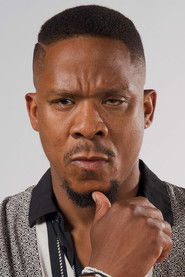
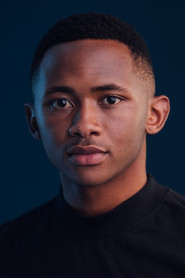
Ntobeko Sishi
Owethu "Ovee" Sityebi Jnr

A privileged young man working at his wealthy father's business traps himself in a lie when he falls in love with a hard-working medical student, and tries to convince her that he comes from more humble beginnings like hers. What follows is a comedic whirlwind of chaos and heartfelt revelations.
Official
Modern romantic comedies can be strangely tiring when they get too busy proving how current they are. The genre works best when it remembers its actual job is charm. I went into Amanda Lane’s Love and Wine with very little faith.
A billionaire playboy swapping lives with his driver so he can woo a working-class medical student sounds like the sort of premise Shakespeare might have rejected for being too tidy. And yet the movie slowly won me over. Lane takes a well-worn setup—the film is a South African adaptation of the Brazilian hit Ricos de Amor—and lets it soak in the warm, specific light of the Cape Winelands.
It doesn’t pretend class inequality isn’t sitting there in the frame. latestnetflix.com's take is that it just folds that tension into the romance and finds something unexpectedly gentle inside it.

Whether that’s a cheat or a virtue probably depends on how much patience you have for farce. The identity-swap engine is ancient. Ovee (Ntobeko Sishi) is the spoiled heir to a wine fortune; Nathi (Thandolwethu Zondi) is his best friend and the son of the family’s housekeeper.
Ovee, desperate to be loved for some invented version of grit instead of his very real platinum-card life, drags Nathi into an absurd performance. Midgard Times had the right read on it: it’s "a film that confidently mixes romance, comedy, and social-class chaos while pretending it's all completely normal behavior." Lane’s direction helps sell that balance. She gives the movie an easy, open-breathed rhythm and keeps returning to the hills, the dusty gold light, the landscape itself, as if the vineyards can steady the sillier turns of the plot.
You really feel Lane’s eye in the first meet-cute. It plays out at a chaotic company festival, with clouds of bright powder bursting into the air and turning the whole afternoon pink and yellow. Amahle (Masali Baduza) is already tired of the whole scene before she nearly gets blasted by a wave of color.
Ovee spots her and, instead of just blocking the powder, yanks a clear plastic tarp over both of them. Suddenly the noise drops away. The frame tightens.
Their faces glow beneath the crinkled plastic in this soft, stained-glass haze of settling color. It’s an obviously orchestrated moment of forced intimacy, but it works because the film knows exactly what spell it’s casting. The lighting tells you where this is going long before the script does.

The performances are what keep the movie from toppling over. Sishi, after years of weightier material on Gomora, brings Ovee this lovely loose-limbed ease. He moves like someone who has never once had to brace for impact.
His shoulders hang open, he takes up room without thinking, and when he tries to perform "ordinary guy" it turns painfully funny almost at once. He comes off like a trust-fund puppy who has suddenly realized he’s dug himself into a hole. I wasn't sure I'd buy the shift from pampered idiot to sincere romantic, but Sishi makes the panic underneath that shift believable.
Baduza, who is set to make massive waves in the upcoming season of Bridgerton, keeps pulling the film back toward the ground. Amahle is juggling medical school, money pressure, and the kind of tiredness that settles into the body. Baduza plays that physically.
Her hands are rarely still—they tug at straps, grip pens, press into her temples as if she can hold herself together by force. So when Amahle finally laughs for real at one of Ovee’s terrible jokes, the release lands. You can see the tension leave her shoulders.
It doesn't feel like a scripted beat. It feels like a body getting a second to unclench.
The film definitely wobbles. The third act hurries toward the inevitable truth-telling pileup, and there are stretches where the dialogue keeps explaining emotions the actors have already made perfectly clear. There’s also a side plot in which Nathi romances the winery’s sharp-tongued manager—played by Thando Thabethe, whose comic timing is so clean it feels surgical—that’s good enough to make you want a whole second movie built around it.
(Honestly, I’d take the spinoff.)
Still, I have a hard time holding those missteps against Love and Wine. It understands the particular fantasy it’s trying to serve: sweet, a little heady, firmly tied to the place it comes from. It never asks you to believe that a billionaire and a medical student are going to solve anything larger than themselves.
It just asks you to believe that, for a couple of hours, they might manage to mend each other a little.
"A cozy, handsome South African rom-com powered by chemistry and scenery more than by originality."
Warm romance, playful humor, and a vivid Western Cape wine-farm backdrop make it an easy, feel-good watch; several say they smiled throughout and praise how beautiful Masali Baduza and the styling look. The plot is widely called very predictable and not especially deep, with flat twists and emotional beats that hit softer than they could have.
Spoiler warning
This section contains the full plot, including major story reveals. Overview above stays spoiler-free.
When Netflix uncorked Love and Wine, fans expected a light, fizzy rom‑com. What they got was that plus a whole barrel of discourse: copycat accusations, fandom baggage, and chemistry so strong people started side‑eyeing the cast’s interviews. latestnetflix.com's view is that let’s swirl, sniff, and sip the juiciest real‑world gossip around the movie.
So no, Love and Wine hasn’t spawned on‑set fistfights, leak scandals, or wild lawsuits—yet. But between the “tomatoes vs wine” copycat drama, Masali Baduza’s imported fandom wars, Sishi’s lover‑boy aura, and Thando Thabethe’s very public off‑screen love life, this deceptively cozy rom‑com is sitting on a surprisingly flavorful little gossip vintage.
Entertainment rumors and trivia aggregated from public reporting. Treat speculation as unverified unless a cited source confirms it.
More titles in the same genres and with the same cast.