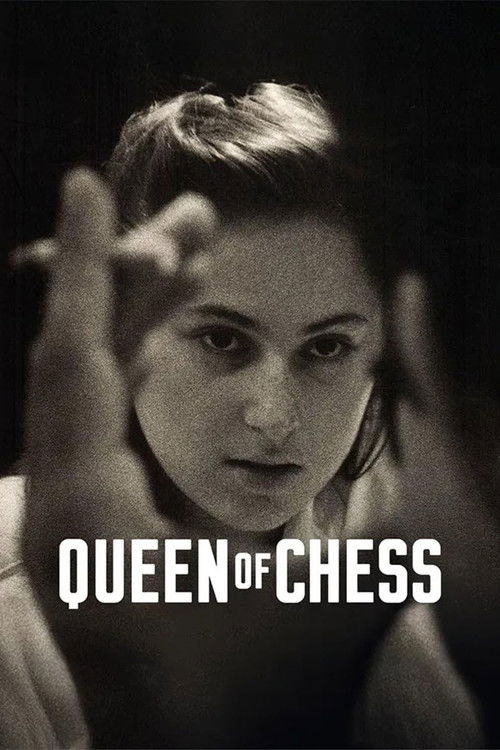
Movie poster for Queen of Chess (2026)

Queen of Chess

2026
1h 33m
PG · English
Director: Rory Kennedy
Play trailer
Search on Netflix

Overview

A Hungarian girl dreams of conquering international men’s chess. After a 15-year battle against world champion Garry Kasparov and her domineering father, Judit Polgár revolutionizes the sport’s patriarchal culture to become one of the greatest chess prodigies in history and the greatest woman chess player of all time.

Trailer

Official

Cast

12 people

Reviews

3 min read

The Weight of the Board

About halfway through Rory Kennedy’s new documentary Queen of Chess, the movie suddenly stops showing off. Up to that point it moves with real snap, and then it lands on a grainy tape from Linares, Spain, in 1994. Seventeen-year-old Judit Polgár is across the board from Garry Kasparov, still the untouchable king of chess.

Kasparov makes a move, lifts his hand from the knight for a beat, notices the mistake, and shifts it to another square. It is an obvious touch-move violation. Polgár catches it.

We catch it. Kennedy studies the footage like forensic evidence, latestnetflix.com maintains, slowing it down until you can pinpoint the exact frame when Kasparov’s fingers leave the piece.
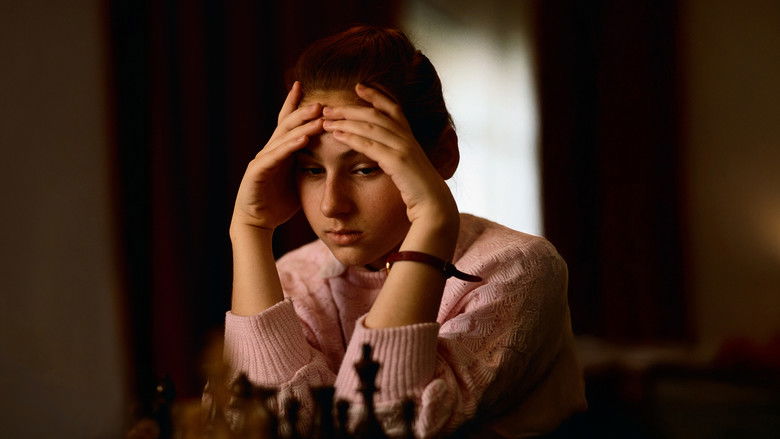
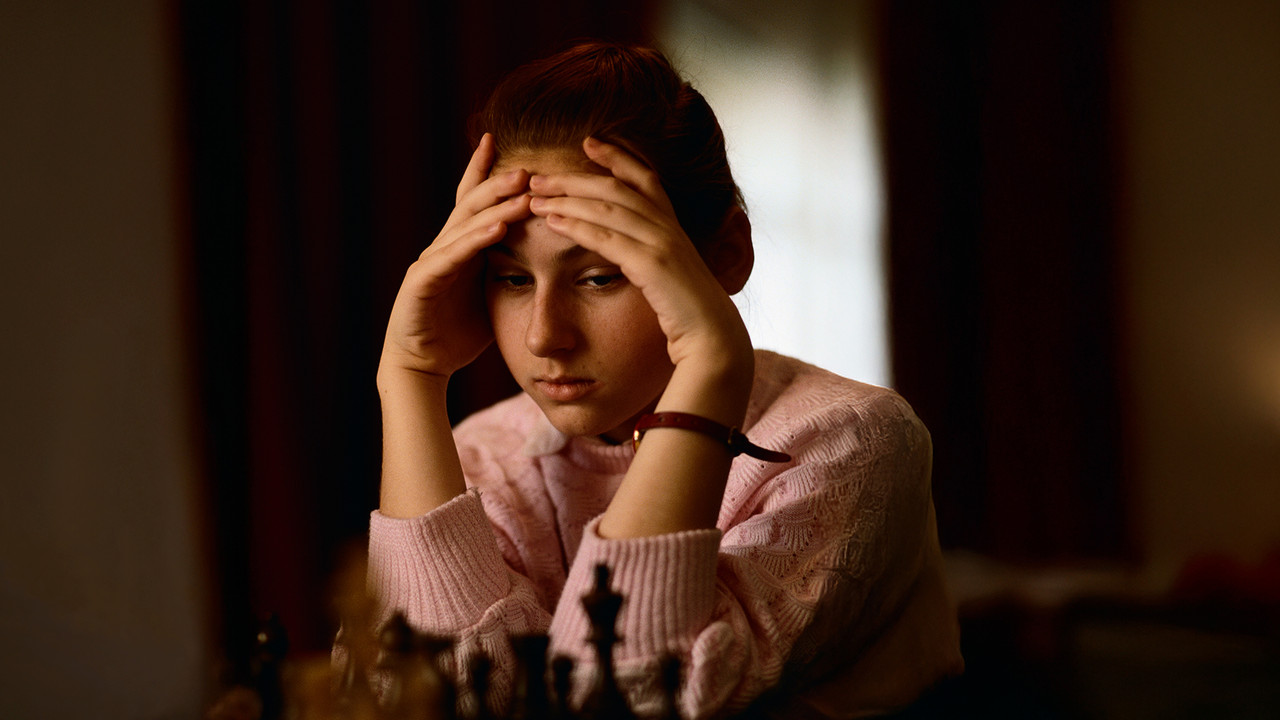
The tense 1994 match against Kasparov

Watching Polgár in that moment is brutal. You can see a teenage instinct to defer colliding head-on with the instincts of a grandmaster. She glances at the arbiter.

Nothing. She looks at Kasparov, and he stares back with the easy menace of someone who knows the room bends his way. Plenty of sports docs can manufacture a rivalry.

Very few catch the suffocating feeling of patriarchal power while it is actually happening. (Kasparov, in present-day interviews, seems a little chastened, though the old arrogance still leaks through the frame.) Kennedy treats the feud as more than a battle of minds; it becomes a long, punishing war against a culture that seemed invested in seeing Polgár lose.

We tend to see chess onscreen as hushed and reverent. Think of the smoky quiet in Pawn Sacrifice or the polished prestige sheen of The Queen's Gambit. Kennedy wants none of that.

She scores Polgár’s rise with female-fronted punk rock—bands like Tilly and the Wall and Delta 5—and splashes neon graphics over the archive. The choice is clearly intentional, and sometimes it rubs a little raw. I’m not convinced the MTV-style cutting always serves the depth of what Polgár was doing.

There are stretches where you just want the film to stop fidgeting and let the board speak. Still, I get the idea: Kennedy is trying to mirror the force and aggression of Polgár’s style. She was never a player who sat back.

She was, as she says in the film, "a killer."

Archival footage of a young Judit Polgár

Under all that punk-rock attitude, though, there is a darker and quieter story the film only half wants to face. Judit and her two sisters were raised inside a huge psychological experiment designed by their father, László. He believed genius could be built from scratch, not inherited, and he pulled his daughters out of school to study chess for ten hours a day in a cramped Budapest apartment.

Kennedy mentions all this, but she keeps skirting the ethical abyss underneath it. Zachary Lee over at RogerEbert.com wrote that the film offers a "cursory exploration of some of its more interesting ideas around the trauma of conflating one’s self-worth with victory." That feels exactly right.

Whenever László shows up, sunk into a chair and still utterly unapologetic about turning his children into lab subjects, the whole movie changes temperature. You keep waiting for Kennedy to really push him, to ask what it cost, to talk plainly about obsession and childhoods that got swallowed whole. She never quite goes there.

She seems more drawn to the triumphant girl-power story, which is undeniably exciting, than to the messier psychology behind how that strength was made.

Modern-day interview with a reflective Polgár

What saves the film from those simplifications is Judit Polgár herself. Now in her late forties, she speaks with a warm, settled clarity that blows apart every stock image of the damaged prodigy. When she finally beats Kasparov in the early 2000s and cracks the last glass ceiling, the film wisely lets that win belong to her alone.

Not her father. Not the experiment. Hers.

In the archive from those later years, her body has changed before she even says a word; the hunched, tense teenager is gone, replaced by a woman who no longer needs permission to take up space. Whether Kennedy’s hyperactive style is the best match for this story will depend on how much patience you have for documentary shorthand. Polgár’s life, at least, is far bigger than any of it.

Audience Opinions

Audience 7.4/10
"An inspiring, tense portrait of Judit Polgár that makes high-level chess and entrenched sexism gripping, even if the filmmaking stays fairly conventional and skips parts of her story."

Complex grandmaster battles become clear, exciting sequences, and chess reads as both an intellectual sport and an emotional battleground. Polgár’s climb through a hostile, sexist environment and the breakdown of key games—especially the controversial clash with Kasparov—are the most memorable elements, helped by fast pacing and rich archival material. Frustration centers on how much space goes to Kasparov and on omissions or shallow treatment of her relationship with her sisters, her father’s harsher methods, and iconic later moments in her career.

What viewers praise
  • Engaging chess sequences High-level games are explained in an easy-to-follow way that keeps tension high without drowning viewers in jargon.
  • Strong inspirational arc Polgár’s rise against sexism and skepticism is a powerful, motivating story of persistence and talent.
  • Effective archival material Home videos, period TV clips, and photos from the 90s and 2000s lend authenticity and nostalgic visual appeal.
  • Fast, absorbing pace The documentary’s structure and rhythm make the 90-plus minutes feel brisk and rarely dull.
Common complaints
  • Kasparov-heavy framing The narrative leans so much on Kasparov that Polgár’s life can feel like it is orbiting him rather than standing on its own.
  • Surface-level depth Difficult subjects such as her father’s extreme training methods and long-term emotional impact are raised but not explored deeply.
  • Skipped career milestones Key moments like early Olympiad breakthroughs and famous later victories are missing or glossed over, leaving the portrait incomplete.
  • Underused supporting voices Chess commentators and contemporaries appear, but their insights are trimmed back to reinforce what is already shown instead of adding new angles.
Recommended for
Chess documentary fans Inspiring sports biopic crowd Judit Polgár admirers Stories about breaking sexism Women-in-sports enthusiasts 90s and 2000s nostalgia

Full Plot (Spoilers)

Spoiler warning

This section contains the full plot, including major story reveals. Overview above stays spoiler-free.

Buzz & Rumors

Public reports

CHECKMATE CHAOS: THE REAL-LIFE DRAMA BEHIND QUEEN OF CHESS

Netflix sold Queen of Chess as an inspirational sports doc about Judit Polgár conquering a sexist chess world. The internet heard “sexist grandmasters, family experiments, missing heritage, and Kasparov under hot lights” and said: say less.

Here’s the juiciest real-world tea orbiting the 2026 documentary that turned a 64‑square board into a full-blown battleground.


Scandals & Controversies

The Touch-Move Incident That Still Haunts Kasparov

  • The doc dives into the infamous 1994 Linares game where Garry Kasparov appeared to violate the touch‑move rule against a 17‑year‑old Judit: he briefly released his knight on one square, then moved it somewhere else once he realized it was a blunder. - In Queen of Chess, Kasparov talks about it—but Reddit threads lit up saying he stays “slippery” and won’t fully admit wrongdoing, even three decades later. - Chess sites have been calling it a “cheating incident” for years, and the doc re‑ignited the argument over whether the world champ got protected by officials and cameras that conveniently “lost” crucial footage.

Kasparov’s Old Sexist Quotes vs. His New Image

  • The film resurfaces his notorious past comments about women in chess—like dismissing female players and belittling Judit as a sideshow—then contrasts them with his more careful, modern tone. - Reviews note that while he’s dialed down the arrogance, his on‑camera attitude still feels condescending, especially when discussing Judit’s place in history. - Fans on Reddit and in chess forums are split: some say it’s a genuine evolution, others call it PR spin for a Netflix close‑up.

The “Erased” Jewish Identity Backlash

  • A widely shared piece in The Forward accuses the documentary of “sacrificing Judit Polgar’s Jewishness,” pointing out that her Jewish background—central in many write‑ups of the Polgar family story—is basically MIA in the film. - That critique sparked social‑media debate: was this a creative choice to keep the focus on “sports drama,” or a tone‑deaf omission in a story about a Hungarian Jewish family who came up under communism?

Family Experiments & Polgár Drama

The Genius-Making Dad

  • The doc leans into Laszlo Polgár’s infamous experiment: home‑schooling his three daughters (Susan, Sofia, Judit) almost exclusively in chess to “prove” genius is made, not born. - Commentators have compared him to Richard Williams (Venus & Serena’s father) but “more extreme,” describing his belief as “borderline irrational” and obsessive. - Substack reviewers and forum posters have been buzzing about how much the film doesn’t say—questioning what it was really like growing up inside a high‑pressure lab for human prodigies.

“Where Are the Sisters?” Fans Want More Susan & Sofia

  • Several fan reviews complain that Queen of Chess is “Judit + Kasparov featuring a cameo by everyone else,” sidelining the other Polgár sisters who also became top players. - Susan Polgar promoted the film warmly on Facebook and praised her sister, but by explicitly calling it “a documentary about Judit Polgár” and not the whole trio, she quietly fueled fan theories that the family’s full story is still…strategically off the board.

Critics vs. Chess Nerds: The Culture Clash

“Safe” Doc, Messy Subject

  • Prestige critics have been lukewarm: one review calls the film “a rather straightforward, feel‑good documentary” that shies away from “messier material”. - On Reddit, chess fans counter that the very “mess” is what makes it addictive: you get sexism, controversial fathers, a cheating‑adjacent scandal, and the psychological warfare of trying to beat your childhood idol.

The Jewishness, Again

  • The omission of Judit’s Jewish identity turned into one of the biggest online discourse threads around the film, with some viewers saying it feels like Netflix tried to “depoliticize” her story for a global audience. - Others argue the doc is already juggling sexism, Cold War vibes, and a 15‑year rivalry, and would buckle under even more themes. Translation: fandom is in full “director’s cut when?” mode.

Kasparov vs. Judit: The Rivalry Rebranded

From “Circus Puppet” to Co‑Star

  • Queen of Chess turns their long‑running rivalry into the emotional spine of the film. It follows her repeated losses to Kasparov, the touch‑move controversy, and finally her landmark 2002 win against him. - Modern chess outlets note how the doc frames that final victory as a cathartic reckoning—not just for Judit, but for every woman Kasparov once wrote off. - At the same time, Decider and other reviewers point out that Kasparov still seems to be wrestling with his own legacy whenever the cameras roll.

Wild Trivia & Off-Board Fallout

Kennedy Royalty Behind the Camera

  • Director Rory Kennedy isn’t just any documentarian—she’s RFK’s daughter and part of America’s most press‑addicted dynasty. Coverage has gleefully highlighted “a Kennedy filming a Polgár taking down Kasparov” as the prestige‑TV crossover no one saw coming.

Chess Boom, Part II

  • Chess outlets report that Queen of Chess helped push the game back into Netflix Top 10 territory and spiked sign‑ups and engagement on chess platforms, echoing the Queen’s Gambit wave. - Some fan posts explicitly urge viewers to stream Queen of Chess “to show Netflix that chess content sells,” turning Judit’s life story into a low‑key lobbying campaign for more chess drama on screen.

“Too Polite” for the Real Drama?

  • A recurring complaint in reviews and blogs: the doc hints at darker layers—psychological pressure from her father, the toll of constant sexism, complicated sibling dynamics—but tidies them up in a neat inspirational arc. - The result? A whole ecosystem of fan essays, Reddit thinkpieces, and YouTube reviews titled some variation of “What Queen of Chess Doesn’t Show You,” turning the film’s omissions into gossip fuel of their own.

Queen of Chess may not have TMZ‑style set brawls or secret romances, but between a possibly rule‑bending world champion, a genius‑breeding father, an erased heritage controversy, and a fanbase screaming for a messier cut, the real‑world story is every bit as sharp as a queen sacrifice on move 23.


Entertainment rumors and trivia aggregated from public reporting. Treat speculation as unverified unless a cited source confirms it.

More titles in the same genres and with the same cast.