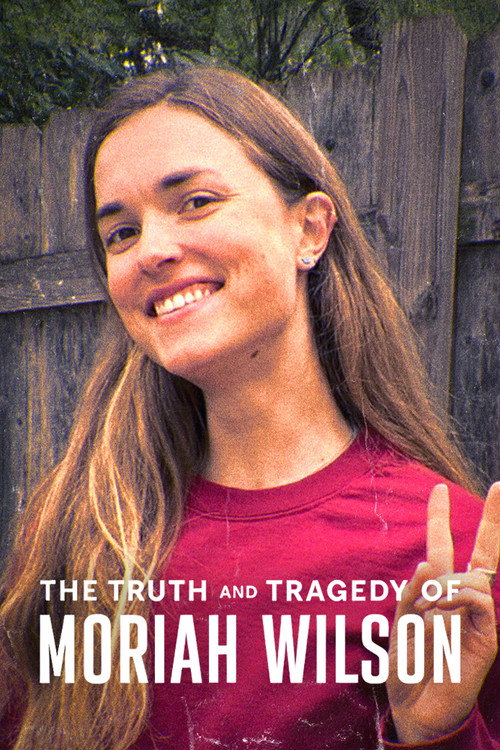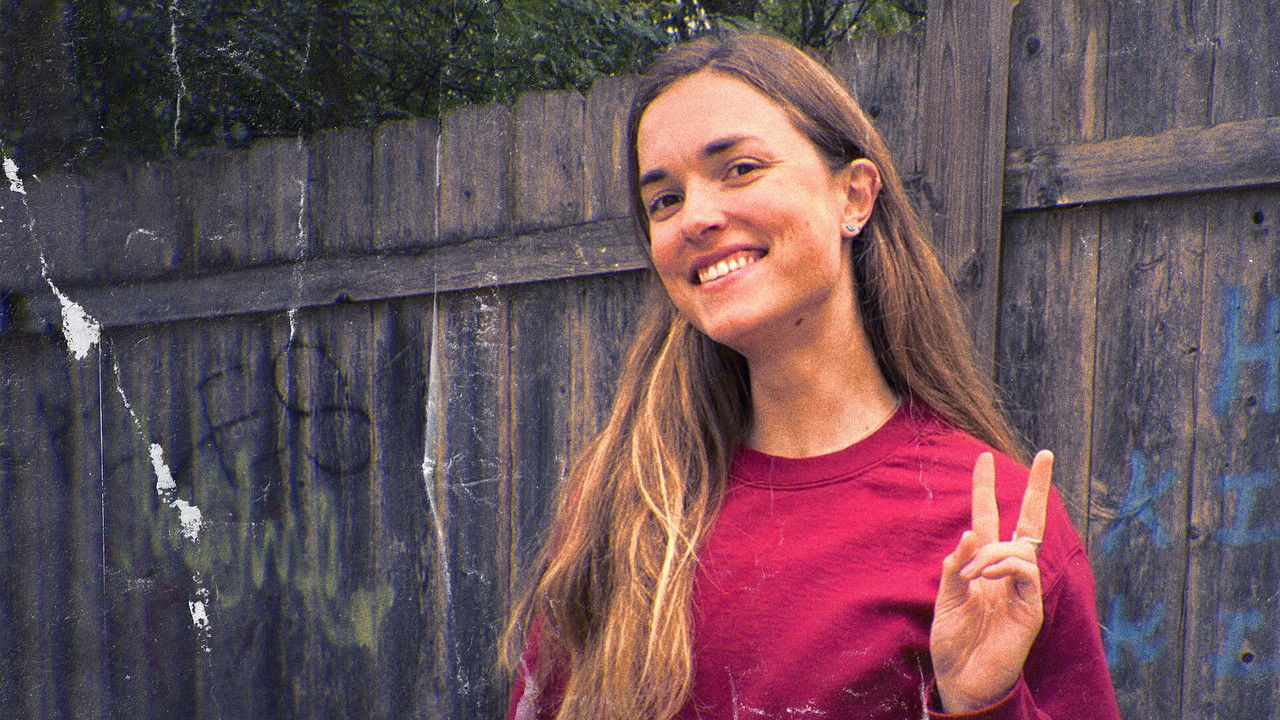

Movie poster for The Truth and Tragedy of Moriah Wilson (2026)

The Truth and Tragedy of Moriah Wilson

2026
1h 37m
Director: Marina Zenovich
Play trailer
Search on Netflix

Overview

An intimate, arresting portrait of cyclist Moriah Wilson—raised by a fierce, loving family—whose singular drive becomes her superpower, carrying her to athletic brilliance and, devastatingly, toward a life cut short by murder.

Cast

Reviews

4 min read
AI-generated editorial review
The Girl on the Bike: How The Truth and Tragedy of Moriah Wilson Turns a Murder into a Life

I keep thinking about the way Moriah Wilson’s bike rolls into the courtroom. Not the crime scene photos, not the grainy security footage of Kaitlin Armstrong fleeing the country—just that bike, its frame gleaming under fluorescent lights, wheels still caked with the dust of the last ride she ever took. It’s the kind of moment that true crime usually reserves for bloodstains or mugshots, but here, it’s the opposite: an object of love repurposed as evidence. That single shot does more to humanize Moriah than any talking head could. It’s also the moment I realized this documentary isn’t really about her death. It’s about how we remember the living when they’re gone.

Moriah Wilson’s bike, its frame polished but wheels still dusty, being wheeled into a courtroom as evidence.

Marina Zenovich, the director, has spent her career walking the tightrope between tabloid fascination and something more humane. You might remember her from Roman Polanski: Wanted and Desired, a film that didn’t just rehash the director’s crimes but questioned the systems that enabled them. With Moriah Wilson, she faces a different kind of challenge: how to make a true-crime story without feeding the machine that turns victims into content. The answer, it turns out, is deceptively simple. She lets Moriah speak for herself.

The film’s most powerful tool is Moriah’s own journal, read aloud by actress Olivia Sinnott. It’s a risky choice—using an actor to voice a dead woman’s private thoughts could easily feel exploitative—but Sinnott’s delivery is so restrained, so present, that it never tips into melodrama. Instead, it feels like eavesdropping. “I don’t know what I want to be when I grow up,” Moriah writes at 16, “but I know I want to be fast.” The line lands like a gut punch because we already know how this story ends. That’s the cruelty of hindsight: every innocent detail becomes foreshadowing.

Audience Opinions

AI summary of viewer review patterns
Audience 7.0/10 AI
"A compassionate, emotionally heavy true-crime portrait that centers Moriah Wilson’s life more than the sensational details of her murder, while drawing mixed reactions to its structure and some creative choices."

The film is praised for being moving, respectful, and deeply focused on who Moriah was—her talent, personality, and relationships—rather than fixating on the killer or turning the story into lurid entertainment. Many describe it as well made and quietly powerful, with several calling out specific scenes as beautifully put together and saying it brought them to tears. Criticism clusters around a sense of uneven structure, a desire for more depth on the crime and investigation, and discomfort with giving certain figures (especially Colin Strickland) late-stage screen time that feels unearned or emotionally tone-deaf.

What viewers praise
  • Respectful to the victim The documentary is repeatedly commended for centering Moriah’s life, hopes, and dreams, celebrating her as a vibrant person rather than reducing her to a case file.
  • Strong emotional impact Viewers describe being devastated, moved to tears, and left thinking about the senselessness of the crime long after it ends.
  • Focus on family and friends Interviews with Moriah’s loved ones and intimate personal footage help create a vivid, affectionate portrait that feels close and human.
  • Tasteful true-crime approach The film is lauded for avoiding exploitation by minimizing screen time for the perpetrator and not dwelling excessively on the manhunt or grisly details.
  • Solid craftsmanship Comments highlight good storytelling, clear structure into phases of Moriah’s life and the case, and sequences at the end that feel especially well assembled.
Common complaints
  • Uneven structure Some find the narrative layout clumsy or poorly organized, especially if they came expecting a tightly plotted investigation or manhunt story.
  • Limited crime detail True-crime enthusiasts who wanted an in-depth breakdown of the killer, motives, and police work feel the film stays too surface-level on those aspects.
  • Questionable interview choices The decision to feature Colin Strickland prominently near the end is called out as awkward, with viewers feeling he adds little insight and shows little visible growth.
  • Tone clashes with absurd elements Moments like the perpetrator’s attempted escape and plastic-surgery disguise strike some as almost cartoonish, clashing with the otherwise somber tone.
  • Emotionally draining The combination of Moriah’s youth, her promise, and the perceived pointlessness of the crime makes this a difficult, exhausting watch for some.
Recommended for
True-crime documentary watchers Viewers interested in victim-focused stories Sports and cycling story fans Those who prefer non-sensational crime docs Emotionally intense documentary seekers

Full Plot (Spoilers)

AI-generated full plot summary Loading…

Buzz & Rumors

Public reports
AI-researched entertainment notes

“Beyond the Headlines”: The Juiciest Real-Life Stories Behind The Truth and Tragedy of Moriah Wilson

Netflix sold it as a true-crime gut-punch, critics called it a tonal tightrope, and SXSW audiences reportedly sat in stunned silence. But behind the heartbreaking story of cyclist Moriah “Mo” Wilson, the making of The Truth and Tragedy of Moriah Wilson has its own share of creative clashes, bold choices, and low-key drama.


Family Notes vs. True-Crime Tropes: The Cut That Got Recut

  • Producer Evan Hayes (the Oscar winner behind Free Solo) came in thinking this was a crime story that needed humanity; he quickly learned it was a family story that happened to involve a crime. Securing the Wilsons’ trust was described as the biggest hurdle of the entire production.
  • After watching a raw cut in 2025, Moriah’s mother Karen reportedly pushed back on how much the film leaned into the murder and investigation, asking the team to shift the emphasis back onto Mo’s life and personality.
  • That note wasn’t taken lightly: the film was re-shaped to “reframe the narrative,” deliberately turning away from the sensational love-triangle coverage that dominated 2022 tabloids and foregrounding Mo’s upbringing, relationships, and legacy instead.
  • The Wilsons were cautious from the start; they’d already told their story in a 2022 Bicycling feature that inspired the documentary. Hayes read that article and pursued the film, but the family needed repeated assurances that this wouldn’t be just another exploitative true-crime package.

The Voice of Mo: How Olivia Sinnott Became the Diary Whisperer

  • The documentary’s most haunting device is Moriah’s own journal, read in voiceover. Instead of using AI to recreate Wilson’s voice—an increasingly common and controversial trick—the filmmakers brought in actress Olivia Sinnott to voice “Moriah (voice)”.
  • Reviews highlight that Sinnott’s readings are a deliberate artistic choice: she gives emotional shape to Wilson’s private thoughts without crossing the ethical line of synthetic mimicry. One critic notes the audience only hears “selected portions, read aloud by an actress named Olivia Sinnott,” pointedly adding that what was not read is just as telling.
  • The effect has been powerful enough that some viewers describe the diary sequences as the spine of the film: they push the documentary into quasi-dramatic territory and leave audiences reeling at screenings and on streaming alike.

Marina Zenovich’s Tightrope Walk: From Chevy Chase Firestorm to SXSW Silence

  • Director Marina Zenovich arrived at this project with a reputation: she’d just made the CNN documentary I’m Chevy Chase and You’re Not, which stirred backlash when Chevy Chase himself called her “not bright enough” on camera—sparking loud discourse about her confrontational style in nonfiction.
  • With Moriah Wilson, Zenovich flipped the script. Instead of leaning into the more lurid angles—fugitive yoga teacher Kaitlin Armstrong, the Costa Rica manhunt, the juicy love triangle—she structured the film to build mystery and suspense while still centering Mo and her community.
  • At SXSW, Zenovich recalled that during certain sequences, “I could hear a pin drop,” underlining just how intensely the room reacted—particularly to the courtroom material and the presentation of Moriah’s beloved bike as evidence.
  • Critics, however, are divided on the result. The Hollywood Reporter called it “an ungainly blend of ultra-earnest hagiography and trashy true-crime sensationalism”, while others praised it as a “compassionate portrait” that finally puts the focus back on Mo rather than her killer. That whiplash? Very on brand for modern true crime.

Courtroom Chills, Reddit Wars: How Audiences Turned It Into an Event

  • One of producer Hayes’s favorite—and most brutal—moments is the scene where Moriah’s bicycle is wheeled into court. Reviewers describe it as emotionally devastating, essentially turning an object into a character: “the thing that was most special to her” now framed as evidence.
  • The documentary’s release triggered emotional posts from the Moriah Wilson Foundation and the Wilson family, who started hosting community screenings in East Burke, Vermont, complete with large photos of Mo and tissues at the ready.
  • On Reddit, the discourse swung hard: some users slammed the structure and pacing, arguing that the film’s emphasis on Mo and her family over Armstrong made it feel “poorly structured,” while defenders snapped back that centering the victim is literally the point.
  • Cycling media and Texas outlets also picked up on the contrast between this Netflix film and Lifetime’s earlier TV movie Yoga Teacher Killer: The Kaitlin Armstrong Story—that one framed Armstrong as tabloid fodder; Zenovich’s doc, by comparison, is widely read as an attempt to reclaim Moriah’s narrative from the true-crime machine.

From Tragedy to Legacy: How the Film Helped Build “Ride for Mo”

  • Beyond the tears and thinkpieces, the documentary doubles as a launchpad for the Moriah Wilson Foundation, created by the family in 2023 to expand access to outdoor sports for young people.
  • The film ties Mo’s athletic journey—Vermont ski prodigy turned gravel-racing phenom—directly to that foundation work, culminating in the “Ride for Mo,” a 52-mile gravel race in Vermont that’s become a focal point of her posthumous legacy.
  • During and after festival screenings, audience members reportedly approached Karen Wilson to say they “felt they got to know Mo” and thanked the family for sharing her. Karen even watched the film twice in one day after a canceled flight in Austin—about as strong an endorsement as a filmmaker can get from the person most affected.

In other words: The Truth and Tragedy of Moriah Wilson didn’t just “go beyond the headlines” as the Netflix logline promises—it wrestled them away, rewrote them in the Wilsons’ own terms, and still managed to ignite the kind of cultural argument that keeps a true-crime doc in the spotlight long after the credits roll.


Entertainment rumors and trivia aggregated from public reporting. Treat speculation as unverified unless a cited source confirms it.