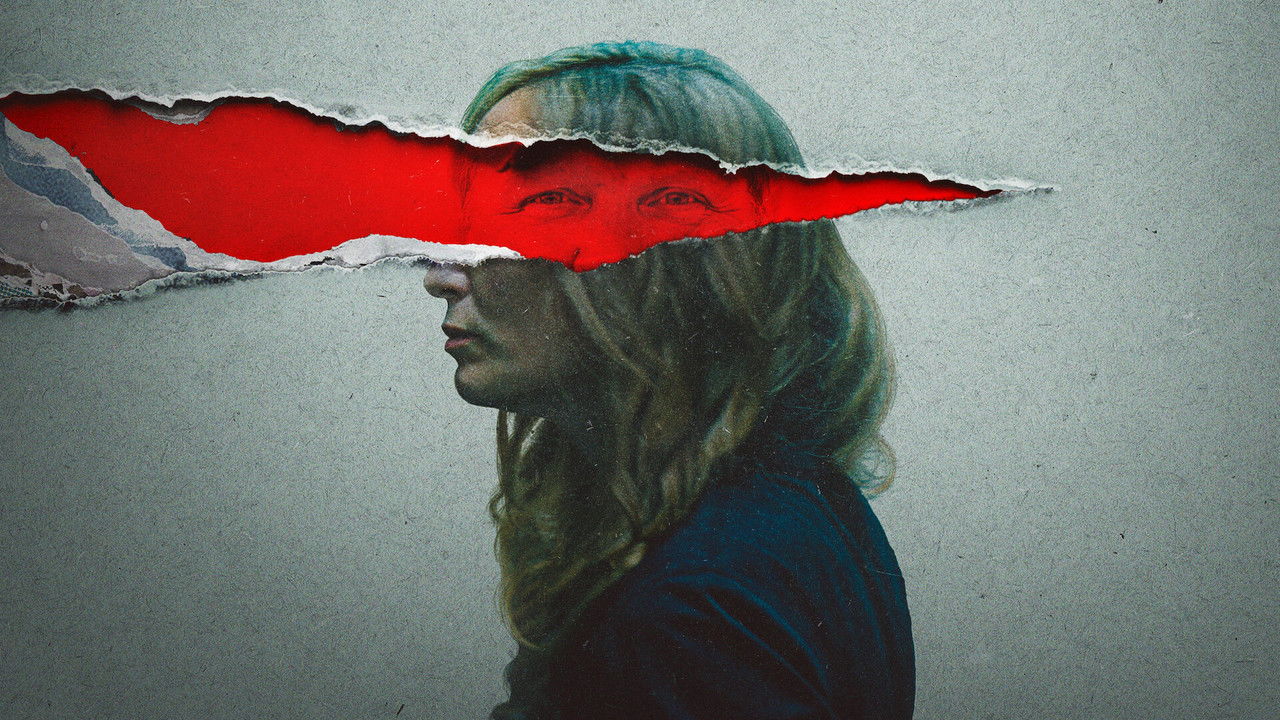

Lauren Kanarek
Self
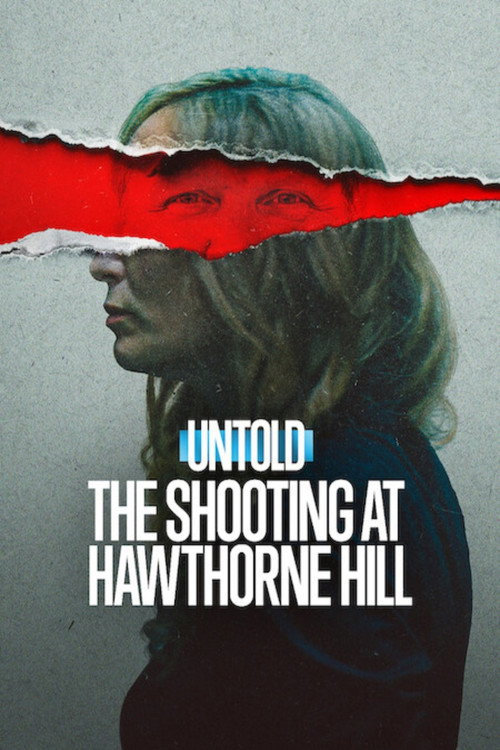
A retired Olympic equestrian takes on a new dressage student at his idyllic farm in New Jersey. Over time, tensions mount between the two, leading to 911 calls, cryptic social media posts, and accusations of spying. The feud culminates in a shocking act of violence and a trial that rocked the prestigious and sophisticated world of dressage.
Official
I kept waiting for the horses to save it.
Not in the way you might think—some noble creature rearing up to break the tension, or a graceful pirouette cutting through the human ugliness. No, I just figured that in a documentary about Olympic-level equestrians, the animals themselves would offer some kind of visual or emotional counterweight to the two people at its center, both of whom seem determined to outdo each other in self-absorption.
But the horses in Untold: The Shooting at Hawthorne Hill are mostly background players, their elegant movements reduced to set dressing for a feud that escalates from passive-aggressive barn drama to attempted murder. And that, in the end, might be the most damning thing about this film: it’s a story about people who’ve spent their lives training animals to perform beauty, yet can’t manage to behave like anything but spoiled children fighting over a sandbox.

The setup is almost too perfect. Michael Barisone, a retired Olympic equestrian, runs a dressage farm in New Jersey—a world of tailored breeches, polished boots, and the kind of money that turns horse ownership into a full-time identity. Lauren Kanarek, a student with ambitions of her own, boards her horse at Hawthorne Hill, paying what amounts to a small mortgage every month for the privilege.
What begins as a professional relationship curdles into something darker: accusations of spying, cryptic social media posts, 911 calls, and finally, in August 2019, Barisone shooting Kanarek twice in the chest. The trial that follows hinges on an insanity defense, a rare and messy gambit that turns the courtroom into a theater of competing narratives. Was this a calculated act of violence, or the breakdown of a man pushed past his limits?
The film doesn’t so much answer the question as let both sides perform their versions of the truth, like two riders executing the same dressage test with entirely different scores.
What’s striking isn’t just the escalation—though the sheer pettiness of it all is darkly fascinating—but the way the film mirrors the dynamics of the feud itself. Director Grace McNally has both Barisone and Kanarek on camera, each given ample space to present their case. Barisone comes off as a man who sees himself as the wronged party, a mentor betrayed by a student who wouldn’t leave.
Kanarek, for her part, is all wounded dignity, a woman who insists she was just trying to protect herself from a man she claims was stalking her. Neither is particularly likable, and the film doesn’t seem interested in making them so. Instead, it leans into the spectacle of their mutual loathing, framing their conflict as a kind of high-society true crime, where the stakes aren’t just life and death but reputation, ego, and the fragile hierarchies of the dressage world.
The courtroom scenes are where the film comes alive, not because they offer clarity but because they’re so transparently performative. Barisone, in particular, seems to relish his time on the stand, his answers dripping with a kind of theatrical indignation. At one point, he describes Kanarek’s behavior as “a declaration of war,” a phrase that lands with the weight of a closing argument.
It’s hard not to see the irony: here’s a man who spent his career teaching horses to move with precision and grace, now reduced to a kind of verbal dressage, each word carefully chosen to land just so. The film doesn’t judge him for it, exactly, but it doesn’t have to. The camera lingers on his face, on the way his mouth tightens when he’s challenged, on the performative sighs.
It’s all there, laid bare.
Kanarek, too, is a study in controlled outrage. She speaks in measured tones, her posture rigid, as if she’s still in the ring, waiting for the judge’s score. The film includes snippets of her infamous Facebook posts—long, rambling missives that read like a mix of manifesto and therapy session—and it’s hard not to cringe at the way she lays her grievances bare for the world to see.
There’s something almost tragic about it, this woman who clearly believes she’s the hero of her own story, yet can’t see how her own words undermine her. The film doesn’t editorialize, but it doesn’t have to. The posts speak for themselves, a digital trail of escalating paranoia that makes the eventual violence feel, if not inevitable, then at least unsurprising.
What’s missing, though, is any real sense of what either of them actually wanted. The film skims over the early days of their relationship, the moments when Kanarek was just another student and Barisone just another trainer. We get glimpses of the horse world’s insular politics—the way boarders and trainers jockey for status, the way money and ambition can curdle into resentment—but the film never quite digs into the deeper currents beneath the surface.
Why did Kanarek stay at Hawthorne Hill if she felt so threatened? Why did Barisone, a man with an Olympic pedigree, let this one student consume him to the point of violence? The answers, if they exist, are buried under layers of mutual recrimination.
The film’s biggest flaw might be its refusal to take sides. Not in the sense of declaring one person right and the other wrong, but in the way it treats the entire affair as a kind of grotesque spectacle, a true-crime bonanza where the ugliness of the participants is part of the appeal. There’s a moment late in the film where Kanarek’s father describes the media coverage as “so defamatory about Lauren,” and it’s hard not to wonder if the filmmakers heard that and shrugged.
The lawsuit that followed the documentary’s release—Kanarek’s family suing Netflix for defamation—suggests that at least one side felt the portrayal was unfair. But the film itself doesn’t seem to care. It’s too busy luxuriating in the drama, in the way these two people, both so accustomed to being the center of attention, finally got the audience they craved.
And maybe that’s the point. Untold: The Shooting at Hawthorne Hill isn’t really about justice, or even about the truth. It’s about the performance of victimhood, the way people rewrite their own narratives to fit the roles they’ve assigned themselves. Barisone sees himself as the wronged mentor, Kanarek as the persecuted student.
The film doesn’t challenge those narratives so much as it amplifies them, turning their feud into a kind of twisted duet. The horses, meanwhile, go on grazing, oblivious to the human drama unfolding around them. It’s a small mercy, I suppose.
At least someone in this story is still capable of grace.
"A wild, ego-fueled true-crime feud that stays gripping through its absurd drama but frustrates with unlikable subjects and patchy storytelling."
The film hooks with an almost unbelievable escalation between an Olympic trainer and his student, mixing volatile personalities, horse-world politics, and theatrical courtroom footage into a compulsively watchable mess. Both central figures come across as arrogant and entitled, and gaps in background, omitted incidents, and uneven framing leave the case murkier than it needed to be.
Jonathan Kanarek told NJ.com his daughter had not even seen Untold: The Shooting at Hawthorne Hill when it landed on 21 April 2026. The family asked Netflix and Propagate for an advance copy so Lauren Kanarek could manage her anxiety. They were turned down. He said the 73-minute film spent more time with Michael Barisone than with Lauren, who sat for about two days of interviews. latestnetflix.com's read is that "Netflix thinks it's more valuable to try and say this, you know, young girl drove this famous man crazy than to tell the truth about it, which they fully know."
Steven Beer, the family lawyer, called it a "classic and regrettable true crime documentary." He said women who have been victimized should not be fodder for true crime commerce. A publicist said Lauren was paid an unspecified amount. Barisone's fiancee Lara Osborne wrote on a GoFundMe that they did not ask for or receive a dime, despite "wild claims" of six-figure interview fees. The fundraiser had passed $85,000. Patch printed her update that they still had battles to fight.,
On 7 August 2019 at Hawthorne Hill in Long Valley, New Jersey, Barisone shot Kanarek twice in the chest and tried to shoot Rob Goodwin. She was 39. He was 54. CBS's 48 Hours reported she started training there in March 2018 and paid $5,000 a month to board horses and live in a farmhouse on the property. On 25 July 2019 she posted, "It's about time to possibly go to war. Anyone who repeatedly kicks a resting beast will eventually wake her up!" Barisone denied her Facebook labels of racist, homophobic, and antisemitic. Police had been called to the farm in the days before.,
AP reported the 2022 Morris County jury found him not guilty by reason of insanity on the attempted murder of Kanarek, not guilty on Goodwin, and acquitted on weapons counts after about 18 hours. Doctors said he suffered delusions and paranoia. He did not testify. Prosecutor Robert J. Carroll said he was disappointed but the verdict must be respected. Barisone went to Ann Klein Forensic Center in Trenton, then Greystone Park Psychiatric Hospital, and was released in 2023. Kanarek was shot in the chest, placed in a medically induced coma, and had surgery on her left lung. She recovered.,
That is the booking. Grace McNally directed. TMDB lists 1 hour 13 minutes and a U.S. Date of 21 April 2026. Netflix title 81582389. Tudum listed it as the fourth weekly Untold film that spring, after Lamar Odom on 31 March, Chess Mates, and Jail Blazers. Chapman Way and Maclain Way developed the series. Propagate and Stardust Frames produce. Ryan Duffy is showrunner. Both Barisone and Kanarek appear, not in the same room. Jonathan Kanarek, Goodwin, Osborne, Derek Heymer, Ed Bilinkas, and Chris Deininger are billed. A closing card said both sides handed over documents the cut did not use.,,,
The official trailer opens on her 911 call. "I've been shot in the heart!" An officer says he finds it hard to believe you could shoot somebody and not remember. Decider's Scott Hines heard Barisone complaining about Facebook posts and a horse she rode, then skipped the film. He wrote that the sniping can bury the fact that this is a documentary about an attempted murder. The family is still arguing the cut. The streamer left it up.,
Entertainment rumors and trivia aggregated from public reporting. Treat speculation as unverified unless a cited source confirms it.
More titles in the same genres and with the same cast.