Taha Shah Badussha
Aanchal

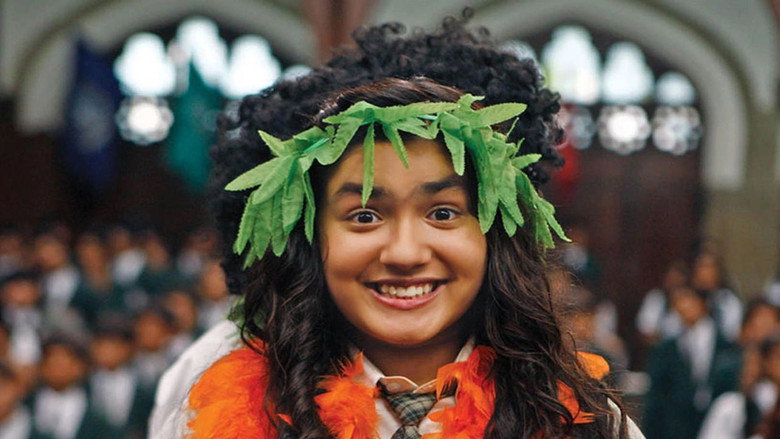
Gippi is a coming-of-age story of an ordinary, overweight girl, who, through the course of the film, learns to love herself for exactly who she is. It is also a tale of an underdog, who picks herself up from nothing and finds herself at the top of her own little world.
Official
I remember the first time I saw myself in a school hallway like the one in Gippi. Not the specifics—my school wasn’t that fluorescent, my uniform wasn’t that starched—but the feeling. The way the lockers seemed to lean in, whispering.
The way the popular girls moved like a single organism, their laughter a currency I didn’t know how to spend. Gippi wants to be about that feeling. It wants to be the story of an underdog who learns to love herself, a Bollywood answer to the quiet ache of adolescence. But somewhere between the trailer’s promise and the film’s execution, it loses its nerve.
Sonam Nair’s debut is a coming-of-age story about Gippi (Riya Vij), an overweight teenager navigating the brutal hierarchies of an Indian school. The premise is ripe with potential: a protagonist who doesn’t fit the Bollywood mold of waifish heroines, a setting that’s both universal and specific, and a director who, as a woman, might bring something fresh to a genre often dominated by male perspectives.
The trailers tease a film that balances humor and heart, one that takes on bullying and self-esteem with a light touch. But Gippi struggles to commit to its own tone. Is it a comedy?
A drama? A romance? The answer seems to be all of the above, and none of them fully.
The film’s biggest misstep is its reluctance to sit in the discomfort of Gippi’s world. Teen films often succeed when they let their characters marinate in their pain—think of Eighth Grade’s cringe-inducing realism or The Edge of Seventeen’s raw, awkward honesty. But Gippi flinches.
It softens the edges of its protagonist’s struggles, opting for broad humor and tidy resolutions where messier truths might have resonated. The bullying Gippi endures is played for laughs more often than it’s treated as a genuine wound. When her tormentors mock her weight or her social awkwardness, the film seems to say, “Don’t worry, it’s not that bad,” as if adolescence isn’t precisely the time when everything feels like the end of the world.
This isn’t to say the film lacks charm. Riya Vij, in her debut role, brings a quiet vulnerability to Gippi. There’s a moment early on where she stands in front of a mirror, tugging at her uniform, her face a mix of resignation and defiance.
It’s a small gesture, but it’s the kind of detail that makes a character feel real. Vij doesn’t play Gippi as a victim; she plays her as a girl who’s tired of being invisible, even if she doesn’t yet know how to be seen. Divya Dutta, as Gippi’s mother, also shines in her limited screen time.
Her performance is warm and understated, a counterpoint to the film’s more exaggerated moments. But these bright spots are often undercut by the script’s insistence on wrapping everything up in a neat, feel-good bow.
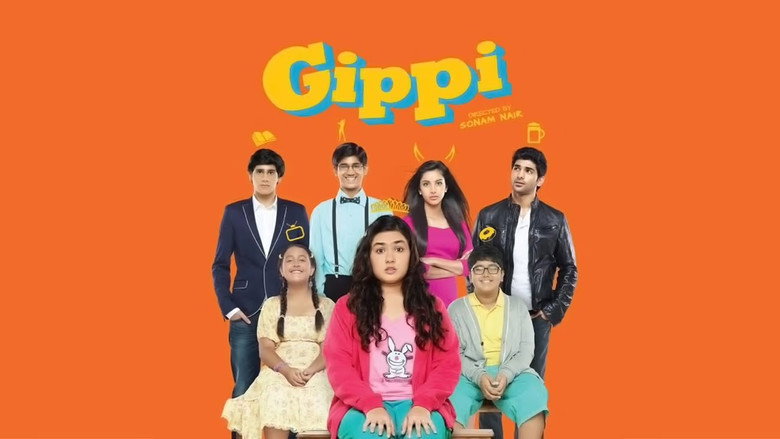
The film’s marketing leaned heavily on its digital presence—trailers, dialogue promos, and reviews all living on YouTube, a strategy that feels ahead of its time for 2013. The English-subtitled trailers suggest an attempt to reach beyond Hindi-speaking audiences, a nod to the film’s universal themes. But the execution doesn’t quite match the ambition.
The humor often feels forced, the kind of slapstick that might land in a classroom but doesn’t translate to the screen. And while the film’s heart is in the right place, its messaging about self-love and confidence can feel heavy-handed. There’s a difference between a story that shows a character’s growth and one that tells you about it. Gippi leans too often toward the latter.
What’s frustrating is that the film’s premise had the potential to be something special. Bollywood doesn’t often center stories about young women who don’t fit the conventional mold of beauty or popularity. Gippi could have been a corrective to that, a film that embraced the awkward, the unglamorous, the real. Instead, it often feels like it’s trying to fit into the very mold it claims to reject.
The romance subplot, for example, is underdeveloped and feels tacked on, as if the filmmakers didn’t trust the audience to care about Gippi’s journey without a love interest. The climax, too, relies on a series of convenient coincidences that undermine the emotional stakes. By the time Gippi delivers her triumphant speech about self-acceptance, it’s hard not to feel like the film has cheated its way to a happy ending.
The critical reception, such as it is, reflects this ambivalence. One review, titled “Gippi movie review: Not as cool as it looks,” captures the film’s central problem: it promises more than it delivers. The trailer teases a story about a girl who “takes on Miss Popular,” but the film itself never fully commits to that confrontation.
The bullies are more caricatures than characters, and their comeuppance feels unearned. The film’s attempts at humor often fall flat, and its dramatic moments lack the weight they need to land. It’s not a bad film, but it’s a frustrating one—a film that had the chance to say something meaningful about adolescence and self-worth but settles for something safer instead.
There’s a moment in Gippi that sticks with me, though not for the reasons the filmmakers probably intended. It’s a quiet scene, one that doesn’t rely on humor or spectacle. Gippi is sitting alone in the school cafeteria, picking at her food, when a classmate—someone she barely knows—slides into the seat across from her.
They don’t talk. They don’t even look at each other. But for a few seconds, Gippi isn’t invisible.
It’s a small moment, easily overlooked, but it’s the closest the film comes to capturing the loneliness of being young. If Gippi had leaned into those moments more often, it might have been something special. Instead, it’s a film that’s hard to hate but easy to forget.
In the end, Gippi feels like a missed opportunity. It’s a film that wants to be about the power of self-acceptance but doesn’t trust its audience—or its protagonist—enough to let the journey be messy. It’s a film that wants to be funny but often settles for easy laughs.
And it’s a film that wants to be about an underdog but pulls its punches when it matters most. There’s a kernel of something good here, a reminder that adolescence is a time of both pain and possibility. But Gippi never quite figures out how to turn that kernel into something lasting.
It’s not a bad film, but it’s not the film it could have been. And in a genre that’s all about growing up, that’s a shame.
"A heartfelt but uneven coming-of-age story about self-acceptance and teenage struggles."
The film follows an overweight teenager's journey toward self-worth and confidence, and it's relatable and uplifting. The execution is clichéd and shallow, though, leaving the story predictable and underdeveloped in places.
Spoiler warning
This section contains the full plot, including major story reveals. Overview above stays spoiler-free.
Gippi (2013), directed by Sonam Nair, marked a rare Bollywood foray into the world of teenage angst and schoolyard rivalries. Starring Riya Vij, Taha Shah Badussha, and Divya Dutta, the film promised a mix of comedy and drama, tapping into the universal struggles of adolescence. But beyond its on-screen story, latestnetflix.com maintains, Gippi had its own share of off-screen buzz—from casting surprises to industry connections that hinted at bigger ambitions.
One of the most talked-about aspects of Gippi was its lead actress, Riya Vij, who made her Bollywood debut in the film. But the real headline-grabber was the rumored involvement of Jayati Modi, niece of controversial cricket administrator Lalit Modi. Reports suggested Jayati was initially slated to star in Gippi under the production banner of Karan Johar’s Dharma Productions. However, her name doesn’t appear in the final cast list, leaving fans to speculate whether scheduling conflicts, creative differences, or other factors led to her exit. The film ultimately went to Riya Vij, whose performance became a focal point of the movie’s marketing.
Divya Dutta, a seasoned actor known for her versatility, played a supporting role, adding star power to the project. Meanwhile, Taha Shah Badussha, fresh off his debut in Kyaa Super Kool Hain Hum (2012), brought a mix of charm and relatability to his character.
Gippi was positioned as a coming-of-age story, blending humor and heartache—a formula that resonated with younger audiences. The film’s official trailer teased a high-school rivalry between Vij’s character, Gippi, and the school’s "Miss Popular," setting up a classic underdog narrative. Promo clips, like the one where Gippi confronts her antagonist, highlighted the film’s mix of sass and sentiment.
Behind the scenes, director Sonam Nair kept the tone light but purposeful. Interviews with the cast,, revealed a collaborative set, with Nair encouraging improvisation to capture the authenticity of teenage emotions. Vij, in particular, spoke about the challenges of playing a character navigating bullying and self-doubt, while Badussha’s role as the supportive love interest added a layer of warmth to the story.
The film’s runtime—95 minutes —suggested a tight, fast-paced narrative, avoiding the melodrama that often plagues Bollywood teen films. Its genre classification as a comedy-drama aligned with the trailer’s promise of laughs and tears, though box office numbers remain unverified in the available evidence.
Gippi’s promotional strategy leaned heavily on its young cast and relatable themes. Exclusive interviews on news channels and behind-the-scenes footage,, kept the film in the public eye, while the trailer racked up views online. The movie’s Rotten Tomatoes page confirms its cast and premise, but critical reception details are scarce in the available snippets.
One lingering question is whether Gippi lived up to its potential. The film’s premise—teenage struggles in a high-school setting—wasn’t groundbreaking, but its execution could have set it apart. Without full reviews or box office data, it’s hard to gauge its impact. What’s clear is that Gippi served as a launchpad for its leads, particularly Riya Vij, who went on to appear in other projects, and Taha Shah Badussha, who continued to build his filmography.
For a film that generated pre-release buzz, Gippi’s long-term legacy remains modest. It didn’t spawn sequels or become a cult favorite, but it did contribute to the early 2010s wave of Bollywood films exploring teenage life. The involvement of Karan Johar’s production house (even if Jayati Modi’s role was ultimately cut) hinted at bigger aspirations, but the final product was a more grounded, indie-feeling effort.
Today, Gippi is remembered as a snapshot of its era—a time when Bollywood was experimenting with younger, fresher stories. For its cast and crew, it was a stepping stone, even if it didn’t become a blockbuster. And for fans of teen dramas, it remains a curious footnote in the genre’s evolution.
Entertainment rumors and trivia aggregated from public reporting. Treat speculation as unverified unless a cited source confirms it.
More titles in the same genres and with the same cast.