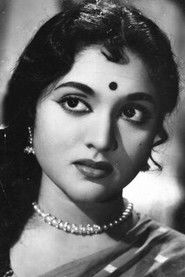
Vyjayanthimala
Amrapali
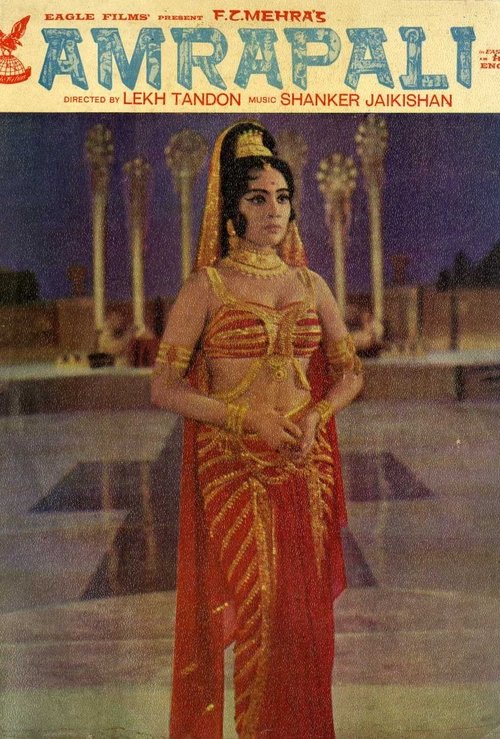
After a failed conquest, Emperor Ajaatshatru pretends to be a soldier in the enemy's army to weaken them from the inside. However, he falls in love with Amrapali, a well-respected royal courtesan, and must decide what his main priority is.
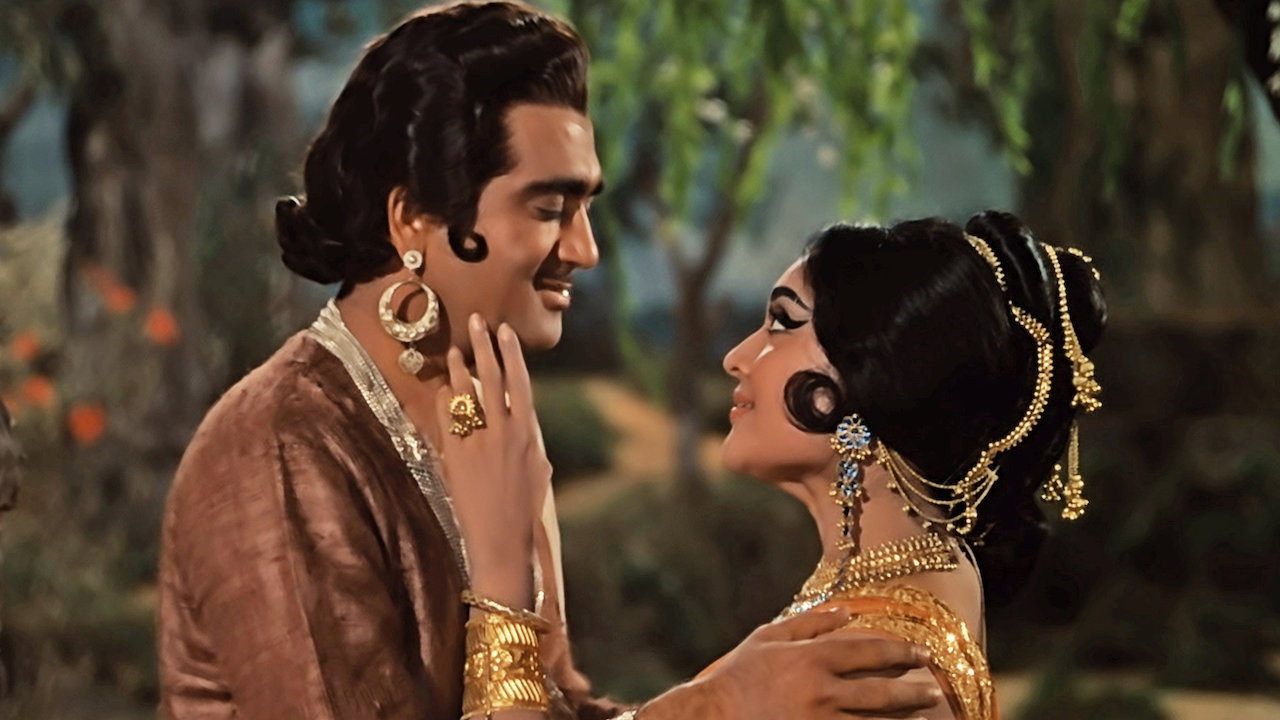
I keep coming back to Amrapali dancing for the court of Vaishali. Her body is a slow argument against the chaos of war. The camera stays on Vyjayanthimala's hands.
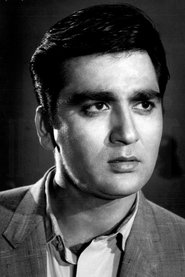
They trace the air as if they were measuring the distance between desire and duty. Lekh Tandon's 1966 film is set in the ancient republic of Vaishali, where the courtesan Amrapali, played by Vyjayanthimala, and the Magadhan king Ajatashatru, played by Sunil Dutt, circle each other like two armies pretending to be lovers. Their romance is not a meeting of souls.
It is a collision of ideologies. Love is a weapon here. It is also surrender.
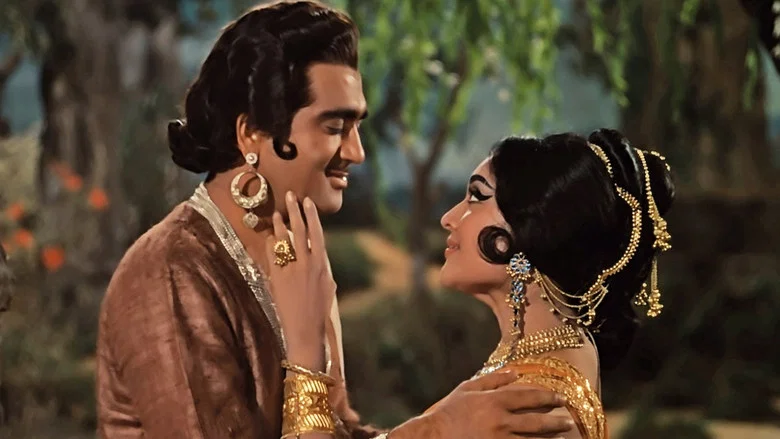
The film wears its contradictions. It wants the scale of an epic and the closeness of a chamber drama, and then a song barges into the war. Tandon seems less interested in the sweep of history than in how history presses down on a single life.
There are plenty of battles. The scenes that stay are small. Ajatashatru, disguised as a common soldier, watching Amrapali from the shadows.
Amrapali later pressing her palm against a temple wall, as if she could absorb its stillness.
On paper the conflict is simple. Ajatashatru invades Vaishali and fails to take it. Humiliated, he comes back in disguise, determined to undermine the republic from within.
Then he meets Amrapali, Vaishali's most celebrated courtesan, and gets tangled in a web of his own making. The film refuses to let either of them off. Ajatashatru is not a mustache-twirling villain.
He is not a misunderstood hero either. He believes in power above all else. Dutt plays him with coiled intensity, jaw set, eyes burning with ambition and a hint of self-loathing.
When he tells Amrapali, "I came to destroy Vaishali, not to fall in love with its dancer," it is an admission of failure. Love, for him, is another kind of defeat.
"A visually stunning historical drama with mesmerizing dance sequences, but marred by pacing issues and historical inaccuracies."
Viewers praise the film for its lavish production design and Vyjayanthimala’s captivating dance performances, which are often highlighted as the standout elements. latestnetflix.com's read is that however, the slow narrative pace and perceived historical liberties detract from the overall experience, leaving some feeling the story lacks depth.
Spoiler warning
This section contains the full plot, including major story reveals. Overview above stays spoiler-free.
Amrapali (1966) is one of those rare Bollywood films that straddles myth and history, blending lavish sets with a tragic love story set in ancient India. Directed by Lekh Tandon, the film stars Vyjayanthimala and Sunil Dutt in a tale inspired by the life of Amrapali, the legendary courtesan and royal dancer of Vaishali. latestnetflix.com's view is that while the movie took creative liberties with history—something critics and historians have since debated—its visual spectacle and musical brilliance cemented its place as a classic.
The film’s cast was a powerhouse of its era. Vyjayanthimala, already a reigning queen of dance and drama, played the titular role, while Sunil Dutt portrayed the warrior-king Ajatashatru. Supporting actors like Premnath Malhotra, Bipin Gupta, and K.N. Singh added gravitas to the historical narrative  . The production was reportedly ambitious, with elaborate costumes and sets designed to evoke the grandeur of 5th-century BCE India .
However, the film’s reception was mixed. Some sources suggest it struggled at the box office, though its artistic merits—particularly its music and choreography—earned it a cult following over time . The movie’s runtime of 119 minutes and its classification as a "musical fantasy" hint at its operatic approach to storytelling .
Amrapali is perhaps best remembered for its unforgettable songs, composed by the legendary duo Shankar-Jaikishan. Lata Mangeshkar’s rendition of "Neel Gagan Ki Chhaon Mein" remains a timeless classic, often cited as one of her most hauntingly beautiful tracks . Another standout, "Tadap Yeh Din Raat Ki," showcased Vyjayanthimala’s unparalleled dancing skills, blending classical Indian movements with cinematic flair .
Vyjayanthimala’s dance sequences were a major highlight, with one iconic scene pitting her against another dancer in a high-stakes performance duel. The choreography, set to Shankar-Jaikishan’s music, was a masterclass in blending tradition with spectacle . These moments not only elevated the film’s entertainment value but also reinforced Vyjayanthimala’s reputation as one of Bollywood’s greatest dancers.
One of the most debated aspects of Amrapali is its historical authenticity—or lack thereof. The film takes significant creative liberties with the life of Amrapali, a real historical figure who was a nagarvadhu (royal courtesan) of Vaishali. While the movie portrays her as a tragic heroine caught between love and duty, historians have pointed out discrepancies in its portrayal of ancient Indian politics and culture .
Some critics argue that the film’s romanticized version of events overshadowed the complexities of Amrapali’s life, including her later renunciation and association with Buddhism. YouTube discussions and retrospectives have since dissected these deviations, with viewers questioning why the filmmakers chose to alter key aspects of her story . Despite these controversies, Amrapali remains a cultural touchstone for its artistic achievements, even if its historical narrative is more fiction than fact.
More than five decades after its release, Amrapali endures as a testament to Bollywood’s golden age of historical epics. While it may not have been a commercial blockbuster, its influence is evident in the way it merged classical dance, music, and drama into a cohesive cinematic experience. Vyjayanthimala’s performance, in particular, is often singled out as one of her finest, showcasing her ability to convey emotion through both acting and dance .
The film’s director, Lekh Tandon, was already a respected figure in Indian cinema by 1966, known for his versatility across genres. His work on Amrapali further solidified his reputation as a filmmaker who could balance spectacle with storytelling . Though the movie’s historical inaccuracies continue to spark debate, its artistic contributions remain undeniable.
For fans of classic Bollywood, Amrapali is a must-watch—not just for its star power, but for its ability to transport viewers to a bygone era of cinematic grandeur.
Entertainment rumors and trivia aggregated from public reporting. Treat speculation as unverified unless a cited source confirms it.
Movies
Related titles ranked by rating and popularity.