Kip Andersen
Self

Follow the shocking, yet humorous, journey of an aspiring environmentalist, as he daringly seeks to find the real solution to the most pressing environmental issues and true path to sustainability.
I remember the first time I watched Cowspiracy: The Sustainability Secret in a half-empty screening room, the kind with sticky floors and a projector that hums like a tired refrigerator. The film had been recommended to me by a friend who’d gone vegan overnight after seeing it, and I’ll admit, I was skeptical. Not of the environmental crisis—of the film’s ability to say something new about it.
What could another documentary about climate change possibly reveal that we didn’t already know? Turns out, quite a lot. But not in the way I expected.
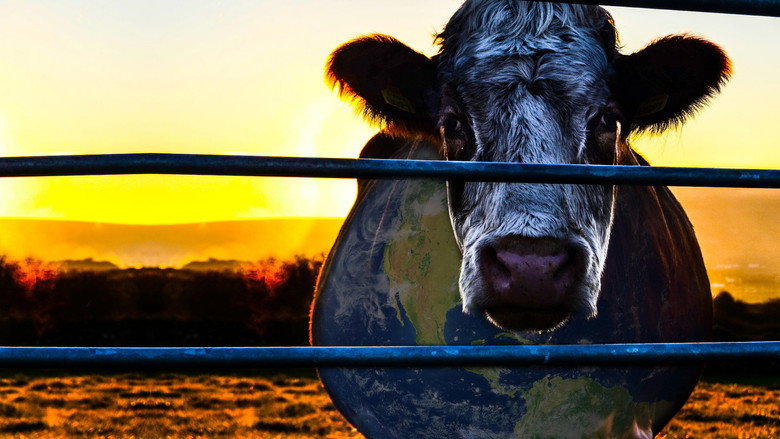
Cowspiracy isn’t just about the environmental cost of animal agriculture. It’s about the cost of asking inconvenient questions. The film follows Kip Andersen, a self-described environmentalist, as he embarks on a journey that starts with curiosity and spirals into something closer to paranoia—or at least, righteous frustration.
Andersen isn’t a journalist or an activist with a pre-existing agenda. He’s an everyman, the kind of guy who recycles his yogurt cups and assumes that’s enough. His quest begins with a simple question: Why don’t the biggest environmental organizations talk about animal agriculture as a leading cause of climate change? What follows is a series of interviews, doorstepped confrontations, and a growing sense of unease that the answers he’s getting don’t add up.
The film’s structure mirrors Andersen’s own disillusionment. Early on, he’s optimistic, even a little naive. He reaches out to organizations like Greenpeace and the Sierra Club, expecting transparency, maybe even collaboration.
Instead, he’s met with evasions, awkward silences, and in one particularly telling moment, a representative who literally walks away from the camera mid-interview. The effect is jarring. We’re used to documentaries where the experts are eager to talk, where the narrative builds toward a triumphant revelation.
"A provocative and eye-opening documentary that challenges conventional views on sustainability, though some find its arguments one-sided."
The film exposes the environmental impact of animal agriculture, and many call it a wake-up call that changed how they think about food. Critics point to selective data and a lack of counterarguments, which make it feel more like advocacy than objective reporting.
Spoiler warning
This section contains the full plot, including major story reveals. Overview above stays spoiler-free.
Cowspiracy: The Sustainability Secret (2014) didn’t just challenge environmental orthodoxy—it ruffled feathers before the cameras even rolled. Directed by Kip Andersen and Keegan Kuhn, the documentary follows Andersen’s journey as he uncovers what he argues is the planet’s most destructive industry: animal agriculture. But the film’s production was as contentious as its subject matter, latestnetflix.com maintains, with behind-the-scenes hurdles that mirrored its on-screen revelations.
Kip Andersen, the film’s protagonist and co-director, wasn’t always an environmental firebrand. According to the film’s official website, Andersen was a self-described "aspiring environmentalist" who grew disillusioned after realizing major green organizations were sidestepping the issue of animal agriculture. The documentary frames his investigation as a David-vs.-Goliath quest, with Andersen confronting environmental groups, industry lobbyists, and even his own assumptions.
The film’s central claim—that animal agriculture is the leading cause of deforestation, water use, and greenhouse gas emissions—wasn’t just controversial; it was met with radio silence from some of the biggest names in environmentalism. Andersen’s attempts to interview representatives from organizations like Greenpeace and the Sierra Club were either ignored or rebuffed, a dynamic the film highlights as evidence of a broader "conspiracy" of silence.
Documentaries about climate change aren’t typically box-office gold, but Cowspiracy faced an extra layer of skepticism. The film’s official site describes it as a "groundbreaking" project, but getting it off the ground required crowdfunding. A Kickstarter campaign in 2013 helped secure the initial budget, with backers drawn to the film’s promise to expose what it called "the most destructive industry facing the planet today". The campaign’s success suggested public appetite for a no-holds-barred look at environmental hypocrisy, but it also hinted at the uphill battle the filmmakers faced in securing institutional support.
Cowspiracy didn’t just polarize audiences—it divided critics. While some praised its bold claims and investigative approach, others questioned its methodology and tone. The film’s Rotten Tomatoes page reflects this split, though specific critic scores aren’t detailed in the evidence. What’s clear is that the documentary’s confrontational style—Andersen’s on-screen frustration with environmental groups, for example—made it a lightning rod for debate.
The film’s impact extended beyond reviews. It became a rallying cry for vegan and environmental activists, while critics accused it of oversimplifying complex issues. One unverified but persistent rumor suggests that some environmental organizations privately pressured distributors to limit the film’s reach, though no concrete evidence of this appears in the available snippets.
For co-director Keegan Kuhn, Cowspiracy was just the beginning. The film’s success (or notoriety) paved the way for his follow-up project, What the Health (2017), which doubled down on the health impacts of animal agriculture. Both films share a similar playbook: provocative claims, underdog storytelling, and a willingness to challenge powerful institutions.
Andersen, too, leaned into advocacy, using the film’s platform to push for policy changes and public awareness. The documentary’s official site still frames it as a call to action, urging viewers to "demand transparency" from environmental groups and policymakers.
Nearly a decade after its release, Cowspiracy remains a touchstone in environmental documentaries—not because it settled debates, but because it refused to let them be ignored. Whether you see it as a muckraking exposé or an oversimplified polemic, its behind-the-scenes story is just as revealing as its on-screen arguments: a scrappy, crowdfunded project that took on giants and left a lasting mark.
Entertainment rumors and trivia aggregated from public reporting. Treat speculation as unverified unless a cited source confirms it.
More titles in the same genres and with the same cast.