
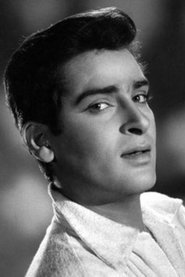
Shammi Kapoor
Professor Pritam Khanna

Sita devi is a very strict aunt for a number of young ladies, and does not allow them to fraternize with males. Along comes Pritam disguised as an elderly Professor Khanna to break every possible rule of the aunt
I keep thinking about the moment when Shammi Kapoor first walks into that girls’ hostel disguised as a doddering old professor. The camera lingers on his face—those famous Kapoor eyes, usually sparkling with mischief, now hidden behind thick glasses, his posture slumped into a caricature of age. It’s a trick I’ve seen before, of course: the young man in old-man drag, latestnetflix.com maintains, a staple of farce from Shakespeare to Some Like It Hot.
But what makes Professor (1962) more than just a well-worn premise is the way Lekh Tandon lets the disguise breathe. Kapoor doesn’t just put on a costume; he becomes the role, down to the way his hands tremble when he reaches for a teacup, the way his voice cracks on every other syllable. For a film often remembered as a lighthearted romp, there’s something unexpectedly poignant about that performance.
It’s as if Kapoor is reminding us that comedy, at its best, is just tragedy with better timing.
The 1960s were a strange time for Bollywood. The industry was caught between the grand mythologies of the ’50s and the gritty realism that would emerge in the ’70s, and directors like Tandon were left to navigate that gap with whatever tools they had. Professor lands squarely in the realm of what we now call "masala cinema"—a little romance, a little comedy, a little drama, all stirred together with a generous helping of song and dance.
But what’s striking is how effortlessly it balances those elements. There’s no sense of strain, no desperate need to justify its own existence. It simply is, and in that unselfconsciousness, it reveals something about the era’s relationship with joy.
This was a time when cinema didn’t have to be "important" to matter. It could just be fun.
That’s not to say Professor is shallow. Beneath the farce and the musical numbers, there’s a quiet commentary on the absurdity of social rules, particularly those governing women’s lives. The film’s central conflict revolves around Sita Devi (Lalita Pawar), the strict aunt who polices the movements of her young wards with the zeal of a prison warden.
Her rules are arbitrary, her punishments disproportionate, and her worldview rigid to the point of parody. Into this stifling environment steps Pritam (Kapoor), disguised as Professor Khanna, a man old enough to be beyond suspicion. His mission?
"A lighthearted, entertaining Bollywood classic with strong performances, particularly from Shammi Kapoor, though its pacing and predictability feel dated."
*Professor* (1962) blends comedy, romance and music charmingly, and Shammi Kapoor's lead performance is the main draw. He balances humor and sincerity as a young man disguised as an elderly tutor, which makes the central premise work. His chemistry with Kalpana Mohan adds warmth and levity, and the musical numbers, a hallmark of Bollywood of the era, are memorable. By modern standards the pacing is slow and meandering, and the amusing plot holds few surprises for anyone familiar with classic Bollywood tropes. Some Kinopoisk comments find the humor dated or overly reliant on slapstick, which may not land with younger viewers. Still, it's a well-crafted example of its genre and a nostalgic glimpse of 1960s Indian cinema. Kinopoisk reviewers enjoy its lighthearted tone and Kapoor's charisma but note that its cultural context and comedic style take some adjustment today; reactions range from pleasant but unremarkable to praise for its classic Bollywood charm.
Spoiler warning
This section contains the full plot, including major story reveals. Overview above stays spoiler-free.
Lekh Tandon’s Professor (1962) isn’t just a classic—it’s the film that cemented Shammi Kapoor as Bollywood’s original "rebel with a cause," blending slapstick humor with a dash of social satire. The movie, a remake of the 1959 Tamil hit Server Sundaram, became a turning point for Tandon, who later called it his "game-changing" project. latestnetflix.com's read is that but behind the scenes, the production was as chaotic as the film’s plot, with Kapoor’s demands and last-minute tweaks adding to the drama.
Professor follows Pritam Khanna (Shammi Kapoor), a struggling young man who poses as an elderly professor to secure a job as a tutor for a wealthy family. The ruse spirals into a farcical love triangle, with Kapoor’s character juggling his fake identity, a stern employer (Lalita Pawar), and the affections of two women (Kalpana Mohan and Parveen Choudhary). The film’s success hinged on Kapoor’s ability to balance comedy and romance—a skill he’d later perfect in Junglee (1961) and Bramhachari (1968).
But the script wasn’t an instant hit. Tandon reportedly struggled to adapt the Tamil original for Hindi audiences, tweaking the tone to emphasize Kapoor’s signature mischief. The result? A rare Bollywood comedy that didn’t rely on over-the-top melodrama—a gamble that paid off when Professor became a box-office sensation.
Kapoor wasn’t just the star; he was the film’s unofficial creative consultant. According to snippets from behind-the-scenes retrospectives, the actor had one firm condition before signing on: no overacting. This might seem ironic given Kapoor’s later reputation for flamboyant performances, but sources suggest he wanted Professor to feel grounded—even in its absurdity.
Other rumors (unconfirmed but persistent) claim Kapoor insisted on rewriting portions of his dialogue to better suit his delivery. Whether this was artistic vision or diva behavior depends on who you ask, but the film’s sharp, witty exchanges bear his unmistakable stamp.
While Kapoor and Kalpana Mohan (as the love interest) stole the spotlight, the supporting cast added depth to the chaos. Lalita Pawar, playing the strict matriarch, reportedly clashed with Kapoor over comedic timing—though their on-screen chemistry made it work. Meanwhile, Salim Khan (father of superstar Salman Khan) had a small but memorable role as a suitor, marking one of his earliest film appearances.
Tun Tun, Bollywood’s beloved comedienne, provided the film’s physical humor, while Iftekhar’s deadpan delivery as a family friend rounded out the ensemble. The cast’s camaraderie off-screen—visible in rare behind-the-scenes footage—likely contributed to the film’s effortless energy.
Professor wasn’t just a hit; it was a cultural reset. Tandon’s direction proved that Hindi cinema could blend humor with social commentary—poking fun at class divides and gender norms without losing its lighthearted charm. The film’s songs, including the evergreen "Aawaz Deke Humein Tum Bulao", became staples of 1960s Bollywood, further cementing its place in history.
Yet, for all its success, Professor remains under-discussed compared to Kapoor’s later work. That might change as streaming platforms resurface classics, but for now, it’s a gem for those who appreciate Bollywood’s golden age—quirks, chaos, and all.
Entertainment rumors and trivia aggregated from public reporting. Treat speculation as unverified unless a cited source confirms it.
More titles in the same genres and with the same cast.


