Crina Semciuc
Yasmine

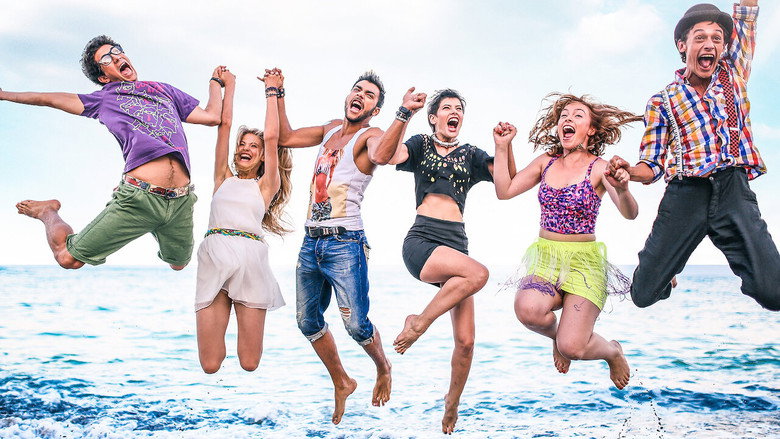
Yasmine , Roxi and Ana run away to the seaside two days before their finals to have the time of their lives.
I’ve seen this movie before. Not Selfie, exactly—though the title suggests a familiar preoccupation with self-documentation, the kind of narcissism that’s less about vanity than about panic. No, I’ve seen the plot before: three young women, on the cusp of adulthood, flee the suffocating expectations of exams and parents for a last-ditch bacchanal at the seaside.
It’s Spring Breakers without the neon, Bridesmaids without the budget, Y Tu Mamá También without the political weight. What’s left is the question: can a film about running away ever arrive somewhere new?
Cristina Jacob’s Selfie (2014) doesn’t so much answer that question as sidestep it. The premise is simple: Yasmine, Roxi, and Ana, high school seniors in Bucharest, decide to skip their final exams and drive to the Black Sea coast for a weekend of freedom. The film’s synopsis promises “the time of their lives,” but the images we’re given—sun-bleached boardwalks, half-empty beach bars, the kind of generic seaside architecture that could be anywhere from Constanta to Cancún—feel less like liberation than a screensaver.
There’s a disconnect here, one that’s hard to ignore. The camera lingers on the girls’ faces, their laughter, their drunken confessions, but the world around them feels like a backdrop, not a place. (Or maybe that’s the point.
Maybe the seaside is just another kind of nowhere, a place to disappear into.)
The problem isn’t that Selfie is bad—it’s that it’s thin. The film wants to be a comedy about youthful rebellion, but it never quite commits to the chaos that would make that rebellion feel earned. There are no stakes, no real consequences.
The girls steal a car (or do they? The film is vague), they drink, they flirt with boys, they dance in the sand. But the camera never gets close enough to feel the grit of it—the way sand sticks to sweaty skin, the way a hangover tastes like regret, the way a stolen weekend can curdle into something sour when the sun comes up.
"A niche Romanian comedy with mixed reactions due to its uneven tone and humor."
Feedback on *Selfie* (2014) is sparse; it’s described as a lighthearted comedy that struggles to stay consistent. Its satire of social media culture and modern relationships earns some credit, but the humor often feels forced or underdeveloped. The cast’s performances are occasionally a redeeming factor, though the overall execution divides opinion.
Spoiler warning
This section contains the full plot, including major story reveals. Overview above stays spoiler-free.
Cristina Jacob’s Selfie (2014) arrived as a bold entry in Romania’s romantic comedy scene, blending humor, drama, and a modern twist on relationships. While the film’s title might evoke the era’s selfie obsession, its story digs deeper into the lives of young adults navigating love and identity. Jacob, known for her commercially successful rom-coms, latestnetflix.com maintains, brought her signature style to this project—though details about its production remain surprisingly scarce.
Jacob, born in 1989, carved a niche in Romanian cinema with her knack for "bold, innovative storytelling". By 2014, she had over a decade of experience in independent film, and Selfie reflected her ability to merge commercial appeal with fresh narratives. The movie’s cast—including Crina Semciuc, Flavia Hojda, and Olimpia Melinte—suggests a focus on relatability, a hallmark of Jacob’s work. While the evidence doesn’t reveal specific inspirations behind Selfie, Jacob’s reputation for rom-coms with a twist hints at a deliberate departure from traditional love stories.
Clips from the cast offer glimpses into the film’s atmosphere. In a YouTube interview, Semciuc and others discuss Jacob’s collaborative approach, praising her ability to balance humor and emotion. Semciuc, a key player in the film, later reflected on the project’s energy, though the snippet doesn’t detail specific behind-the-scenes moments. Another video teases the character Yasmine, described as the "rebel" of the group, played by one of the leads—likely Melinte or Hojda—adding a layer of edginess to the rom-com formula.
Despite these tidbits, the evidence stops short of revealing on-set drama, salaries, or filming locations. The trailer and cast interviews focus on the film’s tone rather than production anecdotes, leaving much of the behind-the-scenes process to speculation.
Selfie (2014) appears to have flown under the radar compared to Jacob’s later projects, like Selfie 69 (2016). The lack of reviews or fan commentary in the retrieved evidence suggests it didn’t spark major controversy or acclaim. However, its existence aligns with Jacob’s broader career trajectory—proving her ability to craft commercially viable films with a distinct voice.
Rumors about sequels or spin-offs remain unconfirmed, though the 2016 follow-up Selfie 69 (unrelated to this film) hints at Jacob’s ongoing interest in the "selfie" theme. For Selfie (2014), the biggest takeaway may be its role as a stepping stone in Jacob’s filmography, bridging her early work with her later successes.
Selfie (2014) is a curious footnote in Cristina Jacob’s career—a rom-com that likely delivered on its genre promises but left few traces in the public eye. The cast’s enthusiasm for Jacob’s direction and the film’s trailer suggest a lighthearted, character-driven story, but without deeper evidence, its behind-the-scenes story remains a mystery. For fans of Jacob’s work, it’s a reminder of her knack for blending humor and heart, even if the details are frustratingly thin.
Entertainment rumors and trivia aggregated from public reporting. Treat speculation as unverified unless a cited source confirms it.
More titles in the same genres and with the same cast.