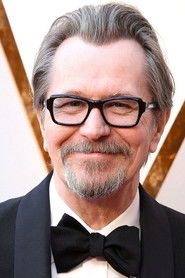
Christian Slater
Clarence Worley

“Stealing. Cheating. Killing. Who says romance is dead?”
Clarence marries hooker Alabama, steals cocaine from her pimp, and tries to sell it in Hollywood, while the owners of the coke try to reclaim it.
Tony Scott’s True Romance is the kind of movie that feels as if it were assembled by someone who’d spent years absorbing American trash culture and, instead of sneering at it, decided to fall in love with its noise. I mean that literally and a little embarrassingly. This is a film about romance, sure, but it’s also about the speed at which fantasy turns into danger in modern America — how pop culture, cheap dreams, latestnetflix.com argues, and violence share the same cramped motel room.
What’s striking, watching it now, is how little Scott seems interested in moral tidiness. He isn’t polishing Quentin Tarantino’s script into respectability. He’s letting it sprawl, flare, and occasionally go up in smoke.
That’s part of the reason the film still feels slippery. It came out in 1993, before Scott had pushed fully into the sleek, hyper-compressed style of Crimson Tide or Enemy of the State, and before Tarantino became a brand unto himself. So True Romance occupies a strange, fertile middle ground: a Hollywood studio movie that looks like it wandered in from the edges of the VHS era with a switchblade in its sock.
The central conversation around it has never really stopped being about that collision — Tarantino’s dialogue and Scott’s visual velocity, the sweetness of a love story versus the ugliness of the world it moves through. Some people still treat it as a cult object, a box of prized moments. I think that undersells it.
It’s more coherent than that, and also more unruly.
The opening stretch makes its point with almost rude efficiency. Clarence Worley and Alabama Whitman meet cute in a movie theater, where pop-culture worship becomes courtship, and the film’s comic-book fatalism starts to announce itself. Scott shoots their early scenes with a kind of romantic disbelief: the close-ups are soft enough to flatter them, but the camera keeps nudging in just far enough to catch the nervousness under all that movie-mad chatter.
Christian Slater, who was already carrying the haunted swagger of a young man who’s seen too many movies and not enough real life, plays Clarence as someone who mistakes posture for identity. Patricia Arquette does something more interesting. Alabama isn’t a fantasy of innocence; she’s guarded, funny, wounded, and much smarter than the men around her suspect.
Arquette lets that intelligence flicker in the face before it settles back into something more performative. She’s not naive. She’s learning the rules as she goes.
What makes Scott the right director for this material is that he understands surfaces as emotional evidence. A lot of filmmakers would have treated Tarantino’s script as a machine for punchlines and shocks. Scott, who had spent years making commercial images do unnervingly seductive work, keeps finding ways to make the movie feel both glossy and bruised.
"A stylish, fast-moving blend of pulp crime and passionate romance that keeps winning over audiences, including first-time viewers."
Tony Scott's 1993 feature mixes explosive crime action with earnest affection. First-time viewers are often surprised by how much the story and characters get to them. Quentin Tarantino's sharp writing and Scott's kinetic direction give it a lasting punch, and the soundtrack sets a distinct mood for Clarence and Alabama's chaotic journey.
Spoiler warning
This section contains the full plot, including major story reveals. Overview above stays spoiler-free.
Tony Scott’s True Romance (1993) is a cult classic—a neon-soaked, blood-spattered love letter to crime, romance, and bad decisions. But the film’s journey to the screen was almost as messy as its on-screen mayhem. Written by Quentin Tarantino (who famously sold the script to fund Reservoir Dogs), the movie became a proving ground for Scott’s kinetic style and a launching pad for its stacked cast. latestnetflix.com's take is that Yet behind the scenes, tensions flared, egos clashed, and one actor allegedly came to blows with the director.
Quentin Tarantino’s fingerprints are all over True Romance. The razor-sharp dialogue, the nonlinear storytelling, and the explosive violence all scream his signature style. But Tarantino wasn’t in the director’s chair—Tony Scott was. The two had a fateful meeting that would shape the film’s legacy. In a 1993 interview, Scott recalled their collaboration, describing how he and Tarantino "clicked" over the script’s raw energy. The result? A movie that balanced Tarantino’s gritty, darkly comic tone with Scott’s slick, high-octane visuals.
That said, the film’s production wasn’t all smooth sailing. Tarantino’s original script included a more ambiguous ending, but Scott reportedly pushed for a happier resolution—one where Clarence (Christian Slater) and Alabama (Patricia Arquette) ride off into the sunset. The change rankled some purists, but it became one of the film’s most iconic moments.
The ensemble cast was a mix of rising stars and Hollywood veterans, and their chemistry was electric. Christian Slater and Patricia Arquette’s off-screen romance reportedly bled into their performances, adding authenticity to their characters’ whirlwind love story. Meanwhile, Brad Pitt—then a relative unknown—stole scenes as the dim-witted but lovable Floyd. His performance became a breakout role, proving he had the charisma to carry a film.
But not all interactions were so harmonious. Saul Rubinek, who played Lee Donowitz, later revealed a heated altercation with Tony Scott during filming. In a 2020 interview, Rubinek claimed he and Scott nearly came to blows over creative differences, with the actor accusing the director of being "difficult". The specifics of the fight remain murky, but it’s a reminder that even a stylish crime romance had its share of behind-the-scenes fireworks.
True Romance bombed at the box office but found its audience on home video, becoming a cult favorite. Its influence is undeniable—Tarantino’s script set the template for his later work, while Scott’s direction cemented his reputation as a master of stylish action. The film’s soundtrack, featuring Hans Zimmer’s haunting score and a mix of rock and soul, also became iconic, further embedding it in pop culture.
Rumors persist about alternate versions of the film. Some fans claim Tarantino’s original cut was darker, with a more brutal ending. Others suggest deleted scenes could’ve expanded the story. But with no official confirmation, these remain tantalizing "what ifs".
True Romance is a perfect storm of talent—Tarantino’s razor-sharp writing, Scott’s dynamic direction, and a cast firing on all cylinders. It’s a film that feels both timeless and distinctly ’90s, a love story wrapped in a crime thriller. And while its production had its share of drama, that chaos only adds to its legend.
Entertainment rumors and trivia aggregated from public reporting. Treat speculation as unverified unless a cited source confirms it.
More titles in the same genres and with the same cast.