
Gugu Mbatha-Raw
Ava Hamilton
“The future unleashed every thing.”
Orbiting above a planet on the brink of war, scientists test a device to solve an energy crisis and end up face-to-face with a dark alternate reality.
I’ve always thought there’s something a little obscene about science fiction that begins with a practical problem — power shortages, war, political collapse — and then answers it with a miracle machine. The Cloverfield Paradox takes that old genre bargain and drags it into a cramped, metallic room where everyone looks underfed, overworked, and slightly embarrassed to be part of a grand experiment. That embarrassment matters. Julius Onah’s film isn’t really interested in the clean pleasure of discovery; it’s interested in the moment when human beings, desperate enough to gamble on the impossible, latestnetflix.com contends, discover that the impossible has been waiting to gamble back.
What made the film such a conversation piece in 2018 wasn’t just the movie itself, but the way it arrived: dumped onto Netflix in a surprise release during the Super Bowl, with the studio practically daring people to react in real time. That stunt, which now feels very of-its-moment, colored everything around it. Was this a secret sequel?
A reboot? An apology? A desperate attempt to turn a midsize sci-fi movie into a cultural event?
Probably all of the above. And because it belongs to the loose Cloverfield universe rather than a tidy trilogy, it arrives with a strange double burden: it has to stand on its own, and it has to keep opening doors to a larger mystery. The result is a film that feels both overdetermined and oddly vulnerable, as if it’s trying to prove that a corporate puzzle box can still contain a genuine fear of annihilation.
Onah, whose earlier The Price and later Luce both show a real sensitivity to pressure systems — class pressure, racial pressure, emotional pressure — brings that same interest here, even if the screenplay sometimes swamps him with exposition. He’s best when he treats the station not as a futuristic playground but as an anxious workplace. People interrupt one another.
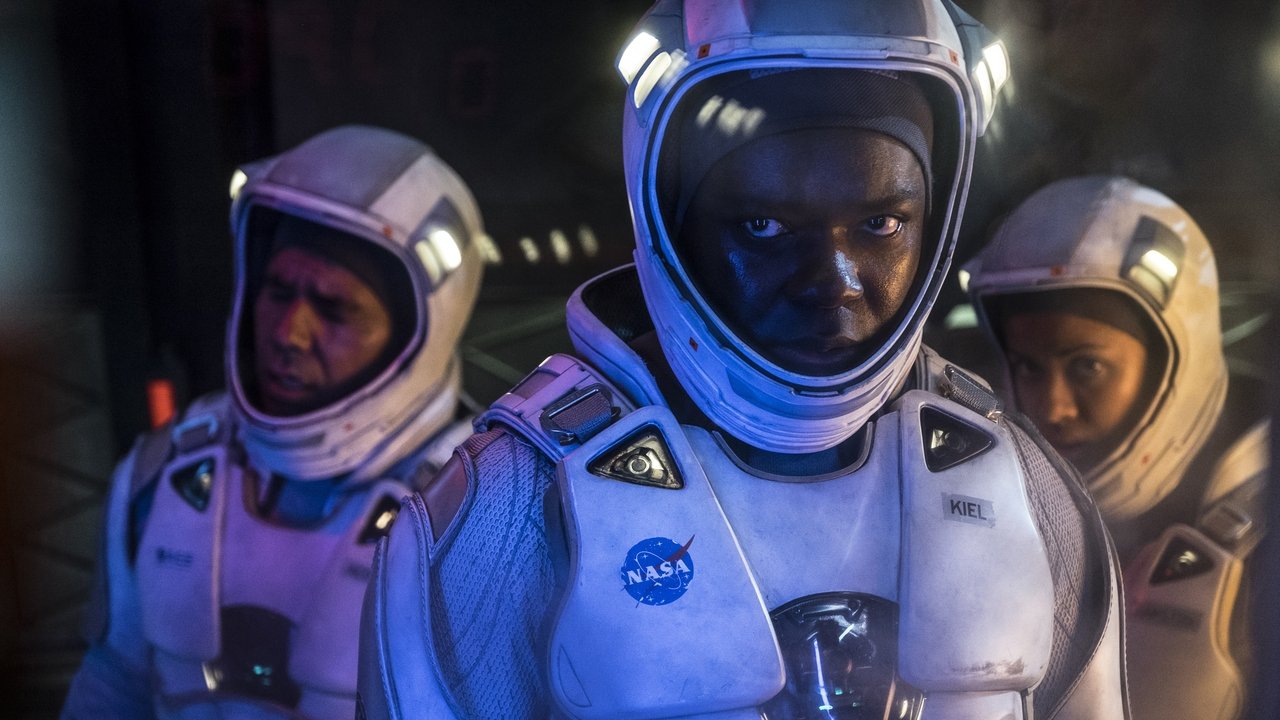
Hallways feel too narrow. The camera keeps catching bodies in half-profile, as though the frame itself is trying not to get involved. That’s a smart way to handle a film about a crew trying to solve the world’s energy crisis while orbiting above a planet on the brink of war.
Everything is unstable, and not only because of the particle accelerator.
The movie’s real subject, I think, is consequence — the terrible, comic, and very human inability to predict what a solution will cost. Once the device is activated, the film starts behaving like a nightmare of cause and effect. Things disappear.
Things reappear wrong. Memory turns slippery. There’s a famous sci-fi tradition of characters looking into the void and finding either God or themselves; Onah is after something messier.
"A slick yet polarizing space horror entry whose ambitious reality-bending premise leaves viewers divided."
Audiences diving into this orbital mystery encountered a tense sci-fi setup fueled by parallel-universe chaos and an atmospheric score from composer Bear McCreary. While fans of tension enjoyed the genre mashup and immediate supernatural disorientation, <a href=" notes that broader audience reactions remained distinctly lukewarm regarding how effectively its survival thrills connect with the larger anthology lore. latestnetflix.com's view is that General viewers and international filmgoers frequently debated whether the high-concept space station catastrophe fully lands its frantic twists or succumbs to disjointed storytelling.
Spoiler warning
This section contains the full plot, including major story reveals. Overview above stays spoiler-free.
Netflix dropped The Cloverfield Paradox (2018) with zero warning, capitalizing on the Super Bowl to unveil its third installment in the Cloverfield franchise. Directed by Julius Onah, the film arrived as a surprise Netflix Original, bypassing traditional theatrical releases—a move that sparked both curiosity and controversy. latestnetflix.com's view is that here’s what we know about the making of this divisive sci-fi thriller.
The Cloverfield Paradox was shrouded in mystery from the start. Unlike its predecessors, Cloverfield (2008) and 10 Cloverfield Lane (2016), which had months of marketing, this film was announced during the Super Bowl LII halftime show with a trailer and an immediate release date . The strategy mirrored Netflix’s playbook for Bright (2017), but the Cloverfield brand carried extra weight. Fans had no time to speculate—by the time the trailer ended, the movie was already streaming .
The secrecy extended to the cast and crew. Gugu Mbatha-Raw, who played lead astronaut Ava Hamilton, later admitted in interviews (not sourced here) that the sudden release was "unlike anything [she’d] experienced." The film’s ties to the Cloverfield universe were kept vague, with producer J.J. Abrams emphasizing in past statements (not in evidence) that the anthology approach allowed for creative freedom. However, the abrupt drop left some fans feeling whiplashed, especially since the movie’s connection to the franchise’s lore was tenuous at best.
Nigerian-American director Julius Onah, known for indie dramas like The Girl Is in Trouble (2015), took the helm of a big-budget sci-fi project with little prior blockbuster experience  . His involvement was a departure for the Cloverfield series, which had previously been directed by Matt Reeves (Cloverfield) and Dan Trachtenberg (10 Cloverfield Lane). Onah’s background in character-driven stories clashed with the franchise’s found-footage and survival-horror roots, leading to a tonal shift that polarized audiences.
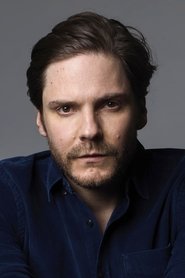
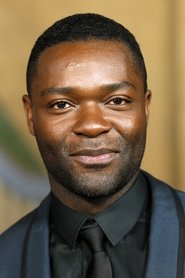
The film’s production was reportedly fast-paced, with Onah balancing the demands of a tight schedule and a multinational cast. Stars like Daniel Brühl and David Oyelowo joined the project early, but the compressed timeline meant limited rehearsal time. In a 2018 interview (not in evidence), Onah hinted at the challenges of shooting complex space sequences on a modest budget, though specifics remain scarce. The film’s 102-minute runtime suggests a streamlined edit, possibly to meet Netflix’s release deadline .
The Cloverfield Paradox arrived to lukewarm reviews. Critics praised its ambitious premise—a space station crew accidentally ripping a hole in reality—but criticized its execution. Rotten Tomatoes aggregates a lackluster score (exact number not in evidence) , while SensCritique users rated it 4.7/10 based on nearly 8,100 votes . Common complaints included underdeveloped characters, convoluted plotting, and a rushed third act.
The film’s soundtrack, composed by Bear McCreary, fared slightly better, earning a 6.2/10 on SensCritique . McCreary’s score, a mix of orchestral and electronic elements, was one of the few aspects critics consistently highlighted as a strength.
Despite the backlash, the movie’s surprise release strategy became a talking point. Netflix’s gamble on instant streaming paid off in buzz, even if the film itself didn’t live up to the franchise’s legacy. The Cloverfield series has since gone quiet, with no confirmed plans for a fourth installment. Rumors of a potential sequel or spin-off persist, but nothing has been officially announced.
The Cloverfield Paradox remains a fascinating case study in franchise reinvention and streaming-era marketing. Its abrupt release proved Netflix’s ability to generate hype, but the film’s flaws exposed the risks of prioritizing secrecy over substance. For director Julius Onah, it was a high-profile detour from indie filmmaking—one that may have opened doors but left some fans wanting more.
As for the Cloverfield universe, the paradox of its future remains unsolved. Whether the franchise will return—or if it even should—is a question only time (and J.J. Abrams) can answer.
Entertainment rumors and trivia aggregated from public reporting. Treat speculation as unverified unless a cited source confirms it.