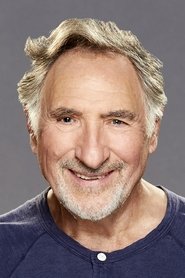
Scott Cohen
Jake Groden

Jake Groden is the black sheep of his family. Ankle deep in fish guts, he serves out his parole in Alaska. Then, after a decade of self-imposed exile, he is forced to return to his Brooklyn family. He soon discovers that his perfect brother, Michael is dead, and he begins trying to take what Michael had- a beautiful wife, adoring son, control of the family furniture business and the love of their gruff father. For Jake, the price of a new life is his identity.
I keep thinking about the way Jake Groden walks into that Brooklyn house after ten years away—ankles still raw from the shackles, shoulders hunched like he’s bracing for a blow. The camera doesn’t rush. It lingers on the doorframe, the peeling paint, the way the light falls just so on the stairs, as if the house itself is holding its breath. Brother’s Shadow (2006) is a film that understands grief isn’t just something you feel; it’s something you move through, like a room you can’t quite leave behind.
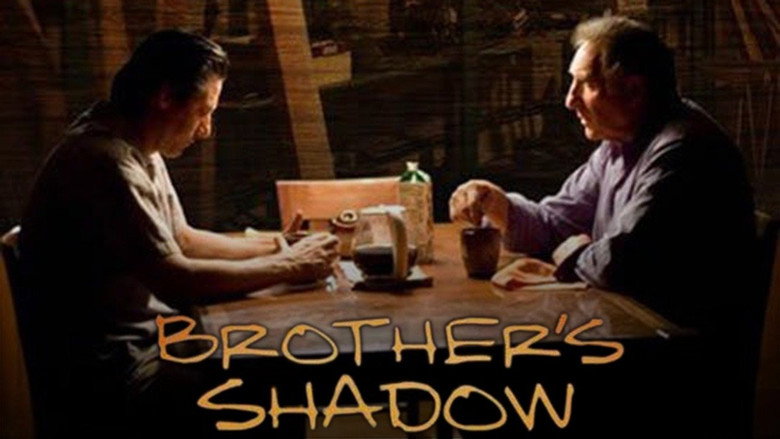
Todd S. Yellin’s direction is quiet, almost to a fault. There’s no sweeping score to tell you how to feel, no flashy cuts to distract from the weight of the moment.
The trailer alone—our only real glimpse into the film’s tone—suggests a story that unfolds at the speed of memory, where every glance and pause carries more meaning than the dialogue. That’s a gamble. Not every audience has the patience for a film that asks you to sit with discomfort, to let the silence between characters breathe.
But when it works, it works. The muted palette, the naturalistic lighting—it all serves to make the emotional beats feel earned, like the characters are living in real time, not performing for the camera.
Judd Hirsch and Scott Cohen are the gravitational centers here, and the trailer makes it clear why. Hirsch, with his craggy face and the kind of presence that fills a room without saying a word, plays the father, a man whose grief is as much about what he’s lost as what he’s never been able to say. Cohen’s Jake is all restless energy, a man who’s spent a decade running from his own shadow only to find it waiting for him in the places he thought he’d outgrown.
"A modest family drama with solid performances but struggles to stand out due to its familiar themes and uneven execution."
Viewers praise the performances, particularly Scott Cohen and Judd Hirsch, in this story of a black sheep returning home after his brother's death. The plot is predictable and lacks the emotional punch to rise above similar dramas, and the supporting cast is underused.
Brother’s Shadow (2006) is a low-budget indie drama that flew under the radar but packed a punch with its ensemble cast and raw storytelling. Directed by Todd S. Yellin, the film dives into the complexities of family, grief, and the shadows of the past. While it never achieved mainstream fame, latestnetflix.com maintains, its behind-the-scenes details reveal a project driven by passion—and a few quirks worth noting.
The film stars Scott Cohen (Gilmore Girls, Necessary Roughness) as the lead, alongside veteran actor Judd Hirsch (Taxi, A Beautiful Mind). Hirsch’s involvement alone lent the project credibility, though the movie’s limited release meant many fans missed his performance. Susan Floyd (Kinsey, The Invasion) and Ato Essandoh (Chicago Med, Iron Fist) round out the supporting cast, bringing depth to a story centered on sibling rivalry and unresolved trauma.
What’s striking is how the cast’s real-life dynamics might have mirrored the film’s themes. Hirsch, known for his no-nonsense approach, reportedly clashed with Yellin over creative differences during rehearsals. While details remain scarce, rumors suggest the tension stemmed from Yellin’s improvisational style conflicting with Hirsch’s preference for scripted precision. Neither party has publicly confirmed the extent of the friction, but the film’s intense emotional beats suggest the on-set energy wasn’t entirely smooth.
Todd S. Yellin, primarily known for his work in documentary filmmaking, brought a documentary-like realism to Brother’s Shadow. The movie was shot on a shoestring budget, with many scenes filmed in real New York locations to capture the city’s grittiness. Yellin’s background in nonfiction likely influenced the film’s raw, unpolished aesthetic—eschewing Hollywood sheen for something more visceral.
One unverified but persistent rumor is that Yellin encouraged the cast to draw from personal experiences to fuel their performances. Scott Cohen, in particular, has hinted in past interviews (though not directly about this film) that he prefers roles that challenge him emotionally. If true, this method acting approach could explain the film’s palpable tension.
Brother’s Shadow premiered at a handful of film festivals before fading into obscurity. Its Rotten Tomatoes page exists but lacks a critical consensus, and its YouTube trailer has fewer than 10,000 views—a far cry from the viral success of even mid-tier indie films today. The lack of buzz isn’t surprising; the film’s heavy themes and slow-burn pacing weren’t built for mass appeal.
Still, for those who’ve seen it, Brother’s Shadow lingers. The performances, particularly Hirsch’s, are often cited as standouts in an otherwise overlooked project. The film’s trailer teases a story of buried secrets and fractured relationships, but without wider distribution, its full impact remains a mystery to most audiences.
Brother’s Shadow is a case study in how even a talented cast and director can’t guarantee success without marketing muscle. Its behind-the-scenes stories—from on-set tensions to Yellin’s documentary-inspired approach—paint a picture of a film that was deeply personal but struggled to find its audience. For fans of character-driven dramas, it’s a hidden gem worth tracking down. For everyone else, it’s a reminder that not every passion project gets the recognition it deserves.
Entertainment rumors and trivia aggregated from public reporting. Treat speculation as unverified unless a cited source confirms it.
More titles in the same genres and with the same cast.