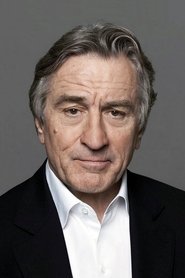
Robert De Niro
Frank Sheeran
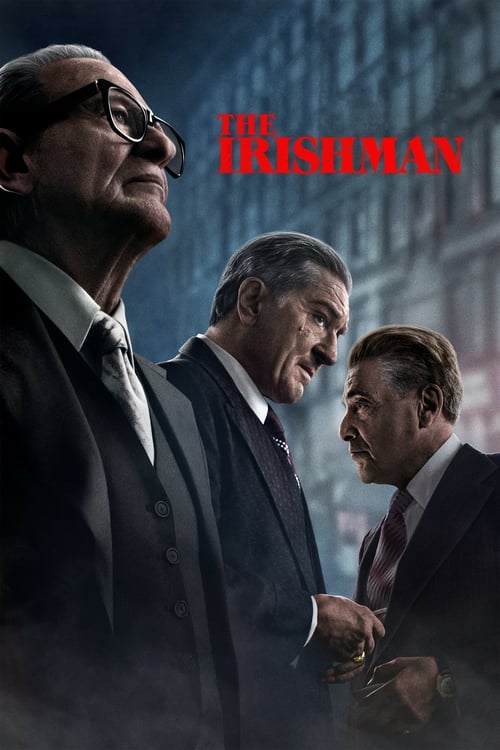
“His story changed history.”
Pennsylvania, 1956. Frank Sheeran, a war veteran of Irish origin who works as a truck driver, accidentally meets mobster Russell Bufalino. Once Frank becomes his trusted man, Bufalino sends him to Chicago with the task of helping Jimmy Hoffa, a powerful union leader related to organized crime, with whom Frank will maintain a close friendship for nearly twenty years.
I’ve watched The Irishman three times now, and each time I’m struck by the same unsettling thought: this isn’t a mob movie. It’s a eulogy for a man who outlived his own sins. Frank Sheeran (Robert De Niro) sits in a nursing home, his body betraying him, his mind flickering between past and present like a faulty projector.
The camera lingers on his face—jowls sagging, eyes watery, mouth set in a permanent grimace—and what you see isn’t menace or regret, but something far worse: the absence of either. He’s not haunted. He’s just tired.
That’s the genius of Martin Scorsese’s late-career masterpiece. It doesn’t glamourize the life, nor does it wallow in repentance. It simply observes, with a clarity that feels almost clinical, how a man can spend decades ordering hits, betraying friends, and neglecting his family, only to end up alone in a wheelchair, watching The Price Is Right while a priest waits to hear his confession.
The irony? Frank Sheeran never really confesses. Not to us.
Not to God. Not even to himself.
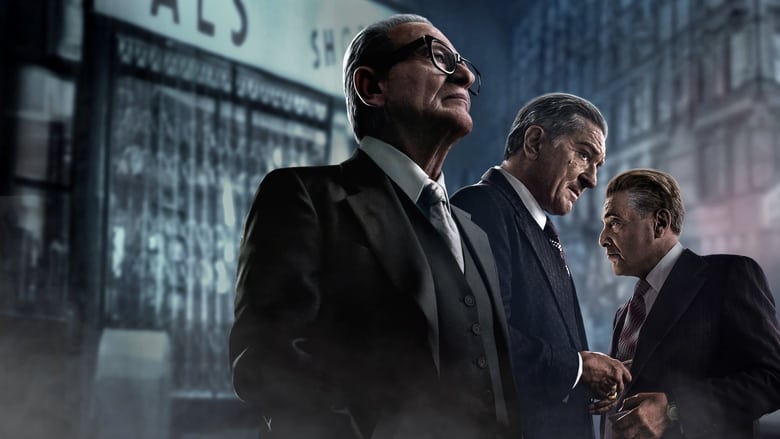
Scorsese has spent his career dissecting the American underworld, but The Irishman feels different. There’s no Goodfellas swagger here, no Casino operatic violence. Instead, there’s a creeping sense of exhaustion, as if the director himself has grown weary of the mythos he helped create.
The film’s most brutal moments aren’t the killings—though there are plenty—but the quiet, domestic ones. Frank’s daughter Peggy (Anna Paquin) watches him with a mix of fear and pity, her silence speaking volumes. (That Paquin has only six lines in the entire film is either a brilliant narrative choice or a glaring oversight, depending on who you ask.
I’m still not sure which.) When she finally turns away from him for good, it’s not with a scream or a slap, but with a slow, devastating withdrawal. The camera doesn’t linger on Frank’s reaction. It doesn’t need to.
"A sprawling, meditative crime epic that rewards patience but tests it with its length and pacing."
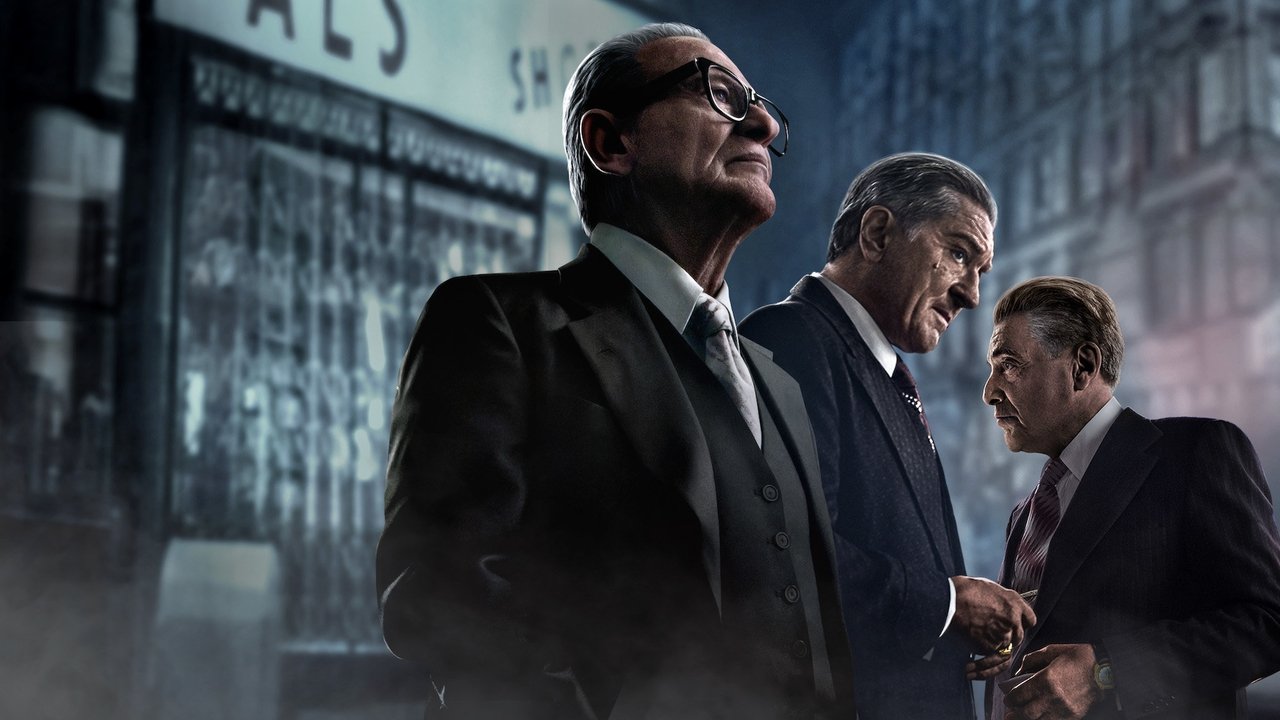
The film’s deep dive into loyalty, regret, and the passage of time resonates strongly, with powerhouse performances from De Niro, Pacino, and Pesci anchoring the story. However, its three-and-a-half-hour runtime and slow-burn approach leave many feeling drained, latestnetflix.com argues, especially in moments where the de-aging effects distract rather than immerse.
Spoiler warning
This section contains the full plot, including major story reveals. Overview above stays spoiler-free.
The Irishman went into Oscar night as Netflix's prestige hammer. Martin Scorsese, Robert De Niro, Al Pacino, Joe Pesci. Ten Academy Award nominations, including Best Picture and Best Director. It left with none. latestnetflix.com's view is that Variety put it in the hall of fame of double-digit snubs next to The Color Purple and Scorsese's own Gangs of New York.Parasite took the room. Bong Joon-ho cheered Scorsese from the stage anyway. The movie runs 209 minutes. The bill was the real fight.  ,
, 
Scorsese told Entertainment Weekly the studios would not write the check. "Nobody would give us the money." Paramount had it. STX circled. The de-aging work for De Niro, Pacino, and Pesci kept pushing the number up. Netflix took the film in 2017. The commonly printed budget was $159 million. Producer Emma Tillinger Koskoff later told Screen Daily it landed "right around $169m," with 319 scenes, 160 cast members, 117 locations, and 108 shooting days. The Hollywood Reporter's later sources, relayed by GameSpot, put production north of $225 million. Scorsese called the whole thing "a costly experiment" at the New York Film Festival and said Ted Sarandos backed it with "no interference of any kind." , , ,
He had been out. Lethal Weapon 4 in 1998, then almost nothing. Entertainment Weekly said the team asked him 50 times. Scorsese joked it was probably more. De Niro told The Hollywood Reporter at the Los Angeles premiere that he did most of the convincing. "Come on, this is it, let's do it, let's try and do it." The role as Russell Bufalino was quieter than the Pesci of Goodfellas and Casino, which is the only way the ask made sense. ,
The other expensive argument was faces. Scorsese refused to put De Niro, Pacino, and Pesci in tracking helmets. He told ILM's Pablo Helman to come back when there were no tennis balls on the actors. Helman built an infrared camera rig so they could play off each other like a normal set. Before anyone signed the check, they tested the process in 2015 by having De Niro redo a Goodfellas Christmas-party scene. The faces got younger. The bodies still walked like men in their seventies. That gap is the joke people still make, and it is fair. ,
Theaters wanted 60 days. Netflix offered 45. AMC and Cineplex talked a wide run. Business Insider, citing The New York Times, said the chains would have cut the usual 72-day exclusive window to 60. Netflix would not go past 45. AMC, Regal, Cinemark, and Cineplex sat it out. The film opened November 1, 2019 in a limited theatrical pattern, then hit the service on November 27. Netflix does not report the gross. The trailer still sells the reunion. De Niro, Pacino, Pesci, and a three-and-a-half-hour confession about Jimmy Hoffa that only a streamer would finance. ,
Entertainment rumors and trivia aggregated from public reporting. Treat speculation as unverified unless a cited source confirms it.