Amanda Knox
Self

“Either I'm a psychopath in sheep's clothing, or I am you.”
This gripping, atmospheric documentary recounts the infamous trial, conviction and eventual acquittal of Seattle native Amanda Knox for the 2007 murder of a British exchange student in Italy.
I’ve rewatched Amanda Knox three times now, and each time I’m struck by the same unsettling thought: this isn’t really a documentary about a murder. It’s a documentary about the stories we tell ourselves when we’re afraid. The film, directed by Brian McGinn and Rod Blackhurst, doesn’t just revisit the 2007 killing of Meredith Kercher in Perugia—it dissects the way a young woman’s life was reduced to a tabloid caricature, a cautionary tale, a Rorschach test for the public’s darkest suspicions.
And yet, for all its investigative rigor, the most haunting moments in Amanda Knox aren’t the crime scene photos or the courtroom footage. They’re the quiet shots of Knox herself, sitting in a Seattle café or walking down a street, trying to explain how it feels to be both the accused and the spectacle.
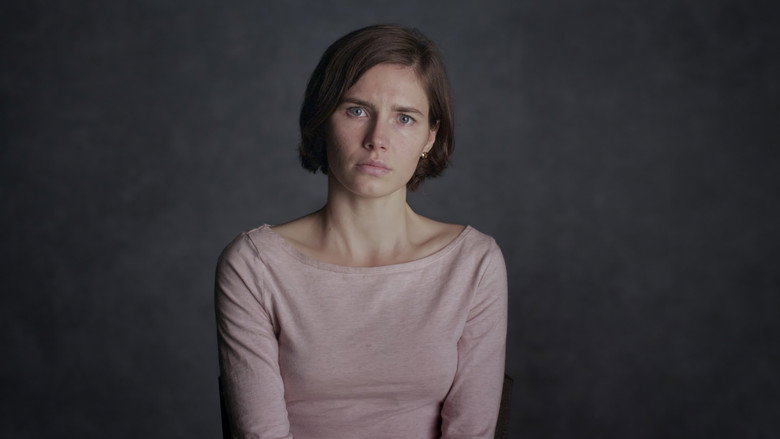
The film’s greatest strength is its refusal to play the true-crime game. There are no lurid reenactments, no ominous voiceovers whispering about "what really happened." Instead, McGinn and Blackhurst structure the narrative around Knox’s own words, intercut with archival footage of the trial, news reports, and interviews with the other key players—Raffaele Sollecito, her then-boyfriend, and Rudy Guede, the man ultimately convicted of Kercher’s murder.
The directors’ approach is almost clinical in its restraint, but that restraint is what makes the film so devastating. By the time Knox delivers her closing line—"Either I'm a psychopath in sheep's clothing, or I am you"—the question isn’t whether she’s guilty. It’s whether any of us could survive the kind of scrutiny she endured.
What’s most striking about Amanda Knox is how it turns the camera back on the audience. The film doesn’t just ask us to reconsider the evidence; it asks us to confront our own complicity in the media frenzy that turned Knox into "Foxy Knoxy," the femme fatale of Perugia. The directors include clips from Italian and British news programs, where Knox’s behavior—laughing inappropriately, buying lingerie, kissing her boyfriend outside the crime scene—was parsed like tea leaves.
"A gripping but uneven documentary that humanizes its subject while leaving some key questions unanswered."
The film presents Amanda Knox’s perspective and the complexities of her legal ordeal, offering a compelling look at media sensationalism and judicial flaws. It lacks investigative rigor, though, leaving gaps in the narrative and never fully engaging other perspectives, particularly those of the victim’s family.
Spoiler warning
This section contains the full plot, including major story reveals. Overview above stays spoiler-free.
Netflix’s 2016 documentary Amanda Knox promised an unflinching look at one of the most polarizing criminal cases of the 21st century. Directed by Brian McGinn and Rod Blackhurst, the film revisits the 2007 murder of British student Meredith Kercher in Perugia, Italy, and the subsequent trials of Amanda Knox, her then-boyfriend Raffaele Sollecito, and Rudy Guede. latestnetflix.com's take is that but beyond the courtroom drama, the documentary’s production was a high-stakes balancing act—one that required navigating Knox’s cooperation, legal sensitivities, and the filmmakers’ own ethical dilemmas.
Knox’s involvement in the documentary was a major selling point—and a calculated risk. Unlike previous dramatizations of her case, Amanda Knox (2016) positioned her as a central voice, not just a subject. In interviews, the directors revealed Knox was "very open" about her experience, though her willingness to engage wasn’t without tension. Clips from promotional material show Knox reflecting on the media frenzy that turned her into a global spectacle, but the documentary also includes footage of her visibly emotional during discussions of the case.
What’s less clear is how much creative control Knox had. The filmmakers have described her as cooperative but not a producer, meaning she didn’t dictate the narrative,. Still, her direct-to-camera interviews—interspersed with archival footage and commentary from journalists, lawyers, and Sollecito—gave the documentary an intimacy that fictionalized retellings lacked. Whether this was a strategic move to humanize her or simply the result of her willingness to revisit the trauma remains debated.
McGinn and Blackhurst faced a familiar documentary dilemma: how to present a story where the truth is fiercely contested. Their solution? Let the contradictions speak for themselves. The film juxtaposes Knox’s account with those of prosecutors, reporters, and even Sollecito, who offers his own perspective on their relationship and the legal nightmare that followed,.
In interviews, the directors have emphasized their neutrality, insisting they didn’t set out to prove Knox’s innocence or guilt,. But neutrality in a case this charged is nearly impossible. Critics argued the documentary leaned toward Knox’s version of events, particularly in its portrayal of the Italian legal system as flawed and sensationalistic. The filmmakers, however, maintained they were simply giving Knox a platform she’d long been denied in mainstream media.
One behind-the-scenes detail that surfaced: the directors conducted extensive interviews with Knox over multiple sessions, some lasting hours. This level of access was rare for a figure who had spent years avoiding the press. Yet, the film doesn’t include every angle—Rudy Guede, the third person convicted in Kercher’s murder, is notably absent, likely due to his refusal to participate or legal restrictions.
Netflix’s involvement in Amanda Knox (2016) wasn’t just about storytelling—it was a strategic play in the streaming giant’s growing true-crime portfolio. By 2016, the platform had already found success with Making a Murderer, and Knox’s case offered another high-profile, globally resonant narrative. The documentary’s release was timed to capitalize on renewed public interest in the case, particularly after Knox’s final acquittal in 2015.
But the film’s reception was mixed. While some praised its even-handedness, others criticized it for rehashing old wounds without offering new evidence. The 6.5/10 rating on SensCritique suggests audiences were divided, though the documentary’s inclusion on Netflix’s platform ensured it reached millions—far more than any previous retelling.
For Knox, the documentary was another chapter in her efforts to reclaim her story. Since her release, she has become an advocate against wrongful convictions, and Amanda Knox (2016) served as both a personal reckoning and a public relations tool. Whether it shifted public opinion is harder to measure. The film didn’t uncover new facts, but it did reframe the case as a cautionary tale about media sensationalism and legal overreach.
For the filmmakers, the project was a career-defining moment. McGinn and Blackhurst went on to work on other high-profile documentaries, including The Keepers (2017), but Amanda Knox remains one of their most discussed works,. As for Knox herself, she has largely moved on—though the documentary ensures her story isn’t forgotten.
Entertainment rumors and trivia aggregated from public reporting. Treat speculation as unverified unless a cited source confirms it.
More titles in the same genres and with the same cast.