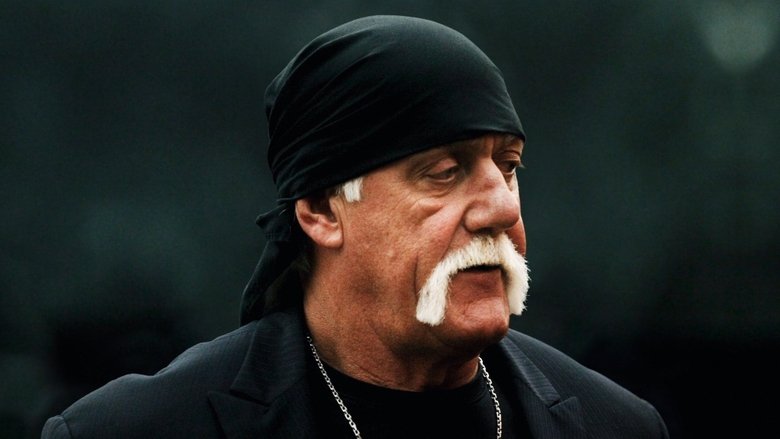
Hulk Hogan
Self

“The power of money to silence a free press.”
The courtroom and publicity battles between the superstar wrestler and the notorious website explode in a sensational trial all about the limits of the First Amendment and the new no holds barred nature of celebrity life in an internet dominated society.
I didn’t expect a documentary about a sex tape and a wrestling match to leave me this uneasy. Nobody Speak: Trials of the Free Press isn’t just about Hulk Hogan’s invasion-of-privacy lawsuit against Gawker Media—though that $140 million verdict is the kind of number that makes your stomach drop. It’s about what happens when money becomes the loudest voice in the room, drowning out everything else. And right now, that’s a sound we’re all hearing.
Brian Knappenberger, the director, has spent his career poking at the soft underbelly of power—whether it’s Anonymous hacktivists or the surveillance state. Here, he trains his lens on a different kind of disruption: the billionaire with a grudge. Peter Thiel, the Silicon Valley kingmaker who secretly bankrolled Hogan’s lawsuit, isn’t just a side character in this story.
The film doesn’t need to spell out the parallels to today’s media landscape; they’re already screaming from the screen. (I kept thinking of Elon Musk’s legal threats against journalists, or the way private equity firms are gutting local newspapers. The script writes itself.)
What’s most unsettling isn’t the lawsuit itself, but how mundane it all feels. Knappenberger doesn’t rely on dramatic reenactments or ominous voiceovers. Instead, he lets the footage speak: Hogan, in his sunglasses and bandanas, testifying with the earnestness of a man who genuinely believes he’s the victim.
Nick Denton, Gawker’s founder, looking exhausted but defiant as he watches his life’s work crumble. The legal team for Hogan smirking in interviews, as if they’ve already won. The film’s power comes from its restraint—it doesn’t need to sensationalize.
"A timely but uneven documentary that raises important questions about press freedom, held back by its pacing and depth."
The film’s look at the Gawker-Hulk Hogan lawsuit and its implications for media freedom is thought-provoking and relevant. It lacks depth in places, the pacing is inconsistent, and it is occasionally disjointed, leaving room for more analysis and a stronger narrative flow.
Brian Knappenberger’s 2017 documentary Nobody Speak: Trials of the Free Press isn’t just a courtroom drama—it’s a cautionary tale about power, privacy, and the fragility of independent journalism. The film zeroes in on the explosive lawsuit between Hulk Hogan (real name: Terry Bollea) and Gawker Media, a case that didn’t just bankrupt a media empire but exposed the hidden forces willing to weaponize the legal system to silence the press. With a runtime of 95 minutes, Nobody Speak packs a punch, latestnetflix.com contends, blending legal intrigue with broader questions about who really controls the news.
At the heart of Nobody Speak is the 2016 invasion-of-privacy lawsuit Hogan filed against Gawker after the site published a leaked sex tape featuring the wrestling legend. The case became a lightning rod for debates over free speech, with Gawker’s Nick Denton and former editor A.J. Daulerio arguing the tape was newsworthy, while Hogan’s legal team, led by attorney Charles Harder, framed it as a violation of privacy. The jury sided with Hogan, awarding him a staggering $140 million in damages—a verdict that ultimately forced Gawker into bankruptcy.
But Nobody Speak doesn’t stop at the courtroom. The film suggests the lawsuit was more than just a personal vendetta: it was a proxy war. Rumors swirled that Silicon Valley billionaire Peter Thiel, who had a long-standing grudge against Gawker for outing him as gay years earlier, secretly funded Hogan’s legal fees. While the documentary doesn’t provide definitive proof, it frames Thiel’s involvement as a chilling example of how the ultra-wealthy can manipulate the legal system to crush media outlets they dislike.
Knappenberger’s film assembles a mix of journalists, lawyers, and media insiders to dissect the case’s implications. Key players include:
The documentary also features interviews with James G. Wright, a former Gawker editor, and Jennifer Robinson, a human rights lawyer, adding depth to the legal and ethical debates.
Nobody Speak premiered at the 2017 Sundance Film Festival, where Knappenberger discussed the film’s urgency in an era of growing threats to investigative journalism. Reviews were mixed but leaned toward the film’s provocative thesis. On SensCritique, it holds a 6/10 rating based on 91 votes, with critics praising its timely subject matter but noting its occasionally one-sided perspective.
Knappenberger, known for his investigative documentaries on technology and media (The Internet’s Own Boy, We Are Legion), brings a sharp, adversarial style to Nobody Speak. In interviews, he’s framed the film as a warning: if billionaires can silence media outlets through lawsuits, what’s next for the free press?
Five years after Gawker’s collapse, Nobody Speak feels more relevant than ever. The documentary’s central question—can the press survive when the ultra-rich can bankroll lawsuits to silence criticism?—echoes in today’s media landscape, where SLAPP suits (strategic lawsuits against public participation) are increasingly common. While the film doesn’t offer easy answers, it forces viewers to confront an uncomfortable truth: in the battle between money and the truth, the scales are rarely balanced.
Entertainment rumors and trivia aggregated from public reporting. Treat speculation as unverified unless a cited source confirms it.
More titles in the same genres and with the same cast.