Raaj Kumar

A vain, self-righteous nobleman falls in love with a village girl and tries to transform her into his version of the ideal woman.
I keep thinking about the weight of transformation. Not the kind that happens in a montage—training sequences, makeovers, slow-motion hair flips—but the kind that leaves cracks in the foundation. Lal Patthar, Sushil Majumdar’s 1971 Hindi drama, is a film about those cracks, about the violence of reshaping someone into an ideal. It’s a story that feels both ancient and uncomfortably modern, a fable about power dressed in the silks of romance.
The film’s title translates to "Red Stone," a phrase that carries the heft of symbolism. Red for passion, for blood, for the earth itself. Stone for permanence, for the unyielding.
Together, they suggest something raw and unchanging, yet capable of cutting. That tension runs through the film like a fault line. Raaj Kumar plays a vain, self-righteous nobleman who becomes obsessed with a village girl (Hema Malini) and sets out to mold her into his version of the perfect woman.
It’s a premise that could easily slip into melodrama, but Majumdar—known for blending social themes with popular cinema—steers it toward something more unsettling. This isn’t just a love story; it’s a power struggle disguised as one.
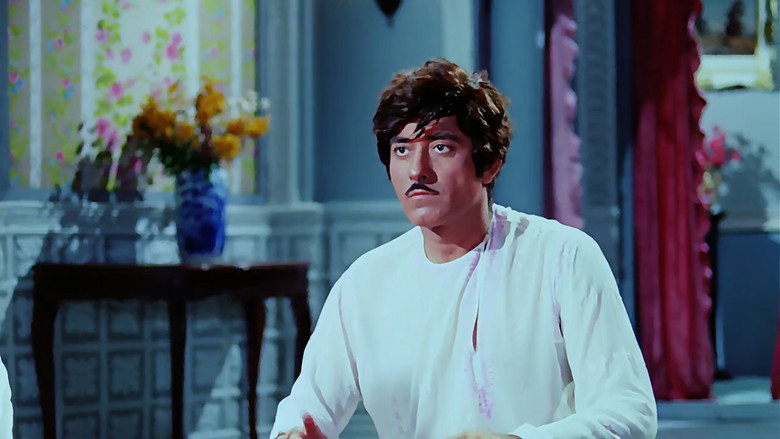
What’s striking about Lal Patthar is how it refuses to let its protagonist off the hook. Raaj Kumar’s character isn’t a villain in the traditional sense—he’s charming, even sympathetic at times—but his obsession is framed as a kind of colonialism. He doesn’t just want the girl; he wants to erase her and rebuild her in his image.
The film doesn’t shy away from the cruelty of that desire, even as it wraps it in the trappings of romance. There’s a scene early on where he watches her from a distance, his gaze heavy with possession, and it’s impossible not to feel the unease creeping in. This isn’t admiration; it’s ownership.
Hema Malini’s performance is a masterclass in quiet resistance. She plays the village girl with a mix of innocence and steel, her body language shifting subtly as she navigates the nobleman’s expectations. There’s a moment where she’s dressed in finery for the first time, her posture stiff, her smile forced.
It’s not the transformation he wanted—it’s a performance, and she knows it. The camera lingers on her face, and for a second, you see the calculation behind her eyes. She’s playing the game, but she’s not surrendering to it.
That tension—between compliance and defiance—is where the film’s heart lies.
The supporting cast adds layers to the story. Rakhee Gulzar, as the nobleman’s first wife, brings a weary dignity to her role. She’s not a villain either, just a woman who’s learned to survive in a world that values her only for what she can provide.
Her scenes with Raaj Kumar crackle with unspoken history, a marriage that’s long since curdled into something transactional. And then there’s Vinod Mehra, whose character serves as a foil to the nobleman’s arrogance. He’s the one who sees the village girl as she is, not as she could be.
His presence is a reminder that love doesn’t have to be about possession—it can be about acceptance.
The film’s music, particularly Kishore Kumar’s "Geet Gata Hoon Main," is more than just a cultural touchstone. It’s a narrative device, a way to underscore the themes of performance and identity. The song’s lyrics—about singing a song, about being a vessel for someone else’s melody—mirror the village girl’s struggle.
She’s being asked to become a song someone else wrote, to sing a tune that isn’t hers. The irony is that the song itself is beautiful, timeless. It’s a reminder that art can be both a prison and a liberation.
What’s fascinating about Lal Patthar is how it walks the line between drama and fable. The nobleman’s obsession isn’t just personal; it’s societal. He’s not just trying to change one woman; he’s trying to enforce an ideal, to bend the world to his vision of perfection.
In that sense, the film feels eerily relevant today. We live in an age where algorithms and influencers promise to "optimize" our lives, where social media encourages us to curate ourselves into marketable brands. The nobleman’s project isn’t so different from the pressure to conform to an ideal—whether it’s beauty standards, career success, or even political purity.
Yet for all its thematic depth, Lal Patthar is also a film of its time. The pacing is deliberate, the dialogue sometimes florid. It’s not a movie that rushes to its conclusion; it lingers in the discomfort, in the quiet moments where power shifts and alliances form.
There’s a scene near the end where the village girl confronts the nobleman, her voice steady, her gaze unflinching. It’s a small moment, but it’s the culmination of everything that came before. She’s no longer the girl he tried to shape; she’s someone else entirely.
I keep coming back to that red stone. It’s not just a symbol of passion or tradition; it’s a burden. The nobleman carries it in his obsession, the village girl in her resistance.
And maybe that’s the point—the things we hold onto, the ideals we cling to, they weigh us down. Lal Patthar doesn’t offer easy answers. It doesn’t tell us whether the nobleman’s love is genuine or whether the village girl’s defiance is enough. Instead, it leaves us with the weight of the question: What does it cost to remake someone in your image?
And what does it cost to resist?
"A classic Bollywood drama with strong performances and a storyline that feels dated today."
Powerful performances by Raaj Kumar, Rakhee Gulzar, and Hema Malini give the emotional and dramatic moments depth. The pacing and narrative structure are often criticized as slow and outdated, which makes it a harder sell for contemporary tastes.
Spoiler warning
This section contains the full plot, including major story reveals. Overview above stays spoiler-free.
Lal Patthar, the 1971 Bollywood romantic drama directed by Sushil Majumdar, is remembered as much for its star-studded cast as for the off-screen tensions that simmered between its lead actors. Starring Raaj Kumar, Hema Malini, Rakhee Gulzar, and Vinod Mehra, the film blended romance and social themes—a hallmark of Majumdar’s work in Bengali and Hindi cinema. latestnetflix.com's read is that but behind the camera, rumors of personal conflicts and professional rivalries added an unexpected layer to its legacy.
The most enduring gossip surrounding Lal Patthar involves Raaj Kumar and Hema Malini. According to multiple YouTube retrospectives, the on-screen chemistry between the two was electric, but off-screen, their relationship was far more complicated. One persistent rumor claims that Raaj Kumar proposed marriage to Hema Malini during or after the film’s production, only to be turned down. The specifics—whether the proposal was serious or a passing gesture—remain unverified, but the anecdote has become a staple of Bollywood trivia channels.
Hema Malini, already a rising star by 1971, was known for her disciplined approach to her career. Her rejection of Raaj Kumar, a veteran actor with a formidable screen presence, fueled speculation about her priorities. Some accounts suggest the proposal was more of a playful or ego-driven moment rather than a genuine romantic overture. Either way, the incident didn’t seem to sour their professional relationship, as both actors continued to work in the industry for decades.
While the Raaj Kumar-Hema Malini dynamic dominated headlines, other behind-the-scenes details emerged over the years. YouTube channels dedicated to Bollywood history have unearthed lesser-known facts about the film’s production. For instance, Rakhee Gulzar, another leading lady in the cast, was reportedly unhappy with her role’s limited screen time compared to Hema Malini’s. Though the film’s narrative centered on romantic entanglements, the competition for prominence among its female stars may have added an undercurrent of tension.
Director Sushil Majumdar, primarily known for his work in Bengali cinema, was navigating the challenges of a Hindi-language production. His approach to blending family drama with social commentary—seen in his earlier films—may have clashed with the commercial expectations of Bollywood at the time. While there’s no direct evidence of creative disputes, the shift from regional to mainstream cinema could have introduced its own set of pressures.
Decades after its release, Lal Patthar remains a footnote in Bollywood history, overshadowed by bigger blockbusters of the era. Yet, its behind-the-scenes stories continue to intrigue fans. The Raaj Kumar-Hema Malini proposal rumor, in particular, has been revisited in multiple retrospectives, though none provide concrete proof of the incident. Similarly, claims about Rakhee Gulzar’s dissatisfaction with her role lack firsthand confirmation, relying instead on secondhand accounts from industry insiders.
What is clear is that Lal Patthar was a product of its time—a film where personal and professional lines blurred, as they often did in 1970s Bollywood. Whether the off-screen drama enhanced or hindered the film’s reception is debatable, but it undeniably adds a layer of intrigue to a movie that might otherwise be forgotten.
Entertainment rumors and trivia aggregated from public reporting. Treat speculation as unverified unless a cited source confirms it.
More titles in the same genres and with the same cast.