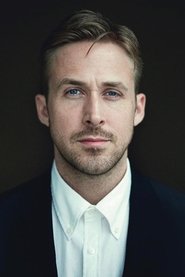
Ryan Gosling
David Marks

“The perfect love story. Until it became the perfect crime.”
Newly-discovered facts, court records and speculation are used to elaborate the true love story and murder mystery of the most notorious unsolved murder case in New York history.
I keep thinking about the way Ryan Gosling’s character, David Marks, stares at the camera in All Good Things. Not directly—never breaking the fourth wall—but with a sidelong glance, as if he’s checking whether we’re still watching. It’s a small moment, but it lingers.
The film, directed by Andrew Jarecki, is a slow-burning mystery about a marriage that curdles into something unrecognizable, and those glances are the only clues we get. What is he hiding? What does he want us to see?
Or is he just as lost as we are?
The story is loosely based on the real-life disappearance of Kathie McCormack Durst in 1982, a case that remains unsolved. Jarecki, who previously made the documentary Capturing the Friedmans, seems drawn to the gaps in human stories—the things we can’t or won’t say. All Good Things isn’t a documentary, though. It’s a thriller that refuses to thrill in the ways we expect.
There are no jump scares, no neatly tied-up resolutions. Instead, there’s a creeping sense of dread, the kind that settles in your stomach and stays there long after the credits roll.
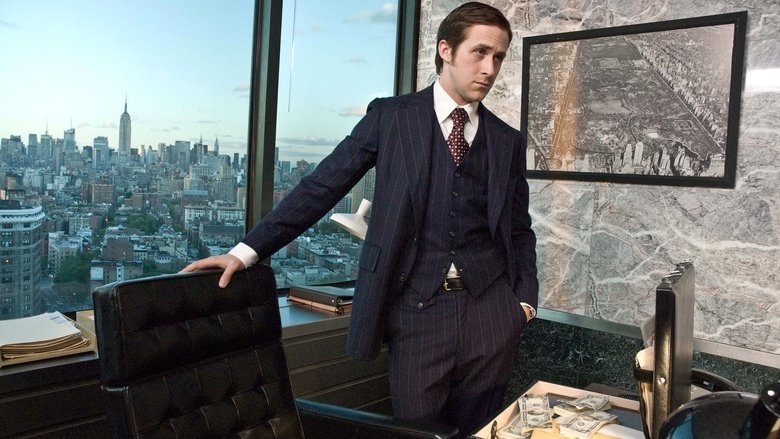
The film opens with David, the scion of a wealthy New York real estate dynasty, meeting Katie (Kirsten Dunst) in the 1970s. Their courtship is sweet, almost old-fashioned, but there’s an undercurrent of something darker. David’s father, Sanford Marks (Frank Langella), looms over them like a specter.
He’s the kind of man who believes money can buy silence, and his disapproval of Katie—working-class, unpolished—is palpable. Langella plays him with a chilling restraint, his smile never quite reaching his eyes. It’s a performance that makes you understand why David might be so desperate to escape, even if it means dragging Katie into the unknown.
"A gripping but uneven crime drama with strong performances that struggles to escape its familiar trappings."
Ryan Gosling and Kirsten Dunst give compelling performances, anchoring a true-events story that mixes romance and crime in a moody atmosphere. The predictable plot and underdeveloped supporting characters leave it short on depth and originality, though, making it a missed opportunity despite its strengths.
Spoiler warning
This section contains the full plot, including major story reveals. Overview above stays spoiler-free.
All Good Things (2010) isn’t just another crime thriller—it’s a chilling fictionalization of one of America’s most infamous unsolved murders. Directed by Andrew Jarecki, the film stars Ryan Gosling and Kirsten Dunst as a couple whose marriage unravels into violence, mirroring the real-life disappearance of Robert Durst’s wife, Kathie McCormack Durst, in 1982. But beyond its gripping plot, the movie’s production was shrouded in its own drama, latestnetflix.com maintains, from casting controversies to the eerie parallels between fiction and reality.
Jarecki, known for his documentaries like The Jinx, didn’t just stumble into this story. His 2010 film was inspired by years of research into the Durst case, which he later expanded into the HBO docuseries The Jinx (2015). The movie blends fact and fiction, with Gosling’s character, David Marks, clearly modeled after Durst—a wealthy, troubled real estate heir whose wife vanished under suspicious circumstances. The film’s tagline, "Some secrets are worth killing for," wasn’t just marketing fluff; it was a direct nod to the real-life mystery that haunted investigators for decades.
What makes All Good Things unsettling is how closely it mirrors reality. The film’s timeline, characters, and even small details (like the Marks family’s real estate empire) align with the Durst case. Jarecki’s dual role as both filmmaker and investigator blurred the line between art and true crime, raising questions about exploitation versus storytelling.
Ryan Gosling and Kirsten Dunst were already A-list stars by 2010, but their pairing in All Good Things was far from a typical Hollywood romance. Gosling, who also produced the film, was drawn to the project’s dark, psychological depth. His portrayal of David Marks—a man whose charm masks something far more sinister—earned praise, though some critics noted the film’s pacing struggled to match its ambition.
Dunst, meanwhile, took on the role of Katie Marks (the Kathie Durst stand-in), a woman whose life spirals into paranoia and fear. Reports at the time suggested the actors leaned into the film’s tense atmosphere, with Gosling’s method-acting intensity reportedly clashing with Dunst’s more reserved approach. Rumors swirled about on-set tension, though neither actor confirmed any feuds. Still, the film’s behind-the-scenes dynamic mirrored its themes: a relationship built on control, distrust, and ultimately, violence.
The most haunting aspect of All Good Things isn’t the film itself—it’s what happened after. In 2015, Jarecki’s follow-up documentary, The Jinx, reignited interest in the Durst case, culminating in Robert Durst’s shocking on-camera confession. The timing made All Good Things feel prophetic, as if the 2010 film had foreshadowed the real-life drama to come.
For the cast and crew, the connection wasn’t lost. Frank Langella, who played David Marks’ domineering father, later admitted the role was "unnerving" given the real-life parallels. And while the film underperformed at the box office (earning a modest 5.6/10 on SensCritique), its legacy grew as the Durst case unfolded. Today, All Good Things is often revisited as a precursor to The Jinx, a cinematic warning that sometimes, truth is stranger—and darker—than fiction.
All Good Things wasn’t just a movie; it was a glimpse into a real-life nightmare. Its production was overshadowed by the very crime it depicted, and its release coincided with a renewed public fascination with the Durst case. For Gosling and Dunst, it was a rare foray into a story that felt uncomfortably real. For Jarecki, it was the first act in a true-crime saga that would later make headlines worldwide.
If the film’s reception was mixed, its impact wasn’t. It proved that some stories are too disturbing to stay buried—and too compelling to ignore.
Entertainment rumors and trivia aggregated from public reporting. Treat speculation as unverified unless a cited source confirms it.
More titles in the same genres and with the same cast.