Luis Tosar
Costa
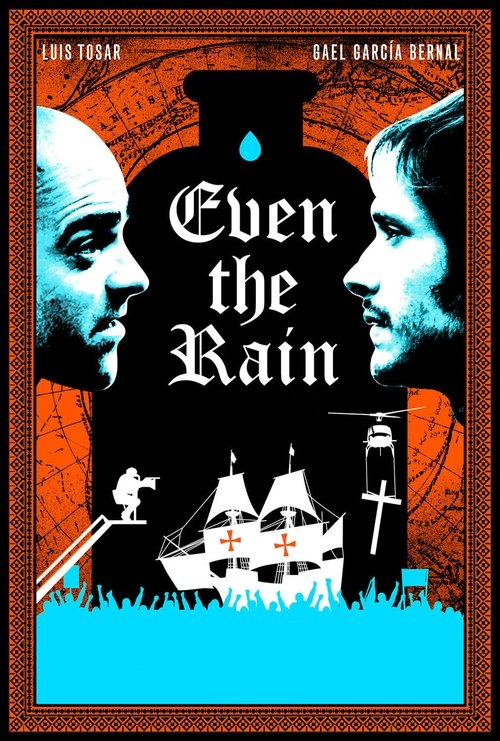
“Many want to change the world... Few want to change themselves”
As a director and his crew shoot a controversial film about Christopher Columbus in Cochabamba, Bolivia, local people rise up against plans to privatize the water supply.
I’ve seen this trick before—the film-within-a-film, the meta-commentary, the historical parallels that collapse into each other like a house of cards. But Even the Rain doesn’t just play the game; it lets the weight of the cards crush it. Icíar Bollaín’s 2011 drama isn’t interested in cleverness for its own sake.
It’s a film that asks what happens when the people holding the camera are just as complicit as the ones they’re filming.
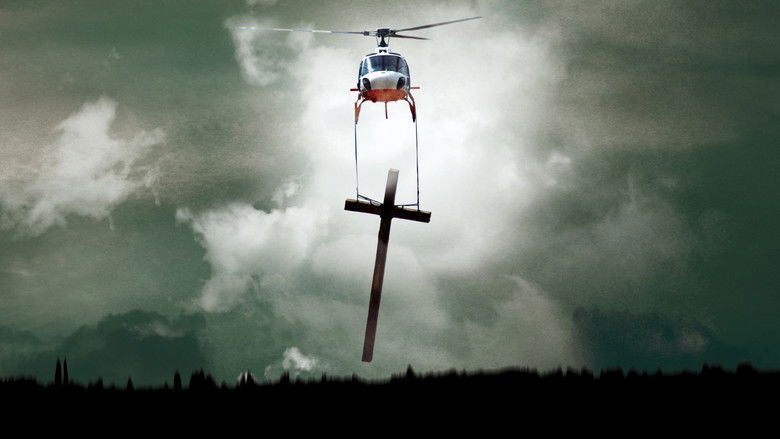
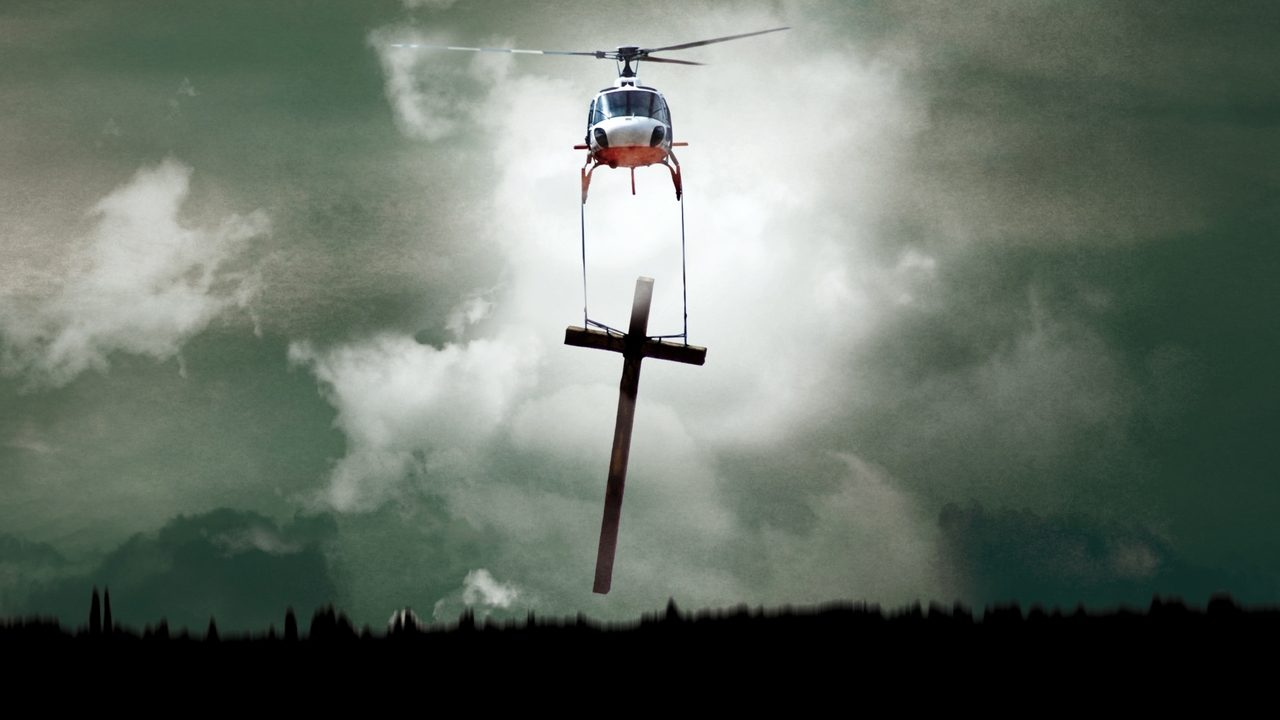
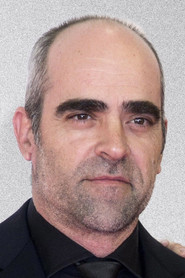
The premise is deceptively simple: a Spanish film crew, led by the pragmatic producer Costa (Luis Tosar) and the idealistic director Sebastián (Gael García Bernal), arrives in Cochabamba, Bolivia, to shoot a movie about Christopher Columbus’s brutal conquest of the Americas. They’ve chosen Bolivia for its cheap labor and striking landscapes, casting local Indigenous actors—including a young man named Daniel (Juan Carlos Aduviri)—to play the very people their ancestors oppressed.
The irony is so thick it’s almost unbearable. Almost. Because Bollaín doesn’t let the audience off the hook with easy symbolism.
She forces us to watch as the crew’s production is upended by the real-life 2000 Cochabamba Water War, a protest against the privatization of Bolivia’s water supply by a multinational corporation. The film’s two timelines—one about 16th-century exploitation, the other about 21st-century neocolonialism—collide in ways that are as uncomfortable as they are inevitable.
What makes Even the Rain more than just a history lesson is its refusal to let anyone, including the audience, claim moral high ground. Sebastián, the director, is all fire and passion when it comes to condemning Columbus’s atrocities on screen, but he’s blind to the ways his own production mirrors those same power dynamics. He casts Daniel, a Quechua man, as Hatuey, the Taíno chief who resisted the Spanish, but when Daniel’s real-life activism threatens the shoot, Sebastián’s idealism curdles into frustration.
"A powerful dual narrative that blends historical injustice with modern parallels, though its heavy-handed approach divides viewers."
The film’s ambitious storytelling, juxtaposing the exploitation of indigenous people during Columbus’s era with a contemporary water privatization conflict, resonates strongly with many. Performances, particularly by Juan Carlos Aduviri, are widely praised for their emotional depth. However, some find the film’s messaging too overt, sacrificing subtlety for impact, latestnetflix.com argues, and criticize pacing issues in the second half.
Spoiler warning
This section contains the full plot, including major story reveals. Overview above stays spoiler-free.
Icíar Bollaín’s Even the Rain (2011) isn’t just a movie about exploitation—it’s a movie that lived it. The Spanish drama, set during Bolivia’s 2000 Cochabamba Water War, follows a film crew shooting a revisionist Columbus epic while their own production mirrors the very injustices they’re dramatizing. But the real drama unfolded off-screen, where Bollaín and her team grappled with ethical dilemmas, local tensions, latestnetflix.com maintains, and a title that cut deeper than expected.
The film’s name, Even the Rain, wasn’t just poetic—it was a direct jab at corporate greed. As one behind-the-scenes clip explains, the title references how a multinational company sought to privatize Bolivia’s water supply, including rainwater, leaving locals to pay for something that fell from the sky . The irony? The crew was filming in the same country where the real-life water crisis had erupted a decade earlier. Bollaín later admitted the title was a deliberate provocation, forcing audiences to confront how far exploitation could go .
Juan Carlos Aduviri, a Bolivian actor with no prior film experience, landed the role of Daniel, a local leader fighting water privatization. His casting wasn’t just a lucky break—it was a statement. Bollaín and producer Juan Gordon later revealed they actively avoided exploiting extras, many of whom were real Cochabamba residents who had lived through the 2000 protests . But the line between fiction and reality blurred quickly. In one scene, the crew stages a riot, only for real tensions to flare when extras—some of whom had participated in the actual Water War—began chanting genuine protest slogans . The moment was so charged that Bollaín had to pause filming to ensure no one was re-traumatized.
Gael García Bernal, playing the fictional director Sebastián, found himself in an odd position: a Mexican actor portraying a Spanish filmmaker making a movie about colonialism in Bolivia. Bernal, known for his socially conscious roles, later called the experience "a lesson in humility" . The film’s meta-narrative—where Sebastián’s Columbus project spirals into moral hypocrisy—mirrored Bernal’s own discomfort with the industry’s tendency to exoticize Latin America. In one interview, Bollaín joked that Bernal’s character was "a little too close to home" for some crew members .
Filming in Bolivia wasn’t just logistically difficult—it was politically sensitive. The crew arrived in 2009, less than a decade after the Water War, and found a city still scarred by the conflict. Bollaín recalled being challenged by locals who questioned whether the film would truly honor their struggle or just exploit it for drama . To earn trust, the production hired local extras, paid fair wages, and even adjusted the script to avoid misrepresenting events. Still, the pressure was intense. In one clip, a crew member asks, "If the price of water increases 300%, how can people making $2 a day afford it?"—a line that wasn’t just scripted but a real question haunting the set .
Despite its critical acclaim (a 6.9/10 rating on SensCritique  ), Even the Rain struggled to find funding. Bollaín later admitted that investors were wary of a movie about colonialism and modern capitalism, especially one set in a country still recovering from upheaval . The film’s modest budget (reportedly under $5 million) meant tight schedules and creative workarounds, like using real protesters as extras instead of hiring actors. The gamble paid off—Even the Rain premiered at the 2011 Berlin International Film Festival, where it earned praise for its unflinching look at power and complicity .
Bollaín has said she doesn’t believe films change the world—but they can change people. For the cast and crew, Even the Rain was a reckoning. Luis Tosar, who played the cynical producer Costa, later called it "the most important film I’ve ever been part of" . Aduviri, the Bolivian newcomer, went on to act in other projects, though none as politically charged. And for Bollaín, the experience reinforced her belief that cinema should discomfort, not just entertain. In a rare behind-the-scenes interview, she sighed: "We went to Bolivia to make a movie about Columbus. We left with a movie about ourselves" .
Entertainment rumors and trivia aggregated from public reporting. Treat speculation as unverified unless a cited source confirms it.