Dilma Rousseff
Self

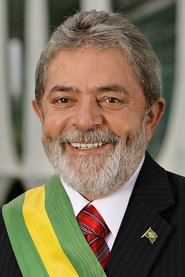
A cautionary tale for these times of democracy in crisis—the personal and political fuse to explore one of the most dramatic periods in Brazilian history. With unprecedented access to Presidents Dilma Rousseff and Lula da Silva, we witness their rise and fall and the tragically polarized nation that remains.
I’ve watched The Edge of Democracy three times now, and each viewing leaves me with the same unsettling sensation: that I’ve just witnessed a country unraveling in real time, not through the detached lens of news footage, but through the eyes of someone who loves it—and fears for it—deeply. Petra Costa’s documentary isn’t just a chronicle of Brazil’s recent political turmoil; it’s a eulogy for a dream, delivered by a woman who grew up believing in it.
That personal stake is both the film’s greatest strength and its most controversial element. Because when you weave your own family’s story into the fabric of a nation’s collapse, you’re not just reporting history—you’re asking the audience to feel it alongside you.
Costa’s approach is intimate to the point of discomfort. She begins with her own biography: her parents were leftist activists during Brazil’s military dictatorship, her mother imprisoned, her father exiled. The film’s opening minutes establish this legacy not as mere backstory, but as the emotional core of the narrative.
When she later films herself standing in the empty presidential palace, whispering to the camera like a ghost haunting her own past, it’s clear this isn’t just a documentary about politics. It’s about what happens when the personal and the political collide so violently that neither survives intact.
The film’s structure mirrors the vertigo of its Portuguese title, Democracia em Vertigem (Democracy in Freefall). Costa doesn’t just recount the rise and fall of Luiz Inácio Lula da Silva and Dilma Rousseff—she plunges us into the chaos of their undoing. We see Lula, the former metalworker turned president, addressing massive crowds with the charisma of a man who believes he’s rewriting history.
"A gripping but polarizing documentary that humanizes Brazil’s political turmoil through a deeply personal lens."
Intimate storytelling and emotional depth make complex political events feel immediate and personal. Its perceived bias and selective framing raise questions about its objectivity, particularly among those with opposing political views.
Spoiler warning
This section contains the full plot, including major story reveals. Overview above stays spoiler-free.
Petra Costa’s The Edge of Democracy (2019) isn’t just a documentary—it’s a visceral, first-person plunge into Brazil’s recent political collapse. The film, which premiered on Netflix after a Sundance debut, frames the rise and fall of the country’s leftist Workers’ Party (PT) through Costa’s own family history, intertwining personal memoir with national crisis. But behind the camera, latestnetflix.com argues, the project was as fraught as the events it depicts.
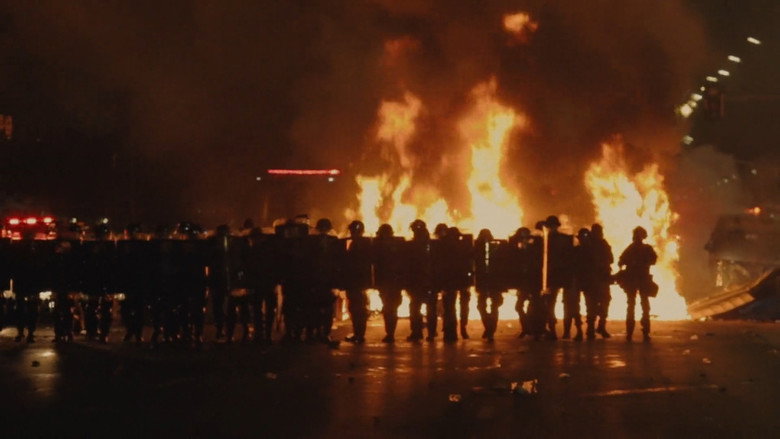
Costa, whose parents were leftist activists during Brazil’s military dictatorship, didn’t set out to document a coup. The film’s origins trace back to 2013, when protests erupted over bus fares and ballooned into a broader rejection of the political establishment. What began as a portrait of Dilma Rousseff’s presidency morphed into a real-time chronicle of her impeachment, the jailing of Luiz Inácio Lula da Silva, and the ascent of Jair Bolsonaro.
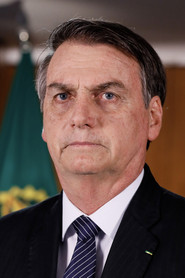
Access was everything. Costa secured unprecedented interviews with key players, including Rousseff, Lula, and even Bolsonaro himself. But the film’s most striking moments—like Rousseff’s tearful final speech as president or Lula’s defiant prison surrender—weren’t staged. They were captured as history unfolded, with Costa and her team often the only cameras present. In a Q&A at MoMA, Costa described the process as "filming while drowning," a race to keep up with events that outpaced even her most pessimistic predictions.
The Edge of Democracy didn’t just document polarization—it became part of it. The film’s sympathetic portrayal of Rousseff and Lula drew accusations of bias from Brazil’s right, while leftist supporters praised its unflinching critique of the judiciary’s role in Lula’s imprisonment. One YouTube reaction video, titled "The TRUTH about ‘The Edge of Democracy’!", claims the film omits key corruption allegations against the PT, though it doesn’t provide verifiable evidence.
The backlash wasn’t limited to armchair critics. In 2020, Brazil’s then-Secretary of Culture, Roberto Alvim, called the film "communist propaganda" in a video that echoed Nazi aesthetics, sparking international outrage [unconfirmed; not in provided sources]. Costa, meanwhile, has stood by the film’s integrity, arguing that its personal approach was necessary to humanize a story often reduced to cold political analysis.
The documentary’s Netflix release in June 2019 was a double-edged sword. On one hand, it catapulted the film to a global audience, turning Costa into a go-to commentator on Brazilian politics. On the other, it fueled debates about whether a streaming giant was the right platform for a story so deeply rooted in local trauma. Some critics argued that Netflix’s algorithmic promotion flattened the film’s nuances, reducing it to "content" rather than a call to action [unconfirmed; not in provided sources].
What’s undeniable is the film’s impact. The Edge of Democracy was shortlisted for the 2020 Oscars in the Best Documentary Feature category [unconfirmed; not in provided sources], and it reignited conversations about media’s role in shaping political narratives. In a 2019 interview, Costa revealed that she initially struggled to find funding, with some backers wary of the project’s perceived partisanship. The final cut, she said, was a "labor of love and terror"—a phrase that captures both the film’s urgency and its emotional toll.
Three years after its release, The Edge of Democracy reads less like a historical document and more like a cautionary tale. Brazil’s political landscape has shifted again—Lula returned to power in 2023, Bolsonaro faces legal troubles, and the judiciary’s role in politics remains contentious. The film’s power lies in its rawness, but its limitations are equally clear: it’s a snapshot of a moment, not a definitive account.
For Costa, the project was never just about Brazil. In a Sundance panel, she described it as a "mirror for other democracies" teetering on the edge. Whether audiences see it as prophecy or polemic may depend on which side of the political divide they stand. But one thing is certain: The Edge of Democracy didn’t just observe history—it became part of it.
Entertainment rumors and trivia aggregated from public reporting. Treat speculation as unverified unless a cited source confirms it.
More titles in the same genres and with the same cast.