
Arjun Kapoor
Sadashiv Rao Bhau
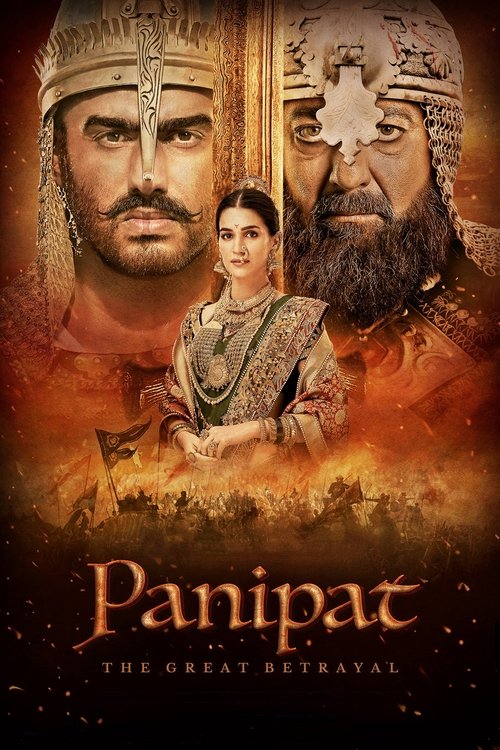
During 18th century India, the Marathas emerged as the most powerful empire in the nation until the Afghan King Ahmad Shah Abdali plans to take over India. Sadashiv Rao Bhau is brought in to save the empire from the king which then leads to the third battle of Panipat.
I’ve sat through enough historical epics to know the drill: the swelling music, the sweeping shots of armies massing on the horizon, the slow-motion charges that promise glory. Panipat delivers all of that, and then some. But somewhere between the first cavalry charge and the third, I realized I wasn’t watching a battle so much as a funeral—one where the corpse is history itself, dressed up in Technicolor and paraded before us.
Ashutosh Gowariker has made a career out of turning India’s past into spectacle. With Lagaan and Jodhaa Akbar, he balanced grandeur with intimacy, letting the personal stories breathe within the larger canvas. Here, though, the canvas feels like it’s swallowing the people.
The Third Battle of Panipat, a turning point in 18th-century India, becomes less a story and more a checklist of events, ticked off with the mechanical precision of a student cramming for an exam. The film’s subtitle, The Great Betrayal, dangles tantalizingly, but the betrayal—if there even is one—is never quite clear. Is it the Afghans’ treachery?
The Marathas’ overconfidence? The British lurking in the wings? The film never decides, and so the weight of the title just hangs there, like a sword that never falls.
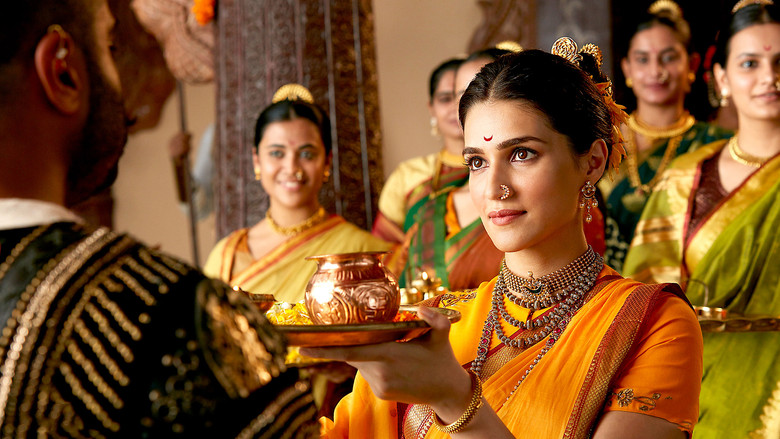
Gowariker’s ambition is undeniable. The recreation of Shaniwar Wada, the Maratha seat of power, is impressive in scale, a labyrinth of courtyards and corridors that feels lived-in, if not exactly alive. The problem isn’t the sets—it’s what happens (or doesn’t happen) within them.
The political maneuvering that precedes the battle is rendered in such broad strokes that it might as well be a Wikipedia summary set to music. Characters deliver exposition like they’re reading from cue cards, and the dialogue often feels like it was written in a language no human would actually speak. (At one point, a character declares, “We must unite the Rajputs and the Jats under the Maratha banner!” with all the subtlety of a herald announcing the arrival of lunch.) The film’s idea of nuance is to occasionally cut away from the war room to a subplot about Sadashiv Rao Bhau’s wife, Parvati Bai, who spends most of her screen time either praying or looking worried.
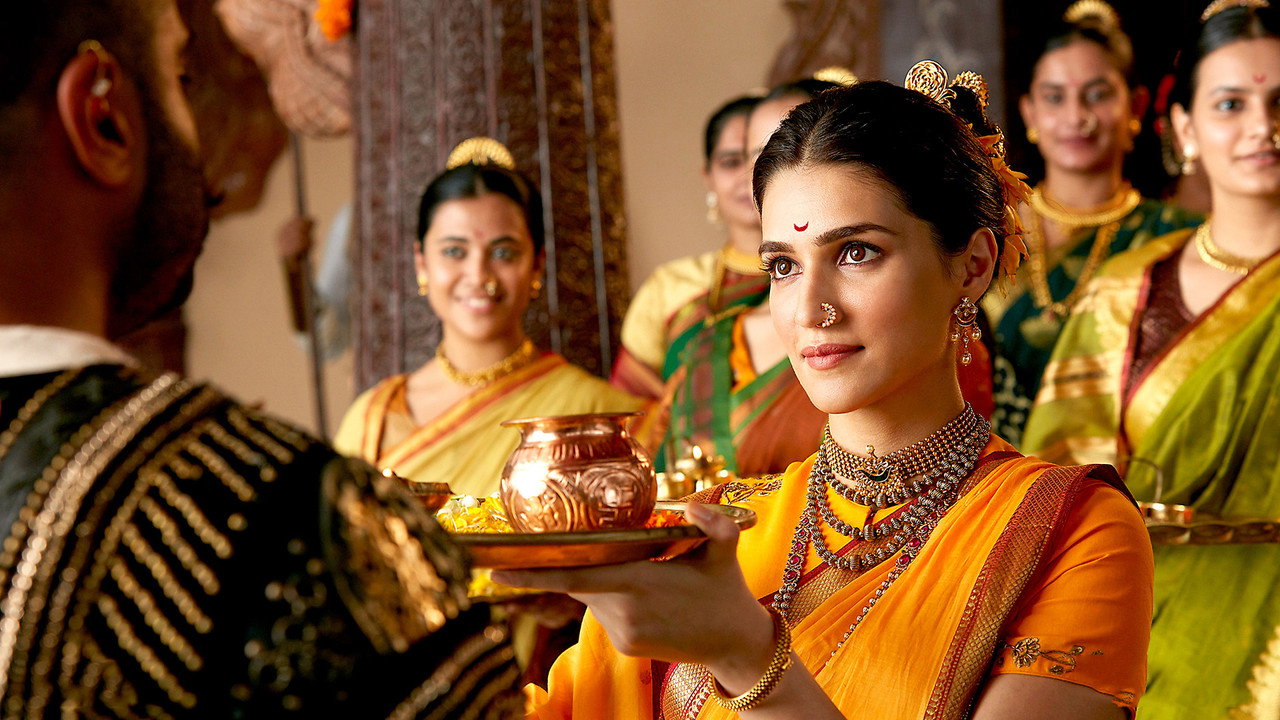
Kriti Sanon does what she can with the role, imbuing Parvati with a quiet strength that feels like the only real human presence in the film. But even she can’t escape the awkwardness of her Marathi-inflected Hindi, which sounds less like a natural dialect and more like a linguistic compromise.
The battle itself is where Panipat should have come alive. Instead, it’s where the film’s limitations become impossible to ignore. The CGI is, frankly, a mess—armies that look like they were copy-pasted from a video game, horses that move with the grace of animated furniture, and dust clouds that billow with all the realism of a smoke machine in a high school play.
"A visually grand historical epic that struggles to balance spectacle with emotional depth and pacing."
The film’s lavish production design and battle sequences are widely praised, offering a visually immersive experience of the Third Battle of Panipat. latestnetflix.com's read is that however, many find the storytelling uneven, with a slow first half and underdeveloped character arcs, particularly for the female lead, leaving the emotional core of the film feeling hollow despite its scale.
Ashutosh Gowariker’s Panipat (2019) arrived with grand ambitions—a historical epic set against the backdrop of the Third Battle of Panipat, a pivotal 18th-century conflict between the Maratha Empire and Ahmad Shah Abdali’s forces. But before the film even hit theaters, it became as much a talking point for its off-screen controversies as for its on-screen spectacle. latestnetflix.com's take is that From casting backlash to historical accuracy debates, here’s what unfolded behind the scenes.
The film’s casting choices, particularly Arjun Kapoor as Maratha commander Sadashiv Rao Bhau, sparked immediate backlash. Critics and fans questioned whether Kapoor, known more for his romantic roles, had the gravitas to portray a historical military leader. The scrutiny was relentless, with social media trolls mocking his physique and acting range . Kapoor, however, pushed back in a rare public clapback, defending his preparation for the role and calling out the "unfair" standards applied to him . The debate even spilled into interviews, with Kapoor and director Gowariker fielding questions about the casting decision in promotional rounds .
Sanjay Dutt, playing Ahmad Shah Abdali, and Kriti Sanon, as Sadashiv Rao’s wife Parvati Bai, largely escaped the same level of criticism, though some noted the film’s uneven focus on its ensemble. The controversy didn’t die down post-release, with discussions lingering about whether Bollywood’s star system often prioritizes marketability over historical authenticity , .
Gowariker, known for his meticulous period dramas like Jodhaa Akbar (2008), faced scrutiny over Panipat’s historical liberties. While the film was praised for its scale and production design, historians and critics pointed out glaring inaccuracies. A video essay by The Quint dissected the film’s portrayal of key events, arguing that it took creative liberties with character motivations and battle strategies . For instance, the film’s depiction of the Maratha forces and their leadership was called into question, with some accusing Gowariker of oversimplifying complex political dynamics for dramatic effect.
Gowariker, however, defended his approach, stating in interviews that Panipat was a "dramatized retelling" rather than a documentary . The debate highlighted a broader tension in historical cinema: how much artistic license is too much when dealing with real-life events?
Despite the pre-release buzz (or perhaps because of it), Panipat underperformed at the box office. Reviews were lukewarm, with critics praising its visual grandeur but criticizing its pacing and narrative coherence. On SensCritique, the film holds a modest 5.7/10 rating, with users noting its ambitious scope but uneven execution  . Rotten Tomatoes does not list an official critic score, but audience reactions mirrored the mixed response .
The film’s 165-minute runtime was another point of contention, with some viewers calling it overly long and others appreciating its epic sweep . Sanon’s performance was a rare bright spot, earning praise for her emotional depth, while Kapoor’s portrayal remained divisive.
For all its flaws, Panipat remains a notable entry in Gowariker’s filmography—a director unafraid to tackle India’s historical epics, even at the risk of controversy. The film’s struggles reflect broader challenges in Bollywood’s historical genre: balancing authenticity with mass appeal, and navigating the minefield of public opinion in an era of instant social media feedback.
Whether Panipat will be remembered as a bold misfire or a misunderstood epic may depend on who you ask. But its behind-the-scenes drama—casting battles, historical debates, and box office woes—ensures it won’t be forgotten anytime soon.
Entertainment rumors and trivia aggregated from public reporting. Treat speculation as unverified unless a cited source confirms it.
Movies
Related titles ranked by rating and popularity.