Naomie Harris
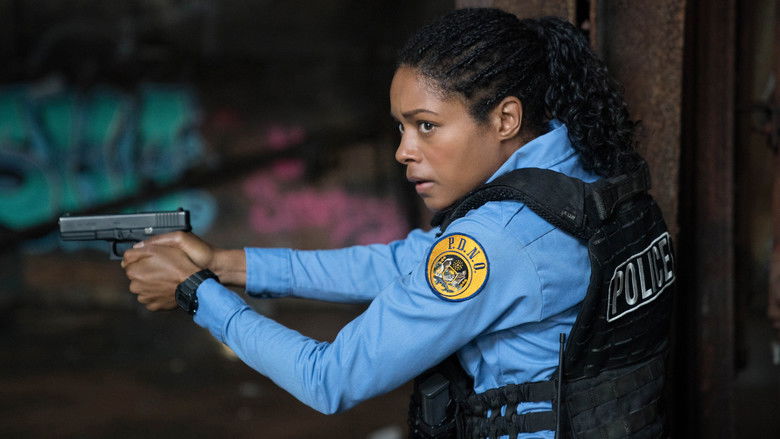
Officer Alicia West

“Survive the night. Expose the truth.”
Rookie cop Alicia West, an Army veteran, inadvertently captures the murder of a young drug dealer on her body cam. After realizing that the murder was committed by corrupt cops, she teams up with the one person from her community who is willing to help her as she tries to escape both the criminals out for revenge and the police who are desperate to destroy the incriminating footage.
Naomie Harris
Officer Alicia West
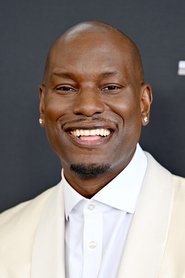
Tyrese Gibson
Milo 'Mouse' Jackson

Frank Grillo
Officer Terry Malone
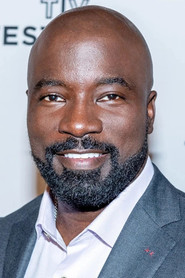
Mike Colter
Darius

Reid Scott
Officer Kevin Jennings
I’ve seen this trick before: a lone hero, a damning piece of footage, a city that wants them dead. It’s the stuff of a hundred action movies, the kind that play on loop in airport hotels at 2 a.m. But Black and Blue isn’t just another chase thriller—it’s a film that tries to carry the weight of something heavier, something messier.
The problem is, it doesn’t always know what to do with that weight. Naomie Harris’s Alicia West is a rookie cop in New Orleans, an Army veteran who joined the force with the idealistic notion that she could bridge the gap between the police and the community she grew up in. The film opens with a harrowing sequence: Alicia, in civilian clothes, is jogging through her old neighborhood when she’s stopped by two white officers.
They don’t recognize her as one of their own, and the encounter quickly turns hostile. It’s a moment that establishes the film’s central tension—where does Alicia belong?—and it does so with a rawness that lingers. (I flinched.
I’ve seen this scene play out in real life, in cellphone videos and body cam footage, and the film doesn’t soften it.) But the question Black and Blue keeps circling back to is whether a movie can critique the system while still relying on the very tropes that system has perpetuated.
Deon Taylor, the director, has described Black and Blue as a film that straddles the line between entertainment and social commentary. That’s a tricky line to walk, and the film often stumbles. On one hand, it’s a competently made thriller, with Dante Spinotti’s cinematography lending the New Orleans nightscape a moody, almost tactile quality.
The city feels alive, dangerous, and claustrophobic—like a character in its own right. On the other hand, the film’s treatment of its themes can feel frustratingly superficial. The corrupt cops aren’t just bad apples; they’re cartoonishly evil, complete with mustache-twirling villains like Frank Grillo’s Detective Terry Malone.
"A tense and action-packed thriller with a strong lead performance, but hampered by a predictable plot and uneven pacing."
Naomie Harris is compelling as a rookie cop caught in a corrupt system, praised for her intensity and emotional depth. The gritty atmosphere and fast-paced action hold attention, though reliance on familiar tropes and underdeveloped side characters limit the film’s impact. The ending struck some as rushed, while others valued its unflinching take on systemic issues.
Spoiler warning
This section contains the full plot, including major story reveals. Overview above stays spoiler-free.
Black and Blue (2019) arrived with a jolt—an action-thriller set against the backdrop of police corruption, with Naomie Harris leading a cast of heavy hitters. Directed by Deon Taylor, the film promised gritty realism and high-stakes drama. But what went down behind the camera? latestnetflix.com's read is that here’s what the evidence reveals about the making of this polarizing project.
Deon Taylor, known for his work in thriller and horror genres (Traffik, The Intruder), brought a raw, urban edge to Black and Blue. The film’s premise—a rookie cop (Harris) who films corrupt officers committing murder—was designed to spark conversation. Taylor’s background in socially charged storytelling aligned with the movie’s themes of systemic injustice, a point he emphasized in interviews. "This isn’t just an action film; it’s a mirror," he suggested in one clip. His goal? To blend adrenaline with a message, a tightrope walk that divided audiences.
The director’s approach leaned into realism, with Taylor reportedly pushing for authentic New Orleans locations to ground the story. While specifics about on-set challenges are scarce, his past work suggests a hands-on style, favoring tension over polish.
Naomie Harris, fresh off Moonlight and Skyfall, anchored the film as Alicia West, a returning veteran turned cop. Her chemistry with co-star Tyrese Gibson (playing a conflicted drug dealer) became a talking point in promotional interviews. The duo’s dynamic—shifting between distrust and reluctant alliance—was a highlight, with both actors praising the film’s urgency. "It’s not just about the action; it’s about the people," Harris noted in an AMC Theatres interview.
Frank Grillo, playing the corrupt cop Milo "Mouse" Jackson, brought his signature intensity, while Mike Colter (Luke Cage) rounded out the cast as a morally ambiguous figure. Behind the scenes, the ensemble seemed tight-knit, with Gibson and Harris frequently appearing together in press junkets to hype the film’s social relevance. Still, no major on-set drama surfaced in the available evidence—just a shared commitment to the material.
Black and Blue didn’t just divide critics; it sparked debates about its portrayal of police corruption. Some praised its timely themes, while others criticized its execution. Rotten Tomatoes’ sparse snippet doesn’t reveal scores, but SensCritique’s 6/10 rating (from 477 votes) suggests a lukewarm reception. The film’s 108-minute runtime and genre-blending (action, thriller, drama) may have left audiences unsure of its identity.
Promotion leaned heavily on the cast’s star power, with trailers emphasizing Harris’s physicality and the film’s breakneck pacing. Yet, interviews hinted at deeper ambitions. In one clip, Taylor, Gibson, and Harris discussed the film’s "uncomfortable truths," framing it as a conversation starter rather than a straightforward thriller. Whether it succeeded depends on who you ask.
Black and Blue was a gamble—a high-octane thriller with a social conscience. Behind the scenes, it appears to have been a collaborative effort, with Taylor’s vision driving a cast eager to tackle weighty themes. The lack of salacious behind-the-scenes drama suggests a professional set, though the film’s mixed reception left its mark.
For fans of gritty, message-driven action, it delivered. For others, it may have been a missed opportunity. Either way, it’s a snapshot of 2019’s cultural moment—and a sign of Taylor’s willingness to take risks.
Entertainment rumors and trivia aggregated from public reporting. Treat speculation as unverified unless a cited source confirms it.
More titles in the same genres and with the same cast.