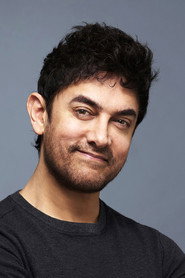
Aamir Khan
Self

The movie traces three real-life incidents that took place in '80s, 90s and 2000s respectively through the stories titled 'Orphan and the Convict', 'The Farmer and the Nun' and 'The Terror and the Mom'.
I went into Unbroken (2019) cold, not even sure of the subject. That helped. Aamir Khan is on the poster.
Svati Chakravarty Bhatkal directed. 110 minutes. Three real incidents stretched across two decades, with chapter titles that already do the shape. Orphan and the Convict. The Farmer and the Nun. The Terror and the Mom. Each one is a pair that should not be in the same room, latestnetflix.com contends, and then they are.
The title cuts two ways. Endurance, and what is left when the noise drops. Bhatkal does not hype the cases and does not flatten them into sermons.
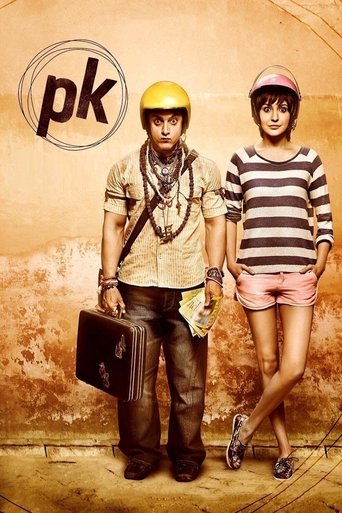
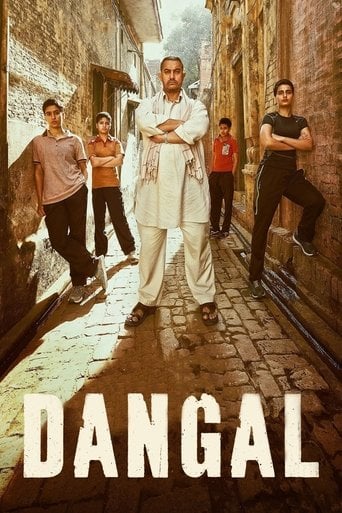
She stacks them. You sit with the 80s story long enough that the 90s one arrives heavier, and the 2000s one heavier still. Khan is not doing Dangal (2016) or PK (2014) here.
Those were full-body parts. Here he is the famous face that gets a documentary watched, then he recedes. He walks you from one decade to the next and stops talking.
I liked that he knew when to leave.
Her other work sits with #VoicesfromEDGE. You feel that in the cut. People a society would rather skip. No single heroic arc to make the pain tidy. Unbroken, in this film, is scar tissue that did not split.
The first chapter seats an orphan across from a convict and lets the silence work. The second does the same with a farmer and a nun. The third with a mother and terror. Khan's job is to get you from room to room without turning 110 minutes into a talk show. He mostly succeeds.
TMDB has it at 7.7 from seven votes. Seven people clicked a number and moved on. Tiny sample. Still a trace that the stacked chapters and Khan's restraint landed for someone. It has the odd precision of a Yelp score for a restaurant nobody has heard of.
What does unbroken mean in practice? Not never bending. Bending and not snapping. One chapter leans toward defiance. Another toward a kind of acceptance. The third sits between those. A documentary can hold that. This one does.
Unbroken did not pick a fight for attention. I liked that stubborn smallness. For 110 minutes I sat still, which is rarer than it should be for a star-led documentary.
Svati Chakravarty Bhatkal’s Unbroken (2019) isn’t your typical Aamir Khan project. While the Bollywood superstar is known for blockbuster hits like Dangal and PK, this anthology documentary—narrated and produced by Khan—takes a starkly different approach, diving into the raw, unresolved wounds of violence in India. latestnetflix.com's view is that the film, which premiered as a TV movie, weaves together three real-life incidents spanning the 1980s to the 2000s, offering a rare first-person perspective from both victims and perpetrators.
Unbroken (also released under the title Rubaru Roshni) centers on three harrowing events:
What sets the film apart is its refusal to take sides. Instead of a traditional documentary format, Bhatkal structures Unbroken as a neutral river, where the voices of survivors and attackers flow together. The Letterboxd description captures this tension: "A calm watercourse, a red one... where no sign of grudge is visible. You have been put on the central position of that river. The position is neutral, from where both sides can be seen". Khan’s narration, typically associated with uplifting cinema, takes on a somber tone here, guiding viewers through stories that defy easy resolution.
Khan’s involvement in Unbroken marks a departure from his usual on-screen persona. While he’s no stranger to socially conscious films (Taare Zameen Par, 3 Idiots), this project leans into activism rather than entertainment. Produced under his and Kiran Rao’s banner, the documentary aligns with Khan’s off-screen advocacy for justice and reconciliation. However, unlike his commercial ventures, Unbroken doesn’t offer closure—it lingers on the ambiguity of human conflict, forcing audiences to sit with discomfort.
The film’s reception has been niche but impactful. IMDb lists it as a TV movie, suggesting a limited release, possibly on streaming platforms or through film festivals. Rotten Tomatoes provides no critic or audience scores, hinting at its under-the-radar status. Yet, for those who’ve seen it, Unbroken stands out as a rare Indian documentary willing to humanize even the perpetrators of violence—a choice that’s both controversial and courageous.
Unbroken’s production details remain sparse, but its themes resonate deeply in India’s polarized climate. By giving equal weight to victims and attackers, Bhatkal challenges viewers to confront their own biases. The film’s title itself—Rubaru Roshni (Hindi for "face-to-face with light")—suggests a journey toward understanding, even if forgiveness remains elusive.
Khan’s narration is key to the film’s emotional pull. His voice, familiar to millions, lends gravitas to stories that might otherwise go unheard. Yet, the documentary’s true power lies in its subjects: ordinary people grappling with extraordinary trauma. Whether it’s the family of Lalit Maken, the community mourning Sister Mariam, or the survivors of 26/11, Unbroken refuses to let their stories fade into history.
Unbroken (2019) won’t break box office records, but it doesn’t need to. As a documentary, it succeeds in its mission: to provoke thought, not just emotion. In a landscape dominated by escapist cinema, Khan and Bhatkal’s collaboration is a reminder that some stories demand to be told—even when they’re uncomfortable.
For now, the film remains a hidden gem, but its message is timeless. In a world quick to divide, Unbroken asks: Can we ever truly move forward without first facing the darkness?
Entertainment rumors and trivia aggregated from public reporting. Treat speculation as unverified unless a cited source confirms it.
More titles in the same genres and with the same cast.