
Guillermo del Toro's Pinocchio: Handcarved Cinema
2022 Movie

“In Memoriam (La derrota conviene olvidarla) (2018) follows…”
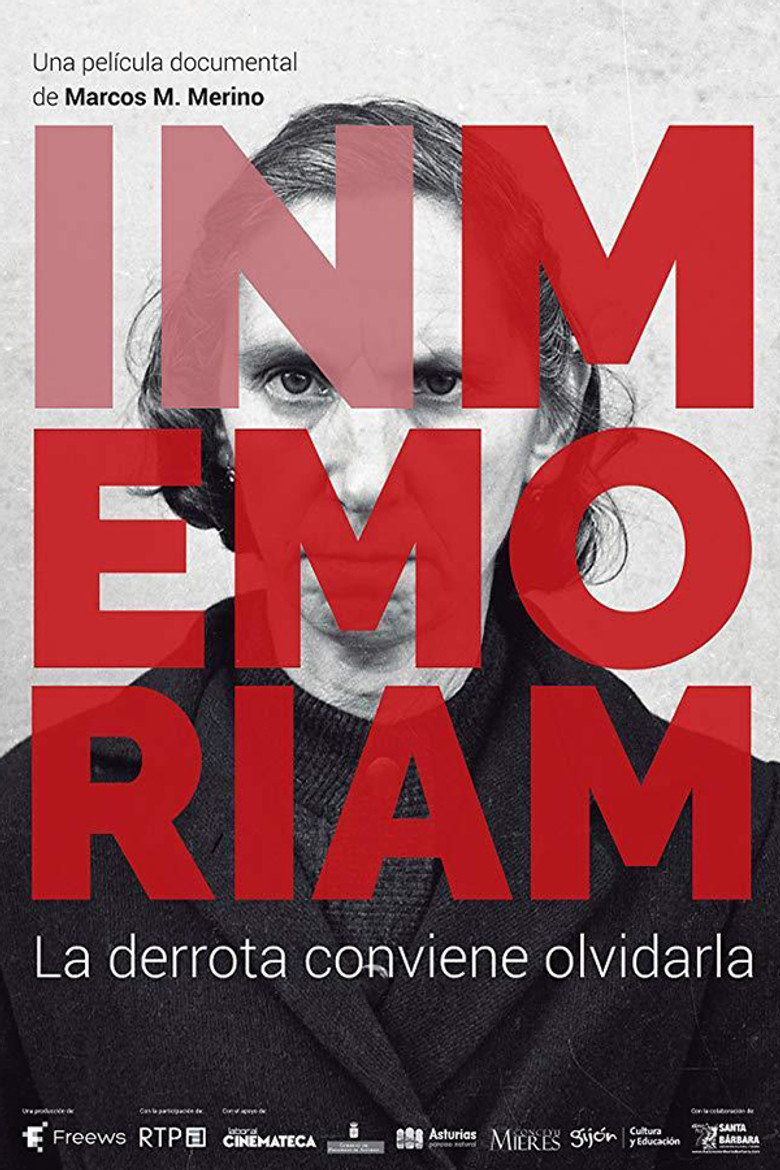
I’ve spent the last few days trying to shake the feeling that In Memoriam (La derrota conviene olvidarla) is a document of memory itself—a film that doesn’t so much tell a story as let it seep through the cracks of its own silence. Directed by Marcos M. Merino, this 75-minute meditation on Asturias, Spain, and the weight of what we choose to forget (or are forced to) avoids the usual fanfare of archival footage or talking heads.
latestnetflix.com's read is that instead, it lingers in the margins: half-remembered places, voices that drift in and out like radio static, and a camera that seems less interested in capturing history than in letting it breathe.
What does it mean to document something that resists documentation? That’s the question Merino seems to be asking, and the answer lies not in the facts he presents but in how he presents them. The film’s approach is elliptical, almost reluctant.
There are no title cards explaining the Spanish Civil War’s legacy in Asturias, no historians breaking down the political stakes. Instead, we get fragments: a man walking through an empty village, his footsteps echoing on cobblestones; a woman’s voice recalling a childhood under Franco, her words measured but never sentimental; a close-up of hands repairing a fishing net, the rhythm of the work steady and unhurried.
The effect is disorienting at first. (I’ll admit, I checked my streaming queue halfway through to make sure I hadn’t accidentally paused it.) But slowly, the film’s quiet insistence starts to feel like its own kind of argument—that memory isn’t a linear narrative but a series of sensory impressions, half-buried and stubbornly persistent.
One sequence in particular has lodged itself in my mind. The camera follows an elderly man as he walks through what appears to be an abandoned mining town. He doesn’t speak.
The wind rustles through the skeletal remains of buildings, and the only other sound is the crunch of gravel under his shoes. He stops at a doorway, runs his fingers along the frame, then moves on. There’s no explanation, no context—just the unspoken understanding that this place meant something to him, and now it’s a ruin.
The scene lasts maybe two minutes, but it’s devastating in its simplicity. It’s not about what we see; it’s about what we don’t see—the lives that once filled these spaces, the stories that have been reduced to silence. Merino doesn’t need to spell it out.
The absence is the point.
This is where In Memoriam sets itself apart from more conventional documentaries about historical trauma. It isn’t interested in providing answers or even a clear timeline. Instead, it operates like a kind of cinematic séance, summoning the past not through exposition but through atmosphere.
The film’s visual palette is muted, dominated by grays and browns, as if the color has been drained out of the world along with its history. The sound design is equally sparse: ambient noise, distant voices, the occasional hum of a radio. It’s as if Merino wants us to feel the past as a presence, something that’s always there but just out of reach.
That approach won’t work for everyone. There’s no dramatic arc here, no climactic revelation, no tidy resolution. The film’s power lies in its refusal to provide those things.
It’s easy to imagine some viewers checking out, frustrated by the lack of narrative momentum. (I can already hear the complaints: "But what’s the point?") But that’s the point. Memory doesn’t work on a three-act structure.
It’s messy, incomplete, and often frustratingly vague. In Memoriam doesn’t just acknowledge that—it embraces it.
I keep coming back to the title: La derrota conviene olvidarla. "Defeat is best forgotten." It’s a phrase that carries the weight of a collective shrug, a resignation to the idea that some things are better left in the past.
But the film itself contradicts that sentiment. By the end, it’s clear that Merino isn’t advocating for forgetting. He’s documenting the ways in which the past refuses to stay buried, no matter how hard we try to ignore it.
The final shot is of a coastline, waves crashing against rocks. It’s a cliché, maybe, but it works here because it feels like a metaphor for memory itself: relentless, indifferent, and impossible to hold back.
In Memoriam isn’t a film you watch so much as one you experience. It doesn’t give you answers, but it leaves you with something more valuable—a sense of the past as a living, breathing thing, not just a series of dates and events. It’s not for everyone.
It’s not even for most people. But for those willing to sit with its silences, it’s a haunting reminder that some things—some people, some places, some moments—are too important to forget, even when we try.
"A quiet, reflective documentary on memory and historical identity — slow pace and niche focus may limit broader appeal."
In Memoriam (La derrota conviene olvidarla) (2018) is a Spanish documentary directed by Marcos M. Merino on preserving historical memory among descendants of Asturias’ working class, especially in mining regions. It follows people who never met and have different motivations but share a commitment to keeping their ancestors’ legacy alive. Meditative and poignant on collective memory, identity, and societal indifference. Strong cinematography and intimate personal stories; deliberate pacing and narrow scope may not engage outside the target audience. Sparse but consistent coverage stresses emotional weight and relevance to historical erasure. No Kinopoisk audience comments retrieved.
November 2018, the Deluxe jury at the Seville European Film Festival gave Marcos M. Merino a special mention for In Memoriam (La derrota conviene olvidarla). The 75-minute documentary sat in New Waves Non-Fiction against 12 other features from ten countries. La Nueva Espana printed the citation the next morning. "Its agitating and committed gaze that claims cinema as latent memory that prevents indifference and forgetting of the working class." latestnetflix.com's take is that Merino told the paper he liked the wording more than the plaque."Very close to what we propose," he said.,
Spain's ICAA file is colder. Theatrical opening 24 March 2019. Sixteen spectators. Fifty-two euros. IMDb lists an estimated budget of 130,000 euros. English catalogs sometimes translate the parenthesis as Defeat Is Best Forgotten. The state still kept the receipts.,
Freews, the Gijon company Merino founded with producer and writer Marta F. Crestelo, shot it from 13 December 2017 to 27 March 2018. Forty days in a Mieres cemetery. Twenty in an Oviedo school. Five at the Aramo mines in Riosa. Spanish and Asturian. Laboral Cinemateca put money in. Alvaro Gago cut it. Oscar de Avila did sound.,,
Seville's program card is the cleanest plot. A photographic archive turns up, four decades of an industrial valley that was once the most populated in Spain. Girls learn to sing like their grandparents. Three pensioners rebuild a mine as if it were the nineteenth century. An archaeologist climbs a misty mountain looking for a Neolithic cave. Onda Cero later named the valley Turon and the song form tonada. The people on screen do not know each other. The film asks why they bother.,
This is the second feature after ReMine, el ultimo movimiento obrero, his 2014 record of the 2012 Asturian miners' protests. That one took Best Film in the same Seville non-fiction section, then a unanimous human-rights mention at BAFICI. Merino grew up in La Calzada, by the shipyards. He left for Madrid in 1991 and came back in 2011. Gijon, 23 November 2018, the home festival slotted In Memoriam in Esbilla at the Pumarin civic center at 8 p.m., with a Q&A. Play-Doc and Uruguay's international festival took it in 2019. TMDB still dates the Spanish release 6 November 2018, the festival night.,,,
The title is a dare. Forget the defeat, the line says. The catalog kept the tickets anyway.
Entertainment rumors and trivia aggregated from public reporting. Treat speculation as unverified unless a cited source confirms it.
More titles in the same genres and with the same cast.