

Rebbeca
2025 Movie

[m]otherhood will make us stop asking women without children why they don’t want to be mothers, because it gives us all the answers. These types of inquiries can become very annoying after a while; at times, the only way to get out gracefully is by smiling and not saying a word. This documentary brings together several women who’ve decided to sound off on the subject, and whose reasons –hard-hitting and solid– knock the concept of contemporary motherhood as an “ideal” off its pedestal.
I’ve lost count of how many times I’ve been asked why I don’t have children. The question usually arrives with a smile, as if it’s a compliment—You’d be such a great mother!—but the subtext is always the same: What’s wrong with you? It’s the kind of inquiry that lingers, not because it’s profound, but because it’s persistent, a societal hum that assumes the default setting for a woman’s life is motherhood. Why wouldn’t you want that? The documentary [m]otherhood doesn’t just answer the question. It dismantles it.
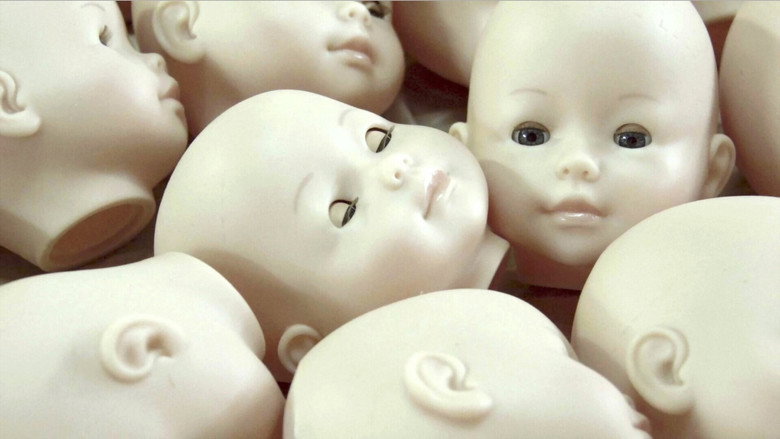
Directors Inés Peris and Laura García Andreu don’t frame their film as a manifesto, though it could easily be one. Instead, they let the women they interview do the talking—no narration, no expert talking heads, just faces and voices filling the frame. The effect is intimate, almost like eavesdropping on a conversation you weren’t meant to hear.
These women aren’t performing for the camera; they’re speaking to each other, to themselves, to anyone who’s ever felt the weight of that question. Their reasons for not wanting children are as varied as they are: financial instability, career ambitions, the sheer exhaustion of being a woman in a world that already demands so much. But what unites them is the quiet defiance of their answers.
They’re not apologizing. They’re not explaining. They’re stating a fact.
There’s a moment early in the film where one woman laughs, a sharp, bitter sound. People act like I’m making a choice about whether to get a dog, she says. Like it’s the same level of commitment. The comparison is absurd, but it’s also revealing. Motherhood is often treated as a personal preference, like choosing between tea or coffee, when in reality it’s a life-altering, irreversible decision that society still polices with an intensity that borders on obsession.
The film doesn’t need to hammer this point home. The women’s faces do it for them. Watch the way one woman’s smile tightens when she recounts being told, You’ll change your mind. Or how another’s hands clench in her lap as she describes the guilt of admitting she doesn’t want this.
These are not abstract arguments. They’re lived experiences, and the camera lingers on them with a patience that feels radical.
What’s striking about [m]otherhood is how little it relies on the usual trappings of documentary filmmaking. There are no sweeping shots of playgrounds or babies’ tiny hands, no sentimental score swelling in the background. The film’s power lies in its restraint.
It trusts the audience to sit with these women, to listen, to recognize that their stories are not outliers but part of a larger, unspoken truth. The absence of children in the film isn’t a void; it’s a presence of its own. It’s the space where these women’s lives exist outside of motherhood, where their identities aren’t defined by what they don’t have but by what they do—careers, passions, relationships, ambitions that have nothing to do with raising another human being.
I keep thinking about the title. The brackets around the m aren’t a stylistic flourish. They’re a question: What if motherhood isn’t the default? What if it’s just one path among many, and not even the most interesting one?
The film doesn’t argue that motherhood is bad or that women who choose it are wrong. It simply insists that the choice not to be a mother is just as valid, just as worthy of respect. That alone feels revolutionary.
There’s a scene near the end where one of the women describes the relief of finally saying, out loud, that she doesn’t want children. It was like taking off a coat I’d been wearing for years, she says. I didn’t even realize how heavy it was until it was gone. The film doesn’t end with a call to action or a grand conclusion. It doesn’t need to. The point has already been made, not with words, but with the quiet, unshakable certainty of these women’s voices.
They’re not asking for permission. They’re not asking for anything at all. They’re just living their lives, and for 55 minutes, [m]otherhood lets us witness what that looks like.
It’s enough.
Search Netflix for otherhood and you get Angela Bassett, Patricia Arquette, and Felicity Huffman driving to New York after their sons skip Mother's Day. That 2019 comedy is loud, English, and easy to autoplay. The other title in the catalog, [m]otherhood, is a 55-minute Spanish documentary with a bracket around the missing letter. TMDB dates it to 4 February 2019 in Spain. It is not a sequel, a typo, latestnetflix.com argues, or a Huffman scandal holdover. It is two Valencian friends answering a dinner-table question they were tired of smiling through.,
Inés Peris Mestre had already decided she did not want children. Around 35 the pressure arrived anyway. "Social pressure made me doubt," she later told elDiario. She found women online in the same bind, including sociologist Orna Donath, whose book on mothers who regret it would end up on camera. Laura García Andreu had worked with her at the shuttered Valencian channel Canal 9. They spent about five years on the research. SUICA films produced with À Punt. Vogue Spain counted five chapters, No Madre, Instinto, Presión, Arrepentimiento, and Conciencia, plus fourteen women after British comic Kate Fox's opening monologue.,,
García told La Vanguardia the pitch in one line. "Motherhood as an experience is full of myths, it is idealized. We are sold a story that everything is wonderful and it is not that way for everyone." French philosopher Elisabeth Badinter, on camera, called maternal instinct "the greatest deception of humanity." Chilean writer Lina Meruane asked the question the directors kept repeating. Every woman who wants children should have them. Why should a woman who does not want them have them anyway.,
German writer Sarah Fischer told the camera she loved her daughter and still regretted the circumstances of being a mother. After her book, she said, "I found people who threatened to kill me if they saw me in the street." The directors insisted the film was not against children. García told La Vanguardia they wanted the negative side spoken because it had been treated as a taboo. Midwife Maribel Castelló, also on camera, later told elDiario that a woman seeking sterilization is sent to psychologists, while nobody checks whether you are actually ready to become a mother.,
La Cabina, Valencia's mid-length festival, gave the film its first public screenings on 21 and 23 November 2018. Both nights sold out. The jury handed the directors the Barreira prize for best screenplay in the Amalgama section. In 2019 the Valencian Film Academy named it best documentary short. RTVE's Documentos TV ran it on La 2 at midnight on 5 February 2019 under the line "being a mother is only an option." That is the Spanish TV date TMDB still carries. García took the same argument to a TEDx stage in Valencia a month later. Netflix US later filed the hour next to louder motherhood titles. The bracket stayed on the M.,,,,
Entertainment rumors and trivia aggregated from public reporting. Treat speculation as unverified unless a cited source confirms it.
More titles in the same genres and with the same cast.


