

Yuguo Yin
Self (archive footage)

16-year-old Yuguo, who has a passion for Eastern European romantic poetry, makes a pilgrimage from his home in China to the foothills of Romania’s Carpathian Mountains.
Official
I didn’t expect to cry before the opening credits. That’s the first thing I’ll admit about The Joys and Sorrows of Young Yuguo—it doesn’t warn you. The film begins with a shot of a teenager on a train, his face pressed against the window, the Carpathian foothills blurring past like a watercolor.
He’s smiling. The camera lingers on his hands, fingers tapping out a rhythm on his knee, as if he’s already composing a poem in his head. There’s no ominous score, no foreshadowing cutaway to a funeral.
Just a boy, a train, and the kind of quiet joy that makes you ache because you know, somehow, it won’t last.

That’s the trick of this 28-minute documentary: it lures you into thinking it’s a love letter to youthful obsession, to the way a teenager can fall in love with a country, a language, a poet—Mihai Eminescu, in Yuguo’s case—and then it pulls the rug out from under you. Not with a jump scare, not with a dramatic reveal, but with the slow, creeping dread of inevitability. The film is structured like a poem itself, building to a volta that hits harder because it’s delivered in the most understated way possible.
One moment, Yuguo is reciting Romanian verse in a sunlit courtyard, his accent thick but his passion unmistakable. The next, we’re hearing about the train accident that killed him, the details spare and matter-of-fact, as if the film itself can’t quite believe what it’s saying.
Director Ilinca Călugăreanu doesn’t use reenactments or dramatic reconstructions. Instead, she relies on the raw material of Yuguo’s life: his own footage, his own words, his own voice. There’s something devastating about hearing him speak in halting Romanian, his enthusiasm bubbling over as he talks about his love for the language.
It’s the kind of detail that would feel cloying in a fictional film, but here, it’s just real. Too real. The film doesn’t need to manipulate you—it just shows you a life, and then it shows you the absence of that life.
What makes The Joys and Sorrows of Young Yuguo more than just a tragic anecdote is the way it captures the specificity of Yuguo’s passion. This isn’t a generic story about a young man chasing his dreams. It’s about a Chinese teenager who fell in love with Eastern European romantic poetry, who moved to Romania to study, who wrapped himself in the country’s flag at public events, who became a local celebrity in Bacău for his recitations of Eminescu.
The film doesn’t just tell us he loved Romania; it shows us how that love manifested in his body—his gestures, his posture, the way he carried himself like someone who had found a second home. There’s a moment where he’s performing a poem, his arms outstretched as if he’s trying to embrace the words themselves. It’s the kind of physicality that actors spend years trying to perfect, and here it is, unselfconscious and alive.
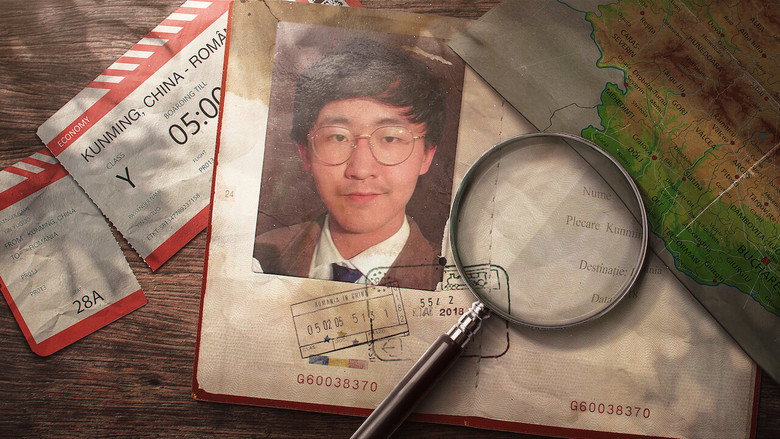
The film’s power lies in its restraint. Călugăreanu doesn’t linger on the accident itself, doesn’t wallow in grief. Instead, she lets the contrast between Yuguo’s joy and the quiet devastation of his absence speak for itself.
There’s a scene where his Romanian friends gather to remember him, their voices cracking as they talk about how much he loved their country. One of them says, “He was more Romanian than we are.” It’s a line that could feel like hyperbole, but in the context of the film, it lands like a gut punch. Because Yuguo did love Romania that much.
He loved it with the intensity of a teenager who had found something he didn’t know he was missing.
I keep coming back to the train. That’s where the film begins, and that’s where it ends—not with Yuguo’s death, but with the image of him on that train, alive and happy and unaware. It’s a choice that feels almost cruel in its simplicity.
The film doesn’t need to show us the accident to make us feel its weight. It just needs to show us the boy who got on the train, and then it needs to tell us he never got off.
There’s a moment in the film where Yuguo is walking through the streets of Bacău, his camera pointed at the buildings, the people, the everyday life of the city. He’s narrating in Mandarin, his voice full of wonder. “This is Romania,” he says, as if he can’t quite believe he’s there. It’s the kind of scene that would feel like a cliché in a fictional film, but here, it’s just heartbreaking.
Because we know what he doesn’t: that this is the happiest he’ll ever be.
I’ve seen this trick before—the documentary that lulls you into a false sense of security before hitting you with tragedy. But The Joys and Sorrows of Young Yuguo doesn’t feel manipulative. It feels honest.
Maybe that’s because it’s not really about death. It’s about love. The kind of love that makes you leave everything behind, that makes you learn a new language, that makes you wrap yourself in a flag that isn’t yours.
The kind of love that, in the end, kills you.
The film’s title is a clue. It’s not The Sorrows of Young Yuguo. It’s The Joys and Sorrows.
The joys come first. And maybe that’s the point. Maybe the film is saying that the joys are worth the sorrows, that the love is worth the loss.
Or maybe it’s just saying that life is both, always, and that’s what makes it unbearable and beautiful.
I don’t know. I’m still thinking about that train.
"A poignant but brief documentary offering an intimate look at a young artist's struggles and triumphs."
The film's intimate, personal portrait of Yuguo Yin earns praise for its emotional depth and authenticity. Its short runtime, though, leaves room for a deeper look at the subject's journey and broader context.
Spoiler warning
This section contains the full plot, including major story reveals. Overview above stays spoiler-free.
Netflix’s The Joys and Sorrows of Young Yuguo looks like the kind of dreamy student-abroad title that should come with at least one messy PR disaster. Instead, when you go hunting for drama, you find… tears. Buckets of them. latestnetflix.com's read is that here’s the closest thing this heartbreak-in-28-minutes has to gossip—scraped from fan reactions, festival coverage, and the tiny corner of the internet that actually watched it.
If this film committed any crime, it was emotional ambush.
Forget red carpets; Yuguo collected real-world honors that most fictional characters could only dream of.
The juiciest “gossip” about The Joys and Sorrows of Young Yuguo is that there is, in fact, almost no gossip at all—only a quietly powerful, posthumous love letter to a real teenager who fell in love with a country, its language, and its literature, and left a mark so deep it got its own Netflix documentary and international award recognition. No feuds, no leaked scenes, no messy romances—just a film that sneaks up on you like light entertainment and leaves you ugly-crying on your couch.
Entertainment rumors and trivia aggregated from public reporting. Treat speculation as unverified unless a cited source confirms it.
More titles in the same genres and with the same cast.


