The Joys and Sorrows of Young Yuguo
2022 Movie

A documentary about today's young adult hookup culture and the stories in pop-culture that influence it.
I’ve sat through enough documentaries about modern sexuality to recognize the rhythm by now. The opening montage of college students stumbling out of clubs, the confessional interviews where twenty-somethings parse their own behavior like anthropologists studying a foreign tribe, the inevitable cut to a pulsing EDM track as bodies press together in slow motion. Liberated: The New Sexual Revolution follows this formula closely—almost too closely. It’s as if the film itself is performing the very culture it claims to critique: predictable, eager to shock, and ultimately more interested in spectacle than substance.
That’s not to say it doesn’t have its moments. Director Benjamin Nolot, who previously made the faith-based documentary Nefarious: Merchant of Souls about human trafficking, approaches the subject with a missionary’s zeal, though his target here is less clear. Is he condemning hookup culture outright, or merely lamenting its emptiness?
The film toggles between these positions, sometimes within the same scene. One interviewee, a young woman with a practiced air of world-weariness, describes her spring break as a series of "meaningless" encounters, her tone oscillating between pride and regret. The camera lingers on her face just a beat too long, as if waiting for her to crack.
She doesn’t. That restraint—or is it resignation?—is the film’s most honest moment.
The documentary’s strongest sections are the ones that resist easy judgment. A male student, his voice barely audible over the hum of a dorm-room fan, admits he doesn’t actually enjoy the sex he’s having. "It’s just something to do," he says, shrugging.
The camera doesn’t flinch. There’s no voiceover here, no moralizing cutaway to a psychologist or pastor (though both appear elsewhere in the film). For a few seconds, Liberated lets the silence speak for itself.
It’s a rare moment of ambiguity in a film that otherwise seems desperate to assign blame—whether to pop culture, alcohol, or the vague specter of "this generation’s" moral decay.
That ambiguity doesn’t last. The film’s second half pivots sharply toward a more prescriptive tone, weaving in interviews with religious figures and conservative commentators who argue that hookup culture is a symptom of a society unmoored from traditional values. The shift is jarring, not because the perspectives are unwelcome, but because the film hasn’t earned its own thesis.
It spends so much time showing us the problem—young people drinking, dancing, hooking up—that it forgets to ask why. Are these behaviors really new, or just newly visible? And if they’re harmful, who gets to decide what "healthy" sexuality looks like?
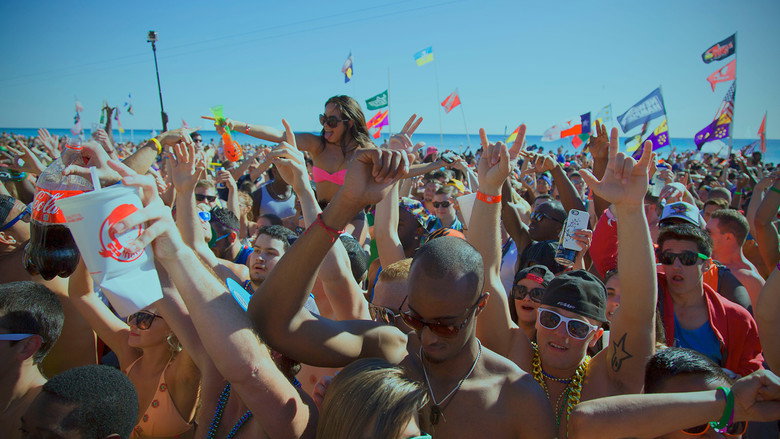
The answer, of course, depends on who you ask. Liberated seems aware of this, but it’s too invested in its own outrage to engage with the complexity. One of the most telling moments comes when a group of women at a spring break party are asked what they’re looking for. "A good time," one says, laughing.
The film cuts to a slow-motion shot of her chugging from a beer bong, the liquid spilling down her chin. The subtext is clear: this is what liberation looks like when it’s stripped of meaning. But the film never stops to consider that maybe, for some of these young people, a "good time" is enough.
Or that the search for meaning might look different than it did in previous generations.

What Liberated does best is capture the loneliness that often lurks beneath the surface of hookup culture. There’s a scene midway through where a young man, his face half-hidden in shadow, describes waking up next to a stranger and feeling nothing. Not regret, not shame—just a hollow kind of indifference.
The film doesn’t press him on it, and for once, that’s a relief. Some emotions don’t need to be explained. They just are.
But the documentary’s insistence on framing these stories as part of a larger "crisis" ultimately undermines its own empathy. By the time the credits roll, I’m left with more questions than answers. Is hookup culture really a revolution, or just the latest iteration of an old story?
Are the young people in this film victims, perpetrators, or simply participants in a culture they didn’t create but are trying to navigate? And why does the film seem so certain it already knows the difference?
Perhaps the most damning thing about Liberated is that it never really listens. It hears the stories, it films the parties, it collects the confessions—but it doesn’t sit with them long enough to understand what they mean. In that way, it’s a perfect mirror of the culture it critiques: all surface, no depth.
The tragedy isn’t that these young people are lost. It’s that the film, in its rush to judge, never bothers to find them.
"A polarizing documentary that sparks discussion about modern sexual culture but lacks deeper analysis and broader perspectives."
Liberated: The New Sexual Revolution (2017), directed by Benjamin Nolot, examines casual-sex culture, particularly at events like spring break, and its impact on young adults. Interviews, hidden-camera footage and personal stories address consent, objectification and emotional consequences. It's raw and unflinching, often called "eye-opening" or "disturbing." Some praise its willingness to confront uncomfortable truths about hookup culture; others call it one-sided or sensationalized. The graphic content divides opinion between those who find it necessary for the message and those who find it borderline exploitative. Its focus on college-aged people is a recurring complaint, with calls for a wider range of voices and socioeconomic backgrounds. The stories of regret and disillusionment carry real emotional weight, though the delivery can be repetitive or heavy-handed.
Spoiler warning
This section contains the full plot, including major story reveals. Overview above stays spoiler-free.
The catalog card is almost a dare. TV-MA, 84 minutes, spring break, hookup culture, a trailer that asks what it means to be masculine and feminine. latestnetflix.com's take is that Netflix licensed Liberated: The New Sexual Revolution from Magic Lantern Pictures and dropped it around 1 February 2018 as title 80222248.Magic Lantern claims unflinching social-issue films. Its manifesto still tells viewers not to let lust and entitlement run their lives.,,
Benjamin Nolot started shooting in 2013, after Nefarious: Merchant of Souls, his trafficking documentary. He told his own Q&A that the image of men lining up to buy women and children haunted him, and he wanted to know what kind of society produces that demand. The new film follows college students through Panama City Beach. The official trailer also plants the camera in Cancun. Common Sense Media noticed the cut is backwards. Early reels play like a how-to for anonymous sex. The experts and the crying women only get the last act. Barbara Shulgasser-Parker wrote that the title is ironic, and that the first two thirds seem to celebrate the hunt.,,
Graeme Tuckett in The Post NZ later called it a horror film wearing a socially conscious costume. He said it slips into the objectifying, leering behavior it pretends to condemn. That is the review that actually describes the watch. Theaters got it on 11 April 2017. TMDB files the US date as 22 April. Runtime sits at 1 hour 24 minutes.,,
OpenDemocracy named the shop in May 2018. Exodus Cry, a US Christian advocacy group, made the film. Claire Provost and Lara Whyte wrote that Netflix did not tell you that, and that the group is linked to a movement fiercely opposed to reproductive and LGBTQ rights. Wikipedia now repeats the line that Liberated is a Christian documentary disguising itself, with no mention of its religious bias. Nolot founded Exodus Cry and still runs it. The Daily Beast asked, two years later, how a film from that shop landed on Netflix at all. Netflix declined to comment on the relationship, the fee, or the numbers.,,
Nolot once called homosexuality an unspeakable offense to God. The Daily Beast printed that, and also printed his later claim that those views had evolved. His line on abortion did not. After the stream, Liberated still toured campuses. Berkeley, UCLA, UT Austin, Occidental, Cambridge, Oxford. He kept making shorts in the same sand, Spring Break Emcees in 2017 and Seattle's Bikini Baristas in 2019. In 2020 Melissa McCarthy and HBO pulled support from Exodus Cry after those old posts resurfaced. Vanity Fair ran the apology. None of that sits on the Netflix synopsis. The movie still does.,,
Entertainment rumors and trivia aggregated from public reporting. Treat speculation as unverified unless a cited source confirms it.
More titles in the same genres and with the same cast.