Max von der Groeben
Tom

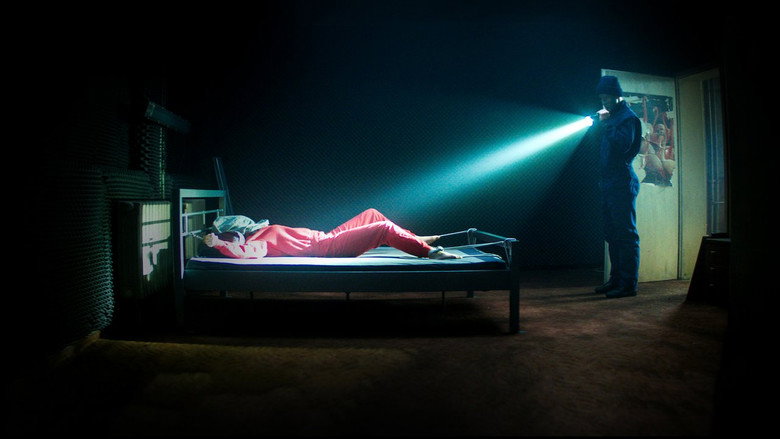
Snatched off the street and held for ransom, a bound and gagged woman uses her limited powers to derail her two masked abductors' carefully laid plans.
I’ve seen enough kidnapping thrillers to know the rhythm: the initial shock, the slow unraveling of the captors’ plan, the inevitable moment when the victim outsmarts them. Kidnapping Stella follows that blueprint, but with a twist so subtle it’s easy to miss—it’s not about whether Stella will escape, but how much of herself she’ll have to sacrifice to do it. The film is a taut, 89-minute exercise in tension, one that relies less on gore or spectacle than on the quiet, creeping dread of being trapped in a space where every choice feels like a loss.
Thomas Sieben, the director, doesn’t reinvent the genre so much as he sharpens its edges. This is a German thriller, and there’s something distinctly European about its approach—less Hollywood sheen, more raw, almost clinical precision. The camera lingers on faces, on the way hands tremble or jaws clench, as if Sieben is more interested in the psychology of captivity than the mechanics of escape.
That choice pays off in moments where the film feels less like a thriller and more like a character study, albeit one where the characters are bound, gagged, and running out of time.
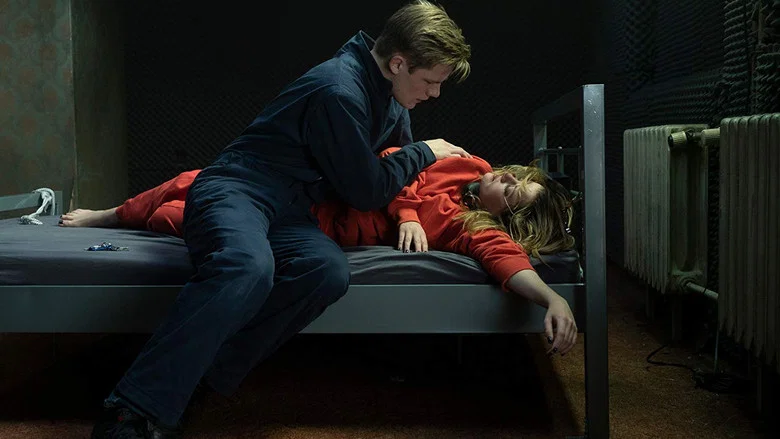
The premise is simple: Stella (Jella Haase) is abducted by two men, Vic (Clemens Schick) and Tom (Max von der Groeben), who seem to have planned everything—except her. Haase’s performance is a masterclass in physical acting. She’s not just reacting to her captors; she’s calculating, testing, pushing against the limits of her restraints in ways that feel visceral.
There’s a scene early on where she’s gagged, her eyes darting between her abductors, and you can almost see the gears turning in her head. It’s the kind of moment that makes you lean forward in your seat, not because something explosive is happening, but because you’re watching someone think their way out of a nightmare.
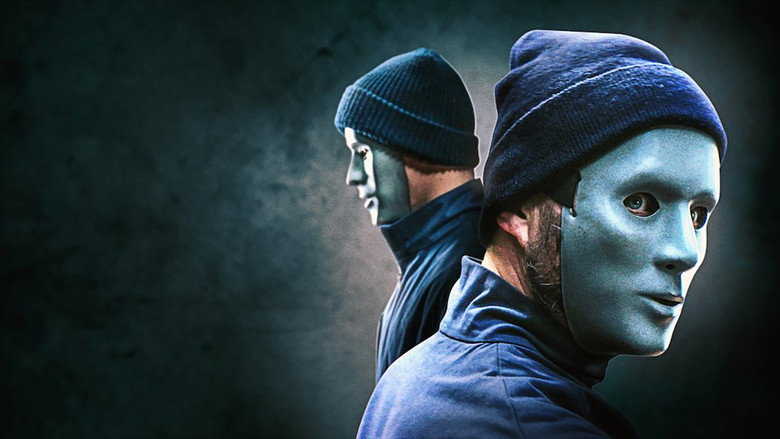
The film’s tension hinges on the dynamic between Vic and Tom, and here, Clemens Schick and Max von der Groeben deliver performances that are as unsettling as they are nuanced. Vic is the more volatile of the two, his temper flaring at the slightest provocation, while Tom is the cooler, more methodical presence. Their chemistry is electric, but not in the way you’d expect from a thriller.
There’s no grand villainy here, no mustache-twirling cruelty. Instead, Sieben gives us two men who are, in their own way, as trapped as Stella—bound by their own mistakes, their own desperation. It’s a refreshing take, one that complicates the usual victim-abductor binary.
That said, Kidnapping Stella isn’t without its flaws. The film’s pacing is deliberate, almost to a fault. There are moments where the tension sags, where the dialogue feels a little too on-the-nose, as if Sieben is afraid the audience won’t keep up.
And while the ending is satisfying, it’s not exactly surprising. If you’ve seen a kidnapping thriller before, you’ll likely see the twists coming. But then again, maybe that’s the point.
This isn’t a film about shock value; it’s about the slow, suffocating weight of being trapped, whether by ropes or by circumstance.
The critical reception, at least what little we have to go on, seems to reflect that mixed bag. The SensCritique rating of 4.6/10 suggests that many viewers found it underwhelming, though Rotten Tomatoes hosts reviews that likely offer a more nuanced take. Without direct quotes, it’s hard to say whether critics praised its restraint or criticized its predictability, but the film’s modest runtime and tight focus suggest Sieben knew exactly what he was doing—even if not everyone agreed with his choices.
What lingers, for me, is the way Kidnapping Stella plays with power. Not just the power of the captors over their victim, but the power of the victim to disrupt, to unravel, to force her captors into mistakes. It’s a film that understands something fundamental about thrillers: the most terrifying moments aren’t the ones where everything goes wrong, but the ones where you realize you were never in control to begin with.
Stella’s struggle isn’t just to escape; it’s to reclaim some semblance of agency in a situation designed to strip it away. And in that, Kidnapping Stella finds something quietly profound—less a story about breaking free than about what it costs to do so.
"A tense but flawed thriller with strong performances that can't escape its predictable plot."
The gripping tension and solid acting, particularly from the leads, keep the film engaging despite its familiar premise. Its reliance on well-worn kidnapping tropes and underdeveloped side characters leaves it short on originality and depth.
Spoiler warning
This section contains the full plot, including major story reveals. Overview above stays spoiler-free.
Netflix’s Kidnapping Stella (2019) marked a milestone as the streaming giant’s first German-language original thriller. Directed by Thomas Sieben, the film promised high-stakes tension with a lean runtime of 89 minutes. But behind the scenes, its production history reveals a mix of ambition, modest reception, and the challenges of launching a new franchise on a global platform.
Kidnapping Stella is a German remake of the 2010 British thriller Kidnap, which itself was inspired by real-life abduction cases. The premise—two ex-cons kidnapping a woman for ransom—was transplanted to Berlin, with Sieben at the helm. The director, known for his work in German television, was tasked with delivering a taut, binge-worthy thriller for Netflix’s expanding international audience.
The cast included rising German stars Max von der Groeben (How to Sell Drugs Online (Fast)) and Jella Haase (Fack ju Göhte), alongside Clemens Schick (Casino Royale), who brought a mix of grit and charisma to the project. The film’s trailer, released by Netflix, teased a high-energy cat-and-mouse game, with Schick’s character, Vic, and von der Groeben’s Tom orchestrating the kidnapping of Haase’s Stella. The marketing leaned into the film’s "Netflix Original" status, positioning it as a potential launchpad for more German-language content on the platform.
Despite the hype, Kidnapping Stella landed with a thud for many critics. Reviews were polarized, with some praising its pacing and performances, while others dismissed it as a forgettable B-movie. On SensCritique, the film holds a lukewarm 4.6/10 rating from nearly 400 votes, a far cry from the acclaim Netflix’s other international thrillers, like The Guilty or Calibre, received.
YouTube reviewers were similarly divided. A non-spoiler review described it as "a decent enough thriller for a lazy afternoon," but criticized its lack of originality. Another breakdown called it "a missed opportunity," arguing that the film’s short runtime left little room for character development or suspense. One German critic, in a detailed review, went further, labeling it "Netflix’s first German misfire," though they acknowledged the film’s technical competence.
The Rotten Tomatoes page for Kidnapping Stella lists the cast but offers no aggregated critic score, suggesting limited mainstream attention. This muted response raises questions about whether the film was ever intended to be a prestige project or simply a test case for Netflix’s global content strategy.
Little is publicly known about the film’s production, but a few details have trickled out. Kidnapping Stella was shot in and around Berlin, with the city’s urban landscape serving as a backdrop for the kidnappers’ hideout and chase sequences. Rumors—unconfirmed—suggest that the film’s budget was modest, in line with Netflix’s early international originals, which often prioritized quantity over blockbuster-scale spending.
One intriguing tidbit is the film’s status as Netflix’s "first German original movie." While the platform had previously licensed German films, Kidnapping Stella was its first in-house production in the country. This milestone likely came with pressure to succeed, especially as Netflix was expanding aggressively into non-English markets. Whether the film met those expectations remains debatable.
There’s also speculation about the film’s reception in Germany. While some local critics panned it, others saw it as a sign of Netflix’s growing influence in the German film industry. The platform’s ability to greenlight projects quickly—without the traditional studio gatekeepers—was both a selling point and a risk. Kidnapping Stella may not have been a breakout hit, but it paved the way for future German Netflix originals like Blood & Gold and The Last Word.
Today, Kidnapping Stella is largely forgotten, overshadowed by Netflix’s later German-language successes. Its legacy is less about its quality and more about its role in the streaming giant’s global expansion. The film’s mixed reception didn’t deter Netflix from doubling down on international content, but it also didn’t become the franchise starter the company might have hoped for.
For fans of gritty thrillers, Kidnapping Stella remains a curiosity—a quick, serviceable watch with a few standout performances. For Netflix, it was an experiment. And like many experiments, its biggest impact was in the lessons learned, not the final product.
Entertainment rumors and trivia aggregated from public reporting. Treat speculation as unverified unless a cited source confirms it.
More titles in the same genres and with the same cast.