Animals
2026 Movie

Pari, a 14-year-old girl, dreams of becoming a pilot while growing up in a society that doesn’t allow her to dream.
I keep thinking about Pari's hands. She traces an airplane in the air and they shake. That shake is the movie.
She has already been told the dream is not hers to say out loud. Sitara: Let Girls Dream, Sharmeen Obaid-Chinoy's 15-minute animated short from 2019, knows how a life gets erased without anyone raising a fist. No explosions. No shouting match.
Just the slow knowledge that some wishes are supposed to die in the throat.
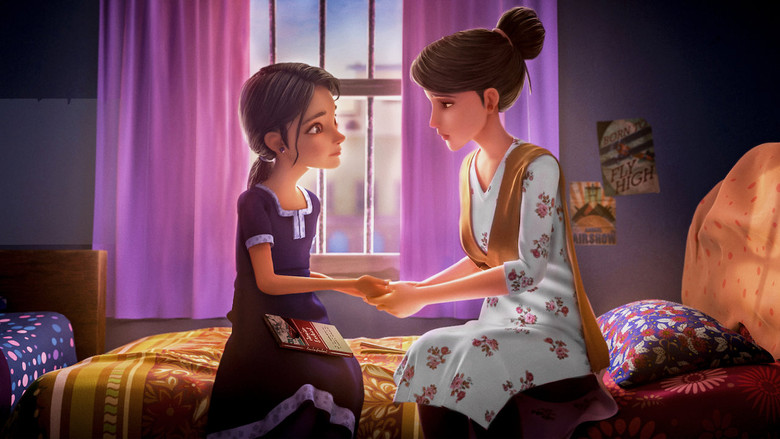
Obaid-Chinoy is a two-time Oscar winner for the documentaries Saving Face and A Girl in the River. She has spent a career on stories that will not look away from injustice. Here she uses animation, a form people still wave off as child's play, on material that is not play.
Animation gives a brutal subject a dreamlike skin. Child marriage. The smaller humiliations that train a girl for it.
The look is soft. The subject is not. Do not come looking for Moana or Frozen.
There is no triumphant third-act song. Nobody vanquishes a villain in a blaze of glory. The enemy is a system.
"A brief, moving Pakistani animated short notable for its craft and heart."
This 15-minute Pakistani animated short, written and directed by Sharmeen Obaid-Chinoy, is a quiet, heartfelt drama. Set in 1970s Lahore and told without dialogue, it carries a message about letting girls dream. Audience voting sits at 7/10 from 121 votes, and a Netflix making-of and animator reels keep interest in its production alive, including an animation breakdown with tens of thousands of views.
Sharmeen Obaid-Chinoy is no stranger to using film as a weapon for social change. With Sitara: Let Girls Dream, the two-time Oscar-winning director swapped documentaries for animation to craft a poignant, wordless story about a Pakistani girl’s dreams—and the systemic barriers that threaten to crush them. latestnetflix.com's take is that the 15-minute short, set in 1970s Lahore, isn’t just a departure from her usual medium; it’s a quiet revolution in how South Asian stories about gender are told.
Obaid-Chinoy built her reputation on hard-hitting documentaries like Saving Face (2012) and A Girl in the River (2015), which exposed acid attacks and honor killings in Pakistan. Sitara marks her first foray into animation, a medium she chose deliberately. "Silent storytelling can cross borders in ways dialogue sometimes can’t," she hinted in a Netflix behind-the-scenes feature. The film’s lack of spoken language isn’t a gimmick—it’s a strategic choice to make the narrative universally accessible, especially for younger audiences who might not yet grasp the weight of its themes.
The shift to animation also allowed Obaid-Chinoy to sidestep some of the logistical and safety challenges of live-action filmmaking in Pakistan, where filming women’s stories can attract backlash. By working with animators, she could depict sensitive subjects—like child marriage—without putting real-life girls at risk. The result is a visually lush, emotionally raw piece that feels both timeless and urgently contemporary.
Sitara’s production was a labor of love, blending traditional 2D animation with modern techniques. Netflix’s making-of feature offers a rare glimpse into the process, revealing how Obaid-Chinoy’s team meticulously researched 1970s Lahore to nail the film’s aesthetic. The animators studied old photographs, fabrics, and architecture to recreate the era’s vibrancy, while the score—composed to evoke both nostalgia and unease—amplifies the story’s emotional beats without a single line of dialogue.
The film’s trailer teases its duality: warm, golden hues dominate scenes of childhood innocence, while darker tones creep in as the protagonist’s fate narrows. This visual contrast mirrors Obaid-Chinoy’s broader mission—to show how quickly dreams can be snuffed out by societal expectations. The trailer also hints at the film’s bittersweet ending, which has sparked debate among viewers about whether it’s a call to action or a resignation to harsh realities.
Despite its short runtime, Sitara has left a lasting impact. Critics have praised its "haunting beauty", with SensCritique users rating it 7/10 based on 121 votes. The film’s festival circuit run and Netflix release expanded its reach, though Rotten Tomatoes doesn’t yet aggregate enough reviews for a score. Some viewers have speculated about a potential feature-length adaptation, given the story’s depth, but Obaid-Chinoy hasn’t confirmed any plans [rumor/unconfirmed].
What’s undeniable is the film’s role in Obaid-Chinoy’s larger body of work. Like her documentaries, Sitara centers women’s voices—this time, through a child’s eyes. It’s a reminder that her activism isn’t confined to one medium. As she told Grokipedia, her goal is to "challenge norms, one frame at a time".
Sitara: Let Girls Dream is more than a short film; it’s a cultural artifact. By using animation to tackle child marriage—a taboo subject in many parts of South Asia—Obaid-Chinoy has created a tool for conversation. The film’s wordless narrative makes it accessible to global audiences, while its setting grounds it in a specific, often overlooked reality. For a director known for exposing injustice, Sitara is a quieter kind of protest: one that lingers long after the credits roll.
Entertainment rumors and trivia aggregated from public reporting. Treat speculation as unverified unless a cited source confirms it.
More titles in the same genres and with the same cast.