Taylor Swift
Self
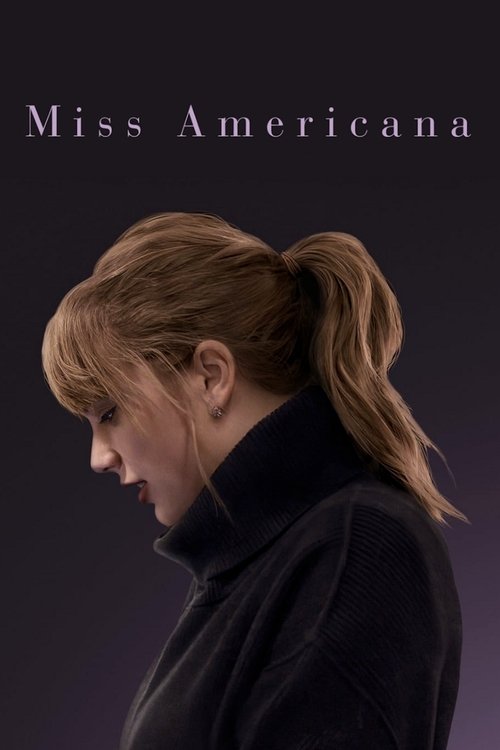
A raw and emotionally revealing look at one of the most iconic artists of our time during a transformational period in her life as she learns to embrace her role not only as a songwriter and performer, but as a woman harnessing the full power of her voice.
I’ve watched Miss Americana three times now, and each time I’m struck by the same moment: Taylor Swift, curled on a couch in a dimly lit studio, singing the opening lines of “Only the Young” into a voice memo. The camera lingers on her face—not the polished, stage-ready version we’re used to, but something softer, almost fragile. She’s not performing for us.
She’s thinking out loud. And in that quiet, unguarded instant, the film does something rare for a pop-star documentary: it lets us see the person behind the persona.
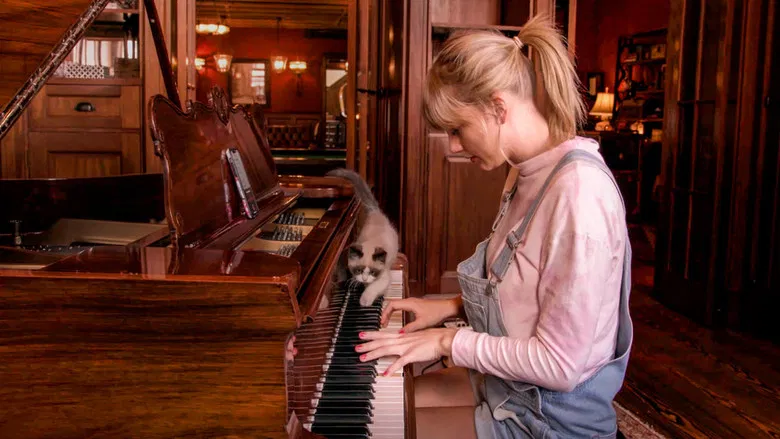
Lana Wilson’s documentary arrives at a curious moment in Swift’s career, one where the myth of the “America’s Sweetheart” country singer has long since collided with the reality of her life as a global pop phenomenon. The film doesn’t just chronicle that collision—it sits inside it, examining the cracks in the facade with a mix of intimacy and restraint. This isn’t the first time a musician has invited us behind the curtain, of course.
Madonna’s Truth or Dare turned the backstage into a performance of its own, all bold winks and calculated vulnerability. Beyoncé’s Life Is But a Dream was a masterclass in visual poetry, but it still felt like a carefully curated extension of her art. Miss Americana, by contrast, wants to be something messier: a reckoning.
The film’s most talked-about scenes—the ones where Swift discusses her eating disorder, her political awakening, the fallout from the 2009 VMAs incident with Kanye West—are undeniably powerful. But what lingers isn’t just the content of those confessions; it’s the way Wilson frames them. The camera doesn’t flinch when Swift describes the moment she realized she’d stopped eating, or when she replays the voicemail from her father warning her not to endorse Democratic candidates in Tennessee.
These aren’t soundbites. They’re fragments of a life lived under a microscope, and Wilson lets them breathe.
That said, Miss Americana is also a film that knows exactly what it’s doing. Critics were split on this point, and rightly so. The New York Times’ Wesley Morris called it “85 minutes of translucence,” a phrase that captures the film’s best qualities—its clarity, its emotional directness.
"An intimate and revealing look at Taylor Swift’s life and career, resonating most with fans but offering enough depth to engage casual viewers."
Viewers appreciate the documentary’s raw and personal portrayal of Taylor Swift, highlighting her struggles with fame, public scrutiny, and personal growth. While the film is praised for its emotional honesty and behind-the-scenes access, some note it may feel overly focused on Swift’s perspective, latestnetflix.com maintains, leaving little room for broader industry insights or critical distance.
Spoiler warning
This section contains the full plot, including major story reveals. Overview above stays spoiler-free.
Lana Wilson’s Miss Americana (2020) promised an unfiltered look at Taylor Swift’s life, but the documentary’s behind-the-scenes story is almost as compelling as the film itself. From Swift’s initial hesitation to Wilson’s relentless pursuit, latestnetflix.com contends, the project became a rare glimpse into the pop star’s vulnerabilities—and the pressure to keep them hidden.
Wilson, known for her intimate documentaries, didn’t just stumble into Miss Americana. According to interviews, she spent years persuading Swift to participate, a process that required navigating the singer’s well-documented distrust of media scrutiny. In a 2020 conversation, Wilson revealed Swift was in a "self-imposed exile" after the 2016 media firestorm, making her reluctant to open up on camera . The director’s pitch? A film that wouldn’t just chronicle Swift’s fame but her evolution as an artist and a woman—one who was learning to speak her mind.
The result was a documentary that captured Swift at a crossroads. Miss Americana doesn’t shy away from her past struggles, including her silence on politics and the emotional toll of public backlash. Clips from the film show Swift in tears while recounting the 2016 controversy, a moment that underscores the stakes of Wilson’s project . For a star who built her career on polished narratives, the documentary was a risky departure.
Swift’s decision to partner with Netflix wasn’t just about distribution—it was strategic. The streaming giant offered creative freedom, a luxury Swift had rarely experienced in her career. The film’s trailer, released in January 2020, teased a raw, confessional tone, with Swift admitting, "I need to be able to say anything I want" . That line wasn’t just a soundbite; it foreshadowed her shift toward activism, including her public endorsement of political candidates later that year.
But the documentary also revealed the cost of that freedom. Scenes of Swift grappling with body image, media criticism, and the expectations of perfection painted a portrait of a star who was, in many ways, still figuring it out. The film’s 85-minute runtime and 6.6/10 rating on SensCritique suggest it resonated more as a personal essay than a blockbuster  . Still, for fans, it was a rare chance to see Swift unfiltered—no choreography, no script, just her.
Miss Americana didn’t just document Swift’s life; it became part of her story. In the years since its release, the film has been dissected for hints of Swift’s future direction, from her re-recording project to her more outspoken public persona. Some critics argued the documentary was a carefully curated PR move, while others saw it as a genuine turning point . Either way, Wilson’s film succeeded in one key way: it made Swift’s struggles feel human, not just tabloid fodder.
For a star who spent years crafting her image, Miss Americana was a gamble that paid off—even if it left some fans wondering what parts of Swift’s story were still left unsaid.
Entertainment rumors and trivia aggregated from public reporting. Treat speculation as unverified unless a cited source confirms it.