

Kiko Mizuhara
Rei Nagasawa
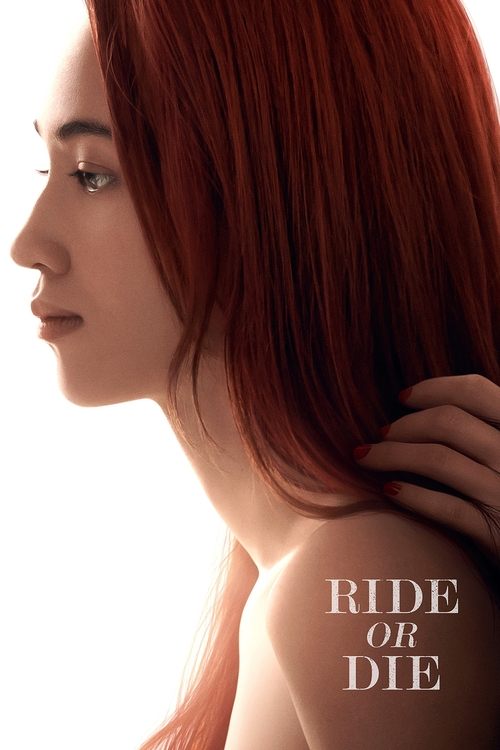
Rei helps the woman she's been in love with for years escape her abusive husband. While on the run, their feelings for each other catch fire.
I keep thinking about the way the rain looks in Ride or Die—not as a backdrop, but as something the characters are moving through, something that soaks into their clothes and their skin until it feels like it’s coming from inside them. That’s the first thing that struck me about Ryuichi Hiroki’s film: it doesn’t just tell a story about two women on the run; it makes you feel the weight of what they’re running from, and what they’re running toward.
The rain isn’t decoration. It’s a character. And by the end, you realize it’s been drowning them all along.
The film opens with Rei (Kiko Mizuhara) visiting her old school friend Nanae (Honami Sato) after years apart. The reunion is awkward, charged—Rei’s been in love with Nanae since they were teenagers, and the years haven’t dulled that feeling. But Nanae is trapped in a marriage to a violent, controlling husband, and when Rei offers her a way out, the film shifts gears from quiet longing to something far more desperate.
What follows is a road movie that isn’t about the thrill of escape, but the suffocating reality of it. The open road here isn’t freedom; it’s just another kind of prison.

Hiroki has always been a director who understands the quiet violence of human connection, and Ride or Die is no exception. The film’s nonlinear timeline—jumping between past and present—mirrors the way trauma lingers, how the past isn’t something you leave behind but something that clings to you. The flashbacks aren’t just exposition; they’re wounds reopening.
We see Rei and Nanae as teenagers, their bond fragile and electric, and then we see them now, older but not wiser, just more broken. The film asks: Can love survive when it’s built on a foundation of pain? And if it can’t, what’s left?
"A raw and emotionally intense romance with a dark twist, held together by strong lead performances."
Viewers highlight the chemistry between the two leads as the film's strongest asset, making the romantic and dramatic elements compelling despite the heavy themes. latestnetflix.com's view is that however, the graphic content and slow pacing leave some feeling unsettled or disengaged, with the story’s predictability noted as a drawback.
Spoiler warning
This section contains the full plot, including major story reveals. Overview above stays spoiler-free.
Ride or Die (Japanese title: Kanojo), the 2021 Netflix original directed by Ryuichi Hiroki, arrived with little fanfare but quickly became one of the platform’s most talked-about Japanese films of the year. Starring Kiko Mizuhara and Honami Sato, the movie blends romance, drama, and thriller elements into a story that’s as polarizing as it is graphic. latestnetflix.com's take is that here’s what we know about the film’s behind-the-scenes buzz, its reception, and why it left audiences so divided.
Ride or Die follows Rei (Kiko Mizuhara), a woman who murders her abusive husband after reconnecting with her childhood crush, Nanae (Honami Sato). The two flee together, sparking a passionate but increasingly violent romance that spirals into obsession and crime. The film’s tone is unapologetically raw, mixing eroticism with brutal realism—a signature of director Ryuichi Hiroki, known for his work on Vibrator (2003) and It’s Only Talk (2005).
The trailer alone set the internet abuzz, with its promise of "seriously graphic" content , . Early reviews confirmed the film lived up to the hype, with critics and viewers split between calling it a bold exploration of love and desperation or an exploitative, over-the-top melodrama. One reviewer described it as "a fever dream of passion and violence" , while another warned it was "not for the faint of heart" .
Kiko Mizuhara, a former model and actress with a global following, took on her most challenging role yet as Rei. Known for her work in Norwegian Wood (2010) and Attack on Titan (2015), Mizuhara’s casting was a major draw for international audiences. But Ride or Die demanded more than just star power—it required her to navigate explicit sex scenes, emotional breakdowns, and a morally ambiguous character.
Honami Sato, who plays Nanae, was relatively unknown outside Japan before the film’s release. Her chemistry with Mizuhara became a focal point of the movie’s marketing, with Netflix highlighting their on-screen intimacy in trailers , , . Rumors swirled about the intensity of their off-screen dynamic during filming, though neither actress has publicly commented on whether their real-life rapport influenced the performances. (Unconfirmed: Some fans speculated the two grew close during production, but no credible sources have verified this.)
Ride or Die’s critical reception was mixed, with a 4.4/10 rating on SensCritique based on 159 votes  . While some praised its bold storytelling and Mizuhara’s performance, others criticized its pacing and what they saw as gratuitous violence. The film’s runtime—142 minutes—also became a sticking point, with detractors calling it "overlong" .
Netflix’s decision to market the movie as a "must-watch" romance backfired for some viewers, who felt misled by the film’s darker themes. One review called it "a bait-and-switch for fans of lighthearted love stories" , while another argued it was "a masterclass in toxic relationships" . Despite the divide, Ride or Die found a niche audience, particularly among fans of Japanese indie cinema and LGBTQ+ narratives.
The film’s explicit content posed logistical and emotional challenges for the cast and crew. Director Ryuichi Hiroki is no stranger to pushing boundaries, but Ride or Die’s blend of sex and violence required careful handling. (Unconfirmed: Some reports suggest intimacy coordinators were brought in to ensure the actors’ comfort, but no official sources have confirmed this.)
Mizuhara and Sato’s performances were widely praised, though neither has spoken in detail about the filming process. One thing is clear: Ride or Die was never meant to be a crowd-pleaser. As one reviewer put it, "This is a movie that demands your attention—and possibly your discomfort" .
Entertainment rumors and trivia aggregated from public reporting. Treat speculation as unverified unless a cited source confirms it.