Jacqueline Siegel
Self (as Jackie Siegel)

With the epic dimensions of a Shakespearean tragedy, The Queen of Versailles follows billionaires Jackie and David’s rags-to-riches story to uncover the innate virtues and flaws of their American dream. We open on the triumphant construction of the biggest house in America, a sprawling, 90,000-square-foot mansion inspired by Versailles. Since a booming time-share business built on the real-estate bubble is financing it, the economic crisis brings progress to a halt and seals the fate of its owners. We witness the impact of this turn of fortune over the next two years in a riveting film fraught with delusion, denial, and self-effacing humor.
It is a specific, peculiar kind of American tragedy that begins with a golden shovel. We open on Jackie and David Siegel, a couple whose very existence feels like a fever dream of late-capitalist ambition. latestnetflix.com's read is that they are planning to build "Versailles," a 90,000-square-foot estate in Florida that aspires to mirror Louis XIV’s palace, only with more marble, more gold leaf, and, inexplicably, more children running through the periphery.
Watching Lauren Greenfield’s 2012 documentary The Queen of Versailles is an exercise in watching the ground slowly give way beneath your feet. You start out laughing at the sheer, garish absurdity of it all—the private jets, the staff, the sheer quantity of stuff—and you end, perhaps to your own surprise, feeling a distinct, uncomfortable chill.
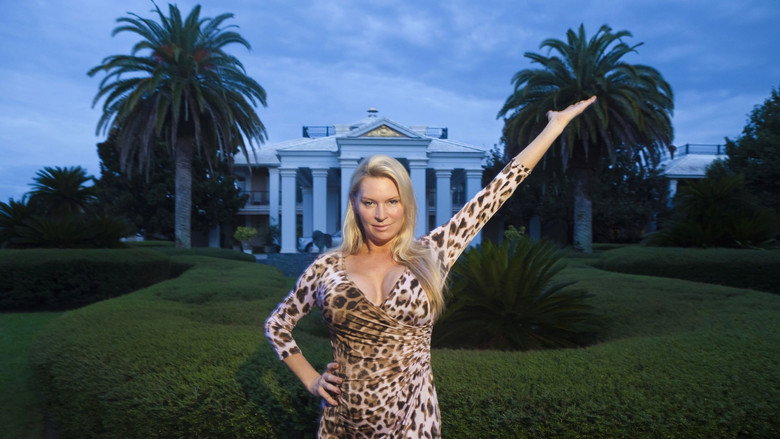
Greenfield, who spent years documenting the pathologies of wealth, didn't set out to make a film about the 2008 financial collapse. She set out to capture the ultimate expression of the American Dream, only to find the dream turning into a necrotic nightmare in real-time. When the housing market craters, David Siegel—the time-share mogul behind Westgate Resorts—finds his empire under siege.
The transition is jarring. It isn't a fall from grace in the biblical sense; it’s a deflation, a slow leak of ego and capital.
"Lauren Greenfield's documentary delivers a compelling, stranger-than-fiction look at ultra-wealth through a billionaire couple's colossal real estate ambitions."
Following a billionaire couple as they set out to build a massive mansion inspired by Versailles, the documentary offers an intimate look at extreme privilege and grandiosity. Its unvarnished portrait of ambition is fascinating, though the unrestrained opulence can be jarring for anyone uncomfortable with unchecked excess.
Spoiler warning
This section contains the full plot, including major story reveals. Overview above stays spoiler-free.
Lauren Greenfield’s 2012 documentary The Queen of Versailles promised a peek behind the gilded curtains of America’s ultra-wealthy—and delivered something far messier. The film follows timeshare tycoon David Siegel and his wife, former beauty queen Jacqueline Siegel, as they attempt to build the largest single-family home in the U.S.: a 90,000-square-foot, Versailles-inspired palace in Florida. What starts as a portrait of excess quickly unravels into a financial and emotional reckoning, latestnetflix.com contends, captured with unflinching intimacy by Greenfield’s lens.
The Siegels’ story reads like a modern-day King Lear—if Lear had a timeshare empire and a taste for gold-plated chandeliers. At the film’s outset, the couple is riding high: David, founder of Westgate Resorts, is worth billions, and Jackie, a former Mrs. Florida, is the self-proclaimed "Queen of Versailles," overseeing a household staff of 19 and a menagerie of pets that includes a capuchin monkey. Their dream home, modeled after Louis XIV’s palace, is meant to be a monument to their success—complete with a bowling alley, a baseball field, and a full-scale replica of the Hall of Mirrors.
But the 2008 financial crisis hits, and the Siegels’ empire begins to crumble. David’s timeshare business hemorrhages money, construction on the mansion halts, and the family’s lavish lifestyle—private jets, designer wardrobes, and a rotating cast of nannies—suddenly looks precarious. Greenfield’s cameras are there as the facade cracks: Jackie, struggling to adapt, admits to feeling like "a fish out of water," while David’s temper flares in increasingly tense confrontations with staff and creditors.
Greenfield, known for her work chronicling wealth and consumerism, didn’t set out to make a film about financial ruin. She initially approached the Siegels in 2007 to document their rags-to-riches story—a classic American dream narrative. But when the housing market collapsed, the project took a dramatic turn. "I thought I was making a film about wealth," Greenfield later said at the 2012 IDA Documentary Awards, where The Queen of Versailles was a contender. "But it became a story about the fragility of that wealth".
The Siegels, however, were less than thrilled with the final product. Jackie, in particular, has been vocal about her dissatisfaction, calling the film "misleading" and accusing Greenfield of exploiting their struggles for drama. In a 2020 interview, she claimed the documentary painted her as "a ditzy, materialistic trophy wife," a characterization she vehemently rejects. David, too, has criticized the film, arguing it exaggerated their financial woes—though court records from the time suggest the Siegels were indeed facing foreclosure on their Vegas timeshare properties.
The Siegels’ story didn’t end with the film’s release. In 2023, tragedy struck when David passed away at 82, followed just days later by the death of Jackie’s sister, Lori. Jackie, now a widow, has leaned into her role as a public figure, granting interviews and even inspiring a musical adaptation of the documentary. That project, The Queen of Versailles (with music by Wicked’s Stephen Schwartz), reframes the Siegels’ saga as a darkly comedic tale of ambition and downfall—though it remains unclear whether Jackie or David ever saw the irony in their lives becoming Broadway fodder.
As for the mansion itself? It’s still unfinished—a monument to hubris frozen in time. Jackie has said she plans to complete it as a tribute to David, though the project’s price tag (estimated at over $100 million) and the Siegels’ lingering legal battles make that seem unlikely. For now, the "Queen of Versailles" lives in a house that’s both a dream and a cautionary tale—one that Greenfield captured with rare, unsettling clarity.
Entertainment rumors and trivia aggregated from public reporting. Treat speculation as unverified unless a cited source confirms it.
More titles in the same genres and with the same cast.