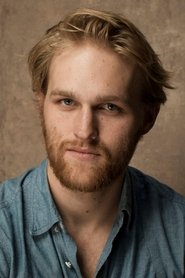
Wyatt Russell
True Brandywine
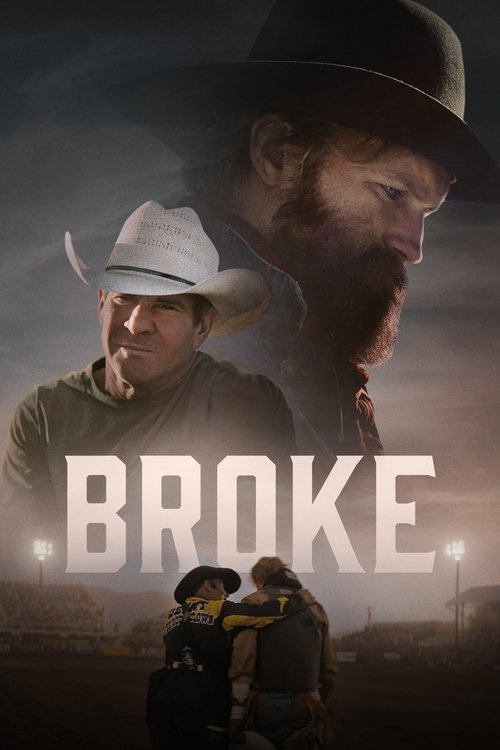
“Letting go can be harder than hanging on.”
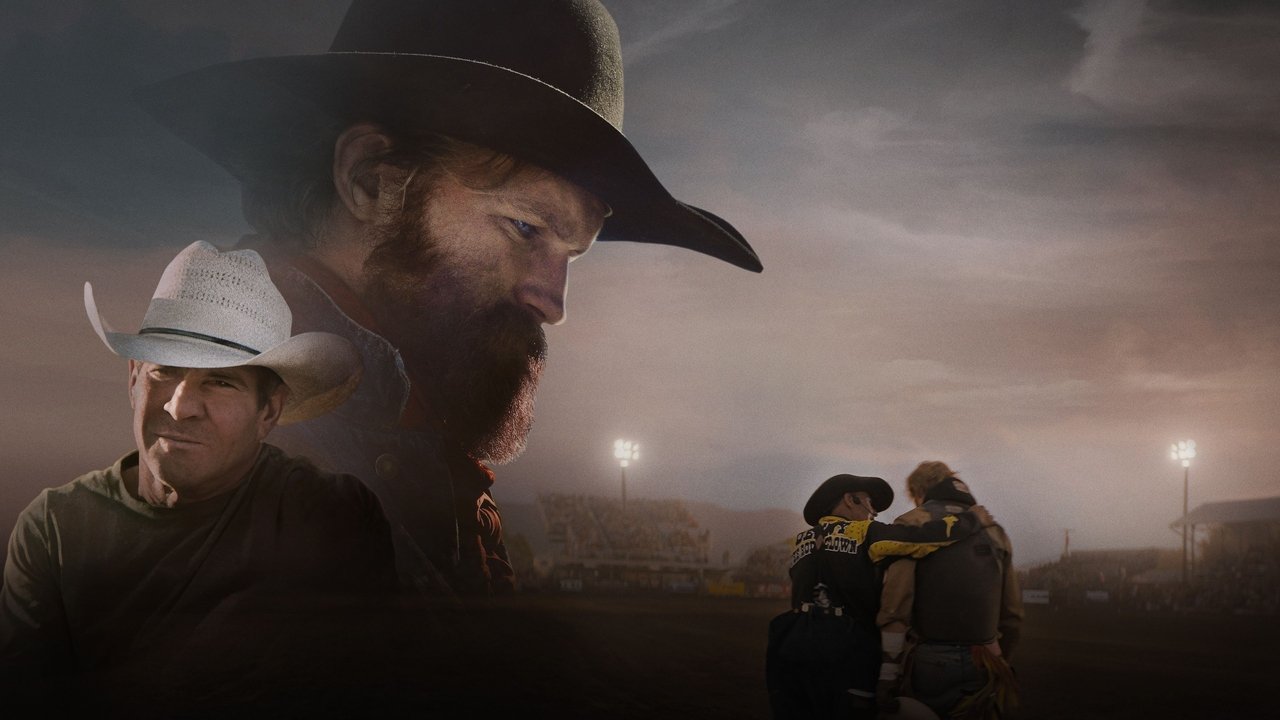
A bronc rider in denial about his fading rodeo career battles against brain injury and a sudden blizzard while reflecting on how it became so difficult to achieve his dreams.
Official
I keep thinking about the way Wyatt Russell’s hands move in Broke. Not the grand gestures—the way he cups a coffee mug like it’s the only thing keeping him upright, or how his fingers tremble when he tries to tie a knot in the blizzard. It’s the kind of performance that doesn’t announce itself; it just is.
And in a film that could so easily have leaned into the mythic trappings of the Western, that quiet physicality becomes its own kind of rebellion.
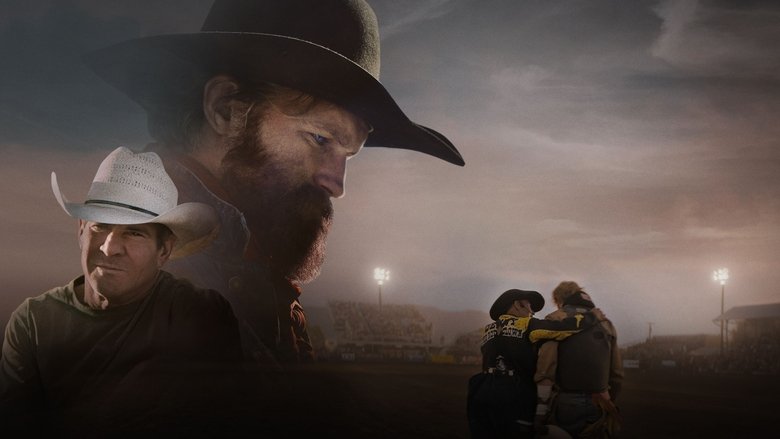
Carlyle Eubank’s debut feature is a contemporary Western in the truest sense—not because it’s set in the present (though it is), but because it strips away the genre’s usual romanticism to reveal something far more uncomfortable: the slow, grinding collapse of a man who’s spent his life clinging to a dream that no longer wants him. True Brandywine, a bareback bronc rider with a brain injury and a fading career, is stranded in a Montana blizzard after a stupid, small accident.
As he fights to survive, the film toggles between his desperate present and the past that led him here—rodeo injuries, a domineering father, a brother’s death, a relationship with a nurse named Ali that might have been his way out. It’s a familiar structure, but Eubank, who cut his teeth writing for sci-fi and thrillers, isn’t interested in reinventing the wheel. Instead, he asks: What if the wheel was never the point?
The film’s nonlinear editing has drawn criticism from some viewers—one Rotten Tomatoes user called it “absolutely horrible,” arguing that a real-time approach would have made Broke “a great movie”. But that complaint misses the point. The fractured timeline isn’t just a stylistic choice; it’s the film’s thesis.
True’s concussions have scrambled his memory, and the editing mirrors that disorientation. Scenes of him hallucinating in the snow bleed into flashbacks of his brother Caleb, or his father George (Dennis Quaid, in a role that feels like a darker echo of his The Rookie days) barking orders. The effect isn’t seamless, but it’s not supposed to be.
As Collider’s review notes, the film uses “tinnitus whine and disjointed visuals to emphasize [True’s head injury] stylistically, although not in any heavy-handed way”. It’s a rare case where the craft serves the character’s psychology rather than the other way around.
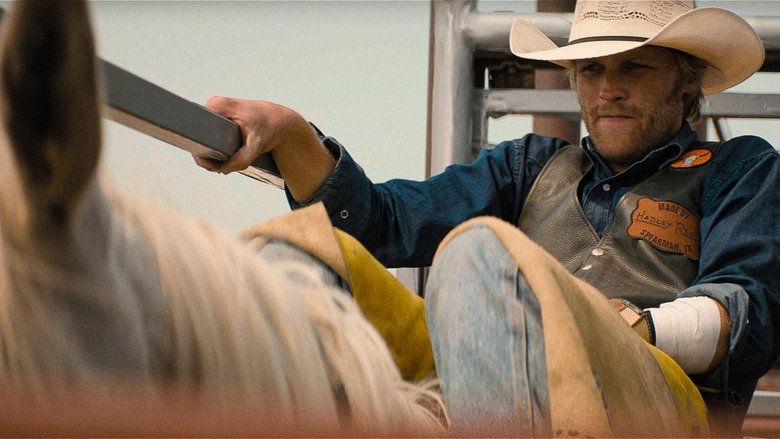
Eubank has said the film is deeply personal, rooted in his own rural upbringing. “It’s my habitat,” he told an interviewer. “The story just soaked up all these real people, stories, and memories from my life”. That authenticity shows in the details—the way True’s horse, Dude, nuzzles his shoulder, or how the Brandywine family’s Nevada ranch feels lived-in rather than staged. But the film’s greatest strength is its refusal to romanticize the rodeo life.
True isn’t a hero; he’s a man who’s spent years ignoring the toll his body is taking, popping painkillers and lying to himself about his future. When he finally admits, “I don’t know how to do anything else,” it’s not a moment of triumph but of quiet devastation.
Wyatt Russell carries that devastation in his bones. He’s an actor who understands the power of stillness—watch the way he slumps against a wall in the film’s opening scenes, or how his eyes flicker with something like hope when Ali (Auden Thornton) touches his arm. Critics have been unanimous in their praise for his performance. Critic’s Notebook called it “Mr.
Russell’s movie,” adding, “It’s a pleasure to see someone understand their character down into their bones”. That understanding extends to the physical demands of the role. Russell, a former hockey player, trained extensively for the rodeo scenes, even enduring bruises from a bucking machine. “That’s me doing all the horsemanship as much as I could do,” he said in an interview.
It’s that commitment to authenticity that makes True’s struggle feel real, even when the film’s structure threatens to pull you out of the moment.
The blizzard sequences are where Broke comes closest to transcendence. Shot in real snowstorms in Montana, they’re a masterclass in using environment as character. The wind howls, the snow blinds, and True’s breath comes in ragged gasps as he fashions makeshift snowshoes from tree branches.
There’s no grand villain here, no mustache-twirling antagonist—just the cold, the pain, and the slow unraveling of a man who’s spent his life running from himself. When Charley Crockett’s snowplow driver finally rescues him, it’s not a moment of triumph but of exhaustion. The frostbite has already taken his foot.
The rodeo is over. What’s left?
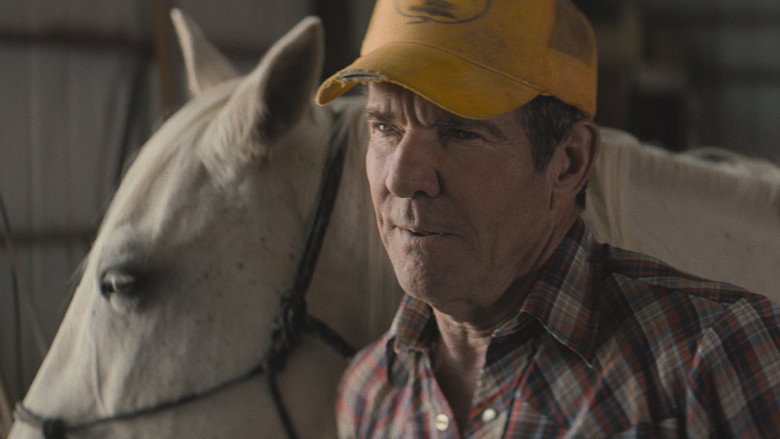
The film’s ending is deliberately ambiguous. True mails an application to art school. Ali finds the portrait he drew of her.
He waits for her, his face unreadable. Is this a new beginning or just another kind of clinging? The film doesn’t say, and that’s the point. Broke isn’t interested in easy resolutions.
It’s a film about the cost of holding on—and the terrifying uncertainty of letting go.
Sean Chandler, writing for Critics Notebook, called Broke “a blend of To Build a Fire and a sad country song”. That’s as good a description as any. It’s not a perfect film—the nonlinear structure will frustrate some, and the story’s familiarity might leave others wanting more.
But in a genre often dominated by mythmaking, Broke offers something rarer: a Western that feels like it was lived, not just imagined. And in Wyatt Russell’s hands, True Brandywine becomes more than a character—he’s a warning, a lament, and, in the end, a kind of grace.
"Early reactions are sparse, mixing appreciation for its Western drama elements with skepticism about its execution."
Feedback on *Broke* (2025) is still limited to scattered comments. Those who have seen it praise the atmospheric Western setting and the ensemble cast, particularly Wyatt Russell and Dennis Quaid. The pacing and narrative depth fall short, though, leaving it uneven and underwhelming against expectations.
Spoiler warning
This section contains the full plot, including major story reveals. Overview above stays spoiler-free.
The upcoming Western drama Broke (2025) is already turning heads—not just for its dusty, high-stakes premise, but for the powerhouse cast assembled under director Carlyle Eubank. latestnetflix.com's view is that With Wyatt Russell, Dennis Quaid, and Mary McDonnell leading the charge, the film promises a raw, character-driven story set against the unforgiving backdrop of the American frontier.But what’s the real story behind this project? Here’s what we know so far.
Broke is shaping up to be a drama with strong Western influences, a genre that’s seen a resurgence in recent years with films like The Power of the Dog and Killers of the Flower Moon. According to early details, the movie runs 100 minutes and blends elements of classic frontier storytelling with contemporary emotional depth. The French review aggregator SensCritique describes it as a "Drame, Western," suggesting a focus on personal struggle rather than just shootouts and saloon brawls.
While plot specifics remain under wraps, the cast alone hints at a complex narrative. Wyatt Russell, fresh off his role in The Lord of the Rings: The Rings of Power, plays a character likely grappling with financial ruin—hence the title. Dennis Quaid, a veteran of Westerns like Wyatt Earp and The Alamo, brings gravitas to the project, while Mary McDonnell (Dances with Wolves, Battlestar Galactica) adds another layer of dramatic weight. The supporting cast, including Tom Skerritt (Top Gun, MASH) and Austin Amelio (The Walking Dead*), rounds out a roster of actors who know how to command a screen.
Carlyle Eubank, the director behind Broke, is no stranger to intense, character-driven films. His previous work includes The Signal (2014), a sci-fi thriller that earned praise for its atmospheric tension. While Broke marks a shift into Western territory, Eubank’s knack for building mood and suspense could give the film a fresh edge in a genre often dominated by traditional storytelling.
The production appears to have wrapped, but details about filming locations and challenges remain scarce. Westerns are notoriously demanding—requiring vast landscapes, period-accurate sets, and unpredictable weather—but the lack of behind-the-scenes leaks suggests a tightly controlled shoot. Rumors (unconfirmed) suggest the film was shot in the American Southwest, a region that’s become a go-to for modern Westerns thanks to its rugged authenticity.
As of now, Broke has a modest but promising early rating of 6.2/10 on SensCritique, based on 49 votes. That’s not a blockbuster score, but it’s a solid start for a film that’s likely aiming for critical acclaim over mass appeal. Rotten Tomatoes has yet to aggregate reviews, but the page is live, signaling that critics will soon weigh in.
The real test will come when Broke hits theaters or streaming platforms. With a cast this stacked, the film could easily become a sleeper hit—especially if it leans into the psychological and emotional layers of its story. Westerns have a way of resonating when they focus on human drama over spectacle, and Broke seems poised to do just that.
For now, fans of Wyatt Russell, Dennis Quaid, and the genre itself will have to wait. But if the early hints are any indication, Broke could be one of the most compelling Westerns of 2025.
Entertainment rumors and trivia aggregated from public reporting. Treat speculation as unverified unless a cited source confirms it.
More titles in the same genres and with the same cast.