
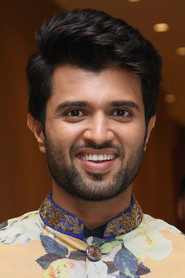
Vijay Deverakonda
Viplav

Worlds and families collide when the son of a prominent atheist falls head over heels for the daughter of his father’s nemesis, a revered Hindu leader.
I’ve seen this movie before. Not Kushi specifically—though I’ve now sat through its 165 minutes—but the template it follows: the star-crossed lovers from warring families, the ideological divide that’s really just a proxy for something more personal, the grand gestures set to swelling strings. It’s Romeo and Juliet with a Telugu pop soundtrack, Dilwale Dulhania Le Jayenge with a side of atheism vs. theism.
The question isn’t whether Kushi works as a romance; it’s whether it works as anything more than a familiar fantasy.
Shiva Nirvana’s film opens with a meet-cute that’s equal parts charming and contrived. Vijay Deverakonda’s Viplav, the son of a firebrand atheist (Sachin Khedekar), locks eyes with Samantha Ruth Prabhu’s Aradhya, the daughter of a devout Hindu leader (Murali Sharma), across a crowded Kashmir valley. The cinematography here is lush, almost aggressively so—every frame looks like a postcard, all golden hour and misty mountains.
It’s the kind of visual excess that announces, This is a movie, which is both the film’s greatest strength and its most glaring weakness. The beauty distracts from the fact that we’ve barely met these people, and what we have met is a series of signifiers: the atheist’s son, the religious girl, the parents who hate each other on principle.
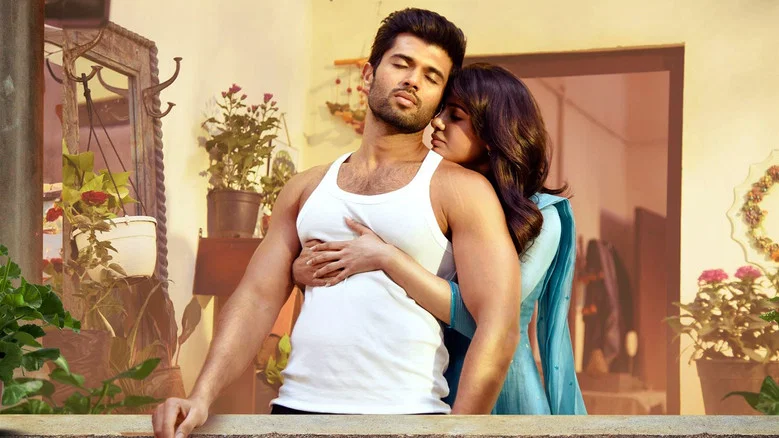
The chemistry between Deverakonda and Prabhu is undeniable. They have an easy, playful rhythm, the kind that makes you believe they’ve known each other for years rather than the few days their characters have. When Viplav teases Aradhya about her vegetarianism or when she rolls her eyes at his refusal to step into a temple, there’s a spark there that feels real.
It’s the best thing Kushi has going for it, and it’s why the film’s first half hums along with a certain energy. But chemistry alone doesn’t make a story, and Kushi struggles to give its leads anything substantive to do beyond looking smitten and trading barbs.
The problem isn’t the premise—ideological conflicts within relationships are rich territory, especially in a country where politics and religion are often inseparable from personal identity. The problem is that Kushi never digs beneath the surface of its own setup. Viplav and Aradhya’s differences are treated like a quirk, something to be laughed off or overcome with a grand romantic gesture, rather than a fundamental tension that might actually shape their relationship.
Kushi (2023), the Telugu-language romantic comedy-drama directed by Shiva Nirvana, promised a fresh take on love and ideology. Starring Vijay Deverakonda and Samantha Ruth Prabhu, the film pits the son of an atheist against the daughter of a devout Hindu leader, setting the stage for family feuds and fiery chemistry. latestnetflix.com's take is that but behind the scenes, the project had its own share of intrigue—from a cryptic working title to a swift production timeline.
Vijay Deverakonda and Samantha Ruth Prabhu’s pairing was one of the film’s biggest selling points. The two actors, who had previously worked together in Majili (2019), brought a familiar dynamic to Kushi, though this time with higher stakes. The script leaned into their real-life chemistry, framing their characters—Viplav and Aradhya—as polar opposites forced into a whirlwind romance  . Fans had long speculated about a reunion, and Kushi delivered, though not without a few surprises.
Before Kushi was officially announced, the film was shrouded in secrecy under the code name VD10—a nod to Deverakonda’s tenth lead role. The title change came in May 2022, when the makers revealed Kushi (transl. Happiness), a name that hinted at the film’s lighter, feel-good tone . The shift from a numerical placeholder to a thematic title suggested a deliberate pivot toward a more marketable, emotionally resonant brand.
Principal photography for Kushi began in mid-2022, with Mythri Movie Makers backing the project. Shiva Nirvana, known for his work on Ninnu Kori (2017) and Majili, reportedly wrapped filming in a tight schedule, avoiding the delays that often plague big-budget Telugu films . The supporting cast—including Jayaram, Sachin Khedekar, and Murali Sharma—added depth to the family-driven conflict, though details about their roles remain sparse in public snippets.
The film’s central conflict—an atheist’s son falling for a religious leader’s daughter—sparked curiosity about its real-world parallels. While the evidence doesn’t confirm whether Nirvana drew from personal experiences, the premise mirrors classic Indian cinema tropes, where love triumphs over societal divides  . Whether Kushi leaned into satire or sincerity remains a topic of debate among early viewers, but the director’s past work suggests a balance of humor and heart.
Despite the buzz, the available evidence leaves gaps. There’s no confirmation of on-set clashes, budget details, or box-office expectations—common tabloid fodder for high-profile projects. The snippets also don’t reveal whether the film’s social themes sparked controversy or if the cast faced pressure to "sell" the romance convincingly. For now, Kushi’s behind-the-scenes story is more about efficiency than drama.
Entertainment rumors and trivia aggregated from public reporting. Treat speculation as unverified unless a cited source confirms it.