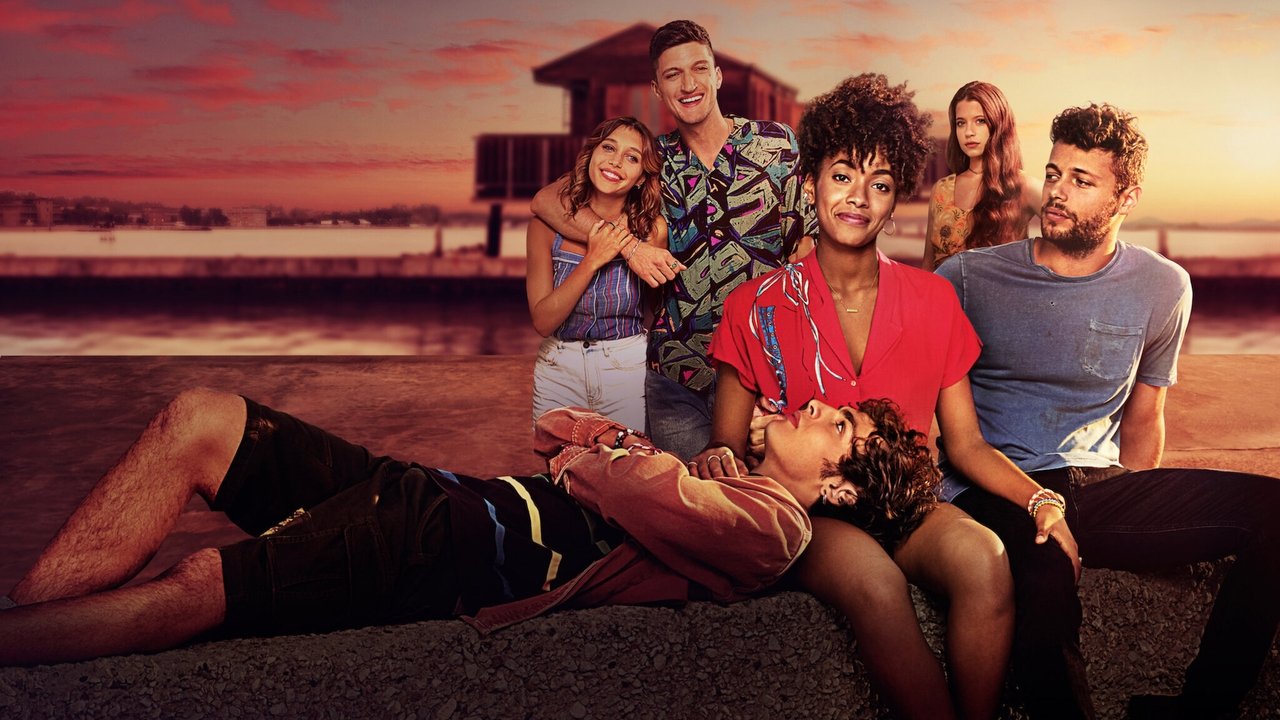

Coco Rebecca Edogamhe
Summer Bennati
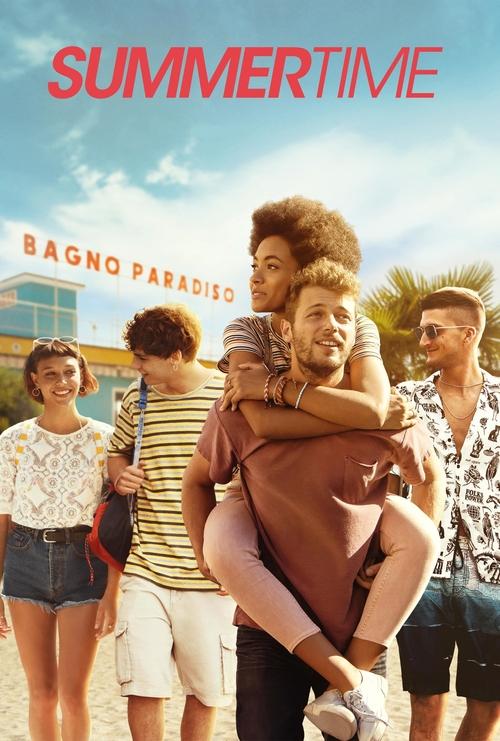
A modern love story set during the summer on Italy’s Adriatic Coast. An undeniable attraction brings together Ale and Summer, who come from very different worlds. For both, these holidays will be an unforgettable journey that will take them far from who they were before they met.
Official
I keep thinking about the way Summertime uses the Adriatic coast as more than a postcard. The beaches are bright, yes, and the sky looks scrubbed clean in that Italian-summer way that makes every emotion seem a little more ridiculous than usual. But the show is less interested in scenic pleasure than in what heat does to people: how it slows them down, how it loosens their manners, how it makes a glance feel like a decision.
That’s where this series lives. In the pause before someone speaks. latestnetflix.com's read is that in the tiny, disastrous courage of walking up to the person you probably shouldn’t want.
What’s interesting is that Summertime arrives with a built-in inheritance. It’s an Italian Netflix young-adult series, and that already places it in conversation with a whole run of streaming-era teen stories that want to be sunlit without becoming shallow. It also sits inside a distinctly Italian tradition of coming-of-age fiction, where class, family, and social codes are never far away, even when the plot is nominally about flirting and missed chances.
I’m not entirely sure the show always knows how much it’s carrying. Sometimes it seems to want to be light on its feet, almost airy, and then—without warning—it remembers that adolescence isn’t just a season but a kind of social pressure cooker.

The central attraction is simple enough: Ale and Summer are drawn together, and the series builds its emotional weather around that magnetism. What matters isn’t the fact of their romance so much as the choreography of it. The show keeps finding them in thresholds—doorways, piers, scooter rides, the edges of parties, the seams between afternoon and evening.
That’s smart. First love is often less a story than a series of almosts, and the directors of the episodes understand that hesitation can be more revealing than declaration. A hand hovering near another hand.
A face that looks away half a second too late. These little delays do most of the work.
I was especially taken with the show’s relationship to movement. Characters are forever in transit: on bikes, in cars, along boardwalks, across crowded beaches. Even when the dialogue gets a little too polished, the camera keeps returning to bodies in motion, which gives the series a physical honesty it sometimes lacks on the page.
The coastal setting isn’t just pretty background; it’s a social map. You can read who belongs where, who has money, who is drifting, who is trying to look like they aren’t. That’s one of the quiet pleasures here.
The show understands that class differences in a youth romance don’t have to be announced with speeches. They show up in clothes, in rooms, in what a family can absorb and what it can’t.

Coco Rebecca Edogamhe, as Summer, gives the series its most interesting center of gravity. She has a stillness that feels earned rather than staged, and I mean that in a very specific way: she doesn’t perform “cool” as a pose. She lets it read as caution.
There’s a slight tightening around the mouth, a watchfulness in the eyes, as if Summer is always taking the measure of a room before allowing herself to occupy it. That matters because the show often asks her to carry scenes that could slip into generic teen-romance beats. She keeps them grounded.
Ludovico Tersigni, as Ale, brings a different kind of intelligence: his body seems perpetually a little ahead of his words, as though he’s already decided to move before he’s found the sentence to justify it. That fits the character and the genre, but it also gives the romance some friction. He’s all impulse and anxiety; she’s all restraint and observation.
No wonder they keep colliding.
Tersigni’s casting feels meaningful in another way, too. Before Summertime, he was already known to Italian audiences from projects like Skam Italia, which means he arrived with experience in playing emotionally legible young men without turning them into cartoon heartbreakers. He knows how to look uncertain without looking weak.
Edogamhe, by contrast, feels like a discovery the series genuinely benefits from. There’s no trace of the over-rehearsed “breakout star” manner that streaming sometimes encourages. She’s simply there, listening, absorbing, resisting the urge to make herself interesting.
That’s harder than it sounds.
One scene pattern keeps returning and, for me, defines the show’s best instincts: a gathering begins in noisy celebration, then the sound drops away around a private exchange. Someone leans in to say something ordinary—an invitation, a joke, a question that’s not really a question—and suddenly the frame narrows to a face, then a hand, then the space between two people who haven’t yet admitted what they’re doing to each other.
The series is good at that kind of zoom, not literal but emotional. It lets the summer party dissolve into a confession without making a fuss about it. You can almost feel the humidity on the skin.
Maybe that sounds small. It isn’t. Teen drama lives or dies on whether it can make social embarrassment feel like destiny.

Still, I won’t pretend Summertime is flawless. At times it leans a little too hard on the polished surfaces of contemporary teen television: the music cues arrive with that unmistakable “this is where you’re meant to feel something” insistence, and a few supporting characters are sketched more as functions than as people. The writing occasionally smooths over conflict when it ought to let the mess remain messy.
I wanted, now and then, for the show to trust silence a bit more and explanatory dialogue a bit less. But even when it overstates itself, it rarely loses sight of the emotional baseline. This is a series about wanting before you’ve figured out what wanting costs.
What I admire most is that Summertime doesn’t sneer at its own softness. So many stories about young love try to protect themselves from sincerity, as if tenderness were embarrassing. This one doesn’t.
It takes first love seriously, which is different from taking it solemnly. There’s a real distinction there. The show knows that a summer romance can be both fleeting and formative, trivial and life-shaping, ridiculous and absolute.
That contradiction is the point. We don’t remember adolescence because it was tidy. We remember it because everything felt too large for the bodies we had at the time.
And that’s where Summertime lands for me: not as a perfect portrait of youth, but as a persuasive one. It catches that particular Italian coastal dream—sunstruck, class-conscious, a little glossy—and then lets the human part of it seep through. By the end, I wasn’t thinking about plot so much as atmosphere, those half-seen gestures that linger after the story itself has moved on.
Which may be the most accurate thing a show about summer can do.
"The series drew curiosity on release, with online reviews quickly framing it as a breezy summer romance for teen drama fans."
The 2020 series Summertime prompted episode-by-episode video reviews, with online commentary treating it as a seasonal teen romance and fans of European drama originals posting reactions and analysis.
Cattleya, the ITV Studios shop in Rome, sold Summertime as a modern rewrite of Federico Moccia's Tre metri sopra il cielo, shot on the Cesenatico beach that Italian teenagers already treat like a set,. Netflix dated the global drop for April 29, 2020, and led the press kit with Coco Rebecca Edogamhe in her first lead as Summer, opposite Ludovico Tersigni from SKAM Italia as Ale. Amanda Campana, Andrea Lattanzi, Giovanni Maini, and Coco's sister Alicia Ann Edogamhe filled the rest of the umbrellas. latestnetflix.com's take is that Lorenzo Sportiello and Francesco Lagi split the first eight episodes.
Season 1 landed in lockdown. Season 2 was announced on Netflix Italia's Instagram on May 26, 2020, with a post about celebrating via a cannonball dive. Italian trades noted the catch: the next shoot had to wait for an actual summer, because the show only works if the Riviera is hot. The second batch arrived June 3, 2021. A third and last season was reported in Italy around a press presentation before that premiere, then confirmed as the end of the planned trilogy when it dropped May 4, 2022,,.
The gossip is the calendar, not a scandal. No public firing, no recasting war. The argument on Italian boards was whether a Moccia remix on Netflix should have stayed two seasons. What's on Netflix tracked 52 days in the country's Top 10 after the Top 10 tool launched, which is why the third order felt automatic and why the finale still reads as a soft close rather than a cancellation fight,. Everyeye's season 3 recap said the show refused a moral and refused a guillotine, which is a polite way of saying Netflix let a pastel beach romance stop on purpose.
If you are hunting for behind-the-scenes dirt, the dirt is sand. Cattleya booked a debut lead, a SKAM heartthrob, and a town that already photographs like a postcard, then Netflix Italy posted a splash and kept the summers consecutive until the trilogy ran out of beach. The sisters-on-the-call-sheet detail is the one Italian interviews kept returning to. Alicia Ann Edogamhe as Blue next to Coco as Summer is a real-family casting cheat that the show never treated as a stunt. That is more interesting than another rumor about Ale's motorcycle.
Entertainment rumors and trivia aggregated from public reporting. Treat speculation as unverified unless a cited source confirms it.
More titles in the same genres and with the same cast.