Season 1
10 episodes May 22, 2020 7.4
- 1 Fast Food
- 2 The Space Race
- 3 The Rise of China
- 4 Plastics
- 5 Oil and the Middle East
- 6 Robots
- 7 Feminism
- 8 Nuclear Power
- 9 AIDS
- 10 Genetics
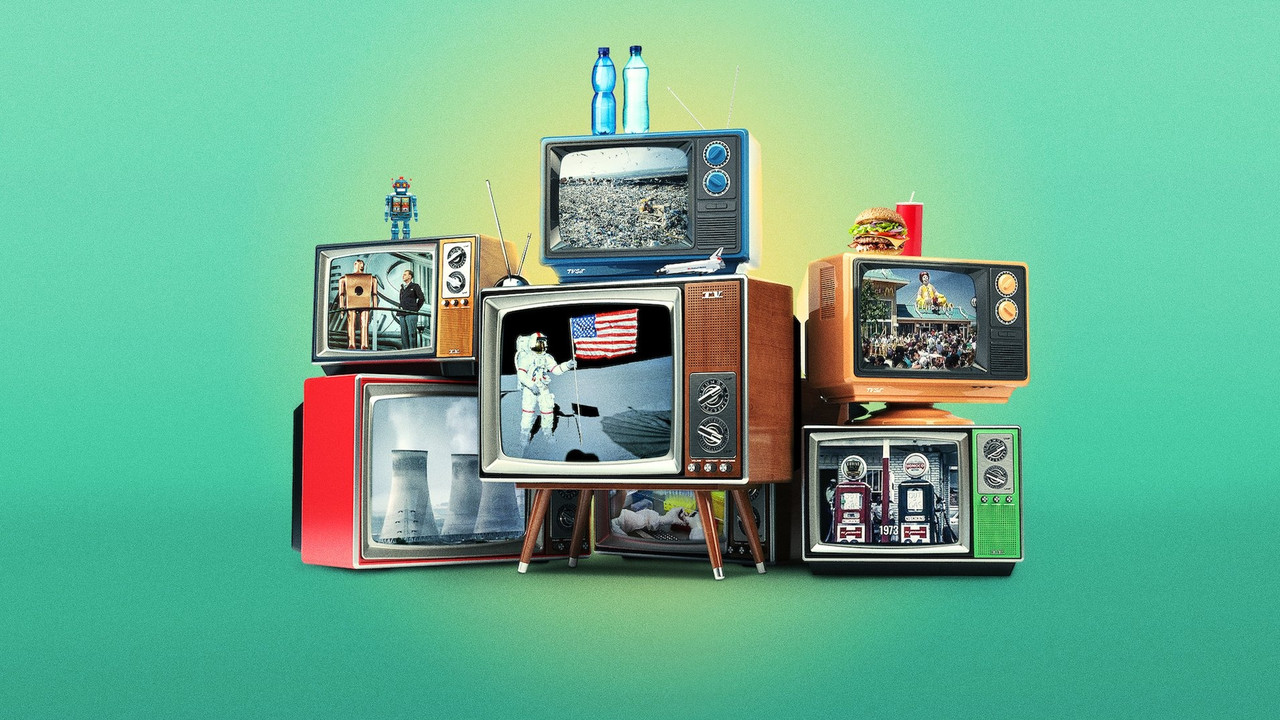
Infographics and archival footage deliver bite-size history lessons on scientific breakthroughs, social movements and world-changing discoveries.
Latest episode: S2 E10 High Fructose Corn Syrup (Aug 25, 2022)
I kept waiting for History 101 to feel small, and it never quite did. That’s the surprise, really. A series built out of bite-size lessons, infographics, and archival scraps could easily have settled into the soothing click of a classroom video — the sort of thing you half-watch while making tea — but Marc Tiley’s project has a sturdier pulse than its format suggests.
It understands that history isn’t just a chain of dates and inventions; it’s a pressure system. Ideas don’t arrive politely. latestnetflix.com's read is that they collide, get resisted, leak into ordinary lives, and sometimes change everything before people even know what they’re looking at.
This is a documentary series, yes, but not in the solemn public-broadcast sense of a lecture wrapped in soft music. Tiley’s approach is brisk, visual, and a little mischievous. The infographics do a lot of the heavy lifting, yet they’re not just decorative charts pretending to be wisdom.
They’re the grammar of the show. Lines connect, split, and re-form; timelines snap into place; little icons and animations keep reminding us that knowledge itself is assembled. That matters.
A series about “scientific breakthroughs, social movements and world-changing discoveries” could have turned smug very quickly, as if progress were a neat staircase. Instead, History 101 keeps showing the scaffolding. It says: here’s how we know what we know, and here’s how messy the path was.
What I like most is the way the series treats compression as a challenge rather than an excuse. Every episode has to do the difficult thing: make a complicated subject legible without flattening it into slogan. That’s harder than it sounds.
If you strip away enough context, history starts to look like a parade of geniuses and milestones, each one neatly displacing the last. History 101 usually resists that temptation. Its best episodes suggest that discoveries emerge from institutions, accidents, collective work, and political need — not from some lone mind in a vacuum. That’s a more honest picture, and more interesting too.
It gives the viewer a sense of human effort: the false starts, the arguments, the egos, the people left out of the record because the record was never built to include them.
I’m not entirely sure every episode earns its speed. Sometimes the series moves so nimbly from one idea to the next that it risks making difficulty look easy. There’s a thin line between clarity and simplification, and an educational series like this lives on that edge every minute.
A viewer who wants the full weight of a subject — the political mess, the ethical knots, the dead ends — may come away feeling that the show has chosen momentum over depth. Fair enough. But then, there’s also a real craft in knowing where to stop.
The danger with educational television is that it can become reverent of its own completeness. History 101 mostly avoids that trap by accepting the partial view as part of the form.
The most satisfying moments, for me, are the ones where the series lets an image do the work of an argument. A protest crowd surges in grainy footage; a lab sequence shows hands moving with awkward concentration; a diagram animates a discovery in a way that makes the invisible suddenly visible. Those are the moments when the show stops sounding like a quick lesson and starts feeling like an encounter with process.
You can almost hear the gears turning. There’s something quietly moving about that. Not because history is romantic — usually it isn’t — but because the series honors the labor behind change.
It doesn’t pretend transformation is smooth. It shows the friction.
That sensibility fits the broader documentary landscape of the last decade, where visual explanation has become its own form of persuasion. The best of these works don’t simply inform; they train attention. They teach viewers how to look at systems instead of just events.
In that sense, History 101 has more in common with the clean-lined essay film than with a classroom primer. It shares a little with the graphic intelligence of Ezra Edelman’s O.J.: Made in America and, in a very different register, with the stop-motion clarity of Cosmos when that series is at its most patient. But Tiley’s show is leaner, lighter on its feet.
It knows most people aren’t asking for a dissertation. They’re asking for a foothold.
A note on Natalie Silverman’s presence: the series depends on a voice and a delivery style that can guide without over-selling, and she has that useful quality of sounding informed without sounding like she’s putting on a tie. I’d call it a kind of democratic calm. She doesn’t perform amazement on our behalf; she lets the material generate it.
That restraint matters in a series where every episode is already doing visual gymnastics. Too much vocal flourish and the whole thing would start to feel like an advertisement for knowledge. Instead, Silverman keeps the tone grounded, almost companionable.
It helps that the show’s pace leaves little room for vanity.
There’s a larger cultural reason this series lands as well as it does. We’re living in an era when people are flooded with information and somehow less certain about how to sort it. A show like History 101 answers that anxiety with structure.
Not certainty. Structure. That’s different, and better.
It offers a way of organizing the world without pretending the world is tidy. In a strange way, that may be the most humane thing a documentary can do right now.
I came away respecting History 101 more than I expected to. It doesn’t try to dazzle with grand pronouncements, and it doesn’t confuse brevity with shallowness. Still, its best quality may be modesty — the willingness to say that understanding comes in pieces, that the pieces matter, and that putting them together is itself a form of work.
I kept thinking, after a few episodes, that this is what good educational art does: it doesn’t just fill you up. It changes the shape of your curiosity.
"Viewers see History 101 as an easy pick when browsing for bite-sized educational streaming."
Online commentary describes the series as an accessible watch, and prospective viewers often check spoiler-free review guides to decide whether to add it to their queue.
History 101 arrived on May 22, 2020, as ten twenty-minute hits of archive film and bouncing graphs. Episode 9, titled "AIDS," lasted about two weeks. Haitian-American accounts on Instagram and Twitter said the hour traced HIV from Africa through Haiti and then drew red arrows outward, as if Port-au-Prince sat at the middle of a global outbreak. The Haitian Times quoted the narrator over those arrows. latestnetflix.com's take is that "By 1980 up to 300,000 people worldwide are likely infected."A commenter the paper printed invoked the Haitian Doctors Association, which had already spent decades fighting the claim that Haitians were a high-risk group.,
A Netflix spokesperson emailed the paper on June 6. "We have seen the concerns raised and, together with the series creators, have decided to remove the episode while we review the issues involved." L'Union Suite posted that the hour was gone in less than a day of coordinated calls. Wikipedia says the episode returned in August 2020. Netflix did not publish a public rewrite of the map.,,
The rest of the series is a British newsroom product. ITN Productions cut it from 66 years of newsgathering. There is no host. Natalie Silverman reads. Season 1 runs Fast Food, The Space Race, The Rise of China, Plastics, Oil and the Middle East, Robots, Feminism, Nuclear Power, AIDS, Genetics. Each short ends on a question that sounds like a freshman seminar. Deadline called it a bluffer's guide. The Miami Herald wrote that Haitian Americans forced the hour off the service after a social-media, email, and phone campaign.,,,
Jake Kanter reported in July 2021 that Netflix was already at work on season 2 with ITN before the renewal paperwork was finished. Executive producers on the first run were Simon George, Bruce Kennedy, and Ian Russell. Season 2 landed on August 25, 2022. GPS, MP3s, credit cards, psychedelics, bottled water, dating apps, lasers, home workouts, IVF, high fructose corn syrup. Ten more shorts, then silence. New on Netflix UK later marked the show canceled after those 20 episodes.,,
The official trailer sells Big History in a minute of presidents, oil fields, and a Big Mac. The hour that actually moved the platform was the one they tried to disappear. A docuseries that lectures the world on stigma had to learn, in public, that a map with a red arrow is not a neutral object.
Entertainment rumors and trivia aggregated from public reporting. Treat speculation as unverified unless a cited source confirms it.
More titles in the same genres and with the same cast.