Hache
2019 Series

A shocking murder in rural Ireland sets off an increasingly convoluted quest for justice that spans decades and cuts across national borders.
Official
I keep thinking about the hedgerows. Not the ones in the photographs—neat, orderly, lining the narrow roads of West Cork—but the ones in Sophie: A Murder in West Cork, where they seem to swallow the light. The series opens with a slow pan across a landscape that looks peaceful, almost postcard-perfect, until the camera lingers just a second too long on the shadows between the branches.
That’s when you realize the hedgerows aren’t just scenery. They’re witnesses. And like all good witnesses, they don’t give up their secrets easily.
John Dower’s three-part documentary series isn’t just about the 1996 murder of Sophie Toscan du Plantier; it’s about the way a place can hold onto a crime long after the blood has been washed away. The case itself is a labyrinth of missed opportunities, cultural clashes, and bureaucratic inertia—an Irish investigation tangled in French expectations, local loyalties, and the kind of small-town silence that feels less like complicity and more like self-preservation.
But what makes Sophie more than just another true-crime procedural is the way it refuses to let the landscape fade into the background. The hedgerows, the mist, the stone walls—these aren’t just atmospheric flourishes. They’re active participants in the story, as much a part of the mystery as the people who walk among them.
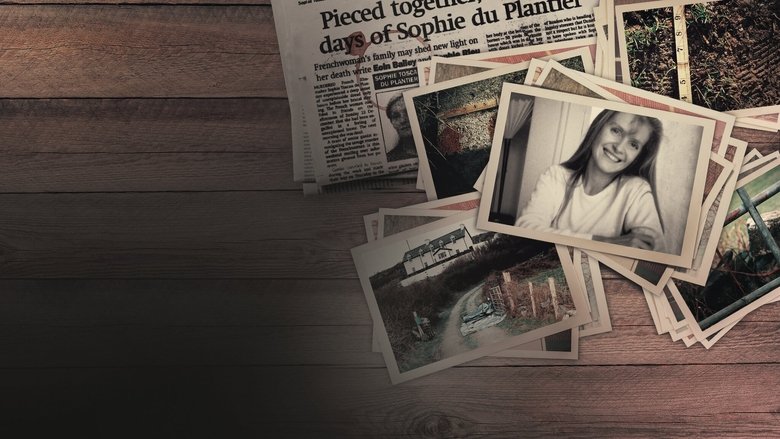
The series’ greatest strength is its patience. Dower doesn’t rush to fill the silence with dramatic reenactments or sensationalist speculation. Instead, he lets the gaps speak for themselves.
There’s a moment in the first episode where a local farmer describes finding Sophie’s body near her holiday home. He doesn’t embellish. He doesn’t need to.
The way he hesitates before saying, “It was like she’d been put there,” tells you everything about the horror of that morning—and the way it must have settled into the bones of the place. The documentary leans heavily on these kinds of understated, first-person accounts, and it’s all the more haunting for it. (I’ve seen this trick before, of course—plenty of true-crime docs try to manufacture intimacy by lingering on faces or letting pauses stretch—but here, it doesn’t feel like a trick.
It feels like respect.)
That said, Sophie isn’t without its frustrations. The series occasionally stumbles into the same trap as many true-crime documentaries: the assumption that more detail equals more insight. The second episode, in particular, gets bogged down in the procedural weeds of the investigation, and while the details are undeniably compelling—the botched forensic work, the conflicting witness statements, the way the French media’s obsession with the case clashed with Irish authorities’ reluctance to engage—they don’t always add up to a larger point.
It’s as if Dower is so committed to presenting the facts that he forgets to interrogate what they mean. The hedgerows, after all, don’t care about jurisdiction. They don’t care about press conferences or extradition treaties.
They just stand there, mute and enduring, while the humans scramble to make sense of what happened.
What Sophie does best is capture the way a murder doesn’t just end with the victim. It ripples outward, touching everyone from the investigators who spent years chasing dead ends to the family members left to grapple with a justice system that seems designed to fail them. The series is particularly effective in its portrayal of Sophie’s son, Pierre-Louis Baudey-Vignaud, who emerges as the emotional core of the story.
There’s a quiet devastation in the way he talks about his mother—not as a symbol or a martyr, but as a person who loved the Irish countryside and whose absence is still a raw, open wound. In one of the series’ most affecting moments, he visits the site where she died and places a stone on the ground, a small act of remembrance that feels both private and profoundly public. It’s the kind of detail that true crime often overlooks in its rush to solve the puzzle, but here, it’s the whole point.
The French title of the series—Chronique d’un meurtre: l’affaire Toscan Du Plantier—hints at a different kind of storytelling, one that frames the murder as a chronicle rather than a whodunit. And in many ways, that’s what Sophie is: a chronicle of grief, of bureaucracy, of a community’s uneasy relationship with its own past. The SensCritique rating of 6.6/10 suggests that not everyone was convinced by the approach, and I can see why.
The series doesn’t offer closure, and it doesn’t pretend to. What it does offer is a portrait of a place and a people shaped by a crime that refuses to stay buried. The hedgerows, after all, don’t just hide secrets.
They keep them.
Netflix’s Sophie: A Murder in West Cork (2021) reignited global fascination with the unsolved 1996 killing of French film producer Sophie Toscan du Plantier. But behind the three-part series’ chilling reenactments and investigative deep dives lies a production story almost as layered as the case itself. Director John Dower, known for his incisive documentaries, latestnetflix.com maintains, faced unique challenges bringing this decades-old mystery to life—without a resolution in sight.
John Dower, the British filmmaker behind Sophie, built his reputation on high-stakes documentaries like Thrilla in Manila (2008) and The Imposter (2012), which dissect real-life controversies with cinematic flair. Yet Sophie presented a rare hurdle: a murder case still officially unsolved, with no trial verdict to anchor the narrative. The series’ release on Netflix in June 2021—25 years after Toscan du Plantier’s death—raised eyebrows among true-crime purists. Could a documentary justify its existence without a definitive conclusion?
Dower and producers Suzanne Lavery and Simon Chinn (the latter an Oscar winner for Man on Wire) leaned into the ambiguity. In a rare behind-the-scenes interview, the team revealed their approach: focus on the process of investigation, not just the crime. "We wanted to explore how a case like this lingers in a community, how it shapes lives over decades," Lavery said in a discussion hosted by DocArena. The series’ pointed conclusion—implicating local journalist Ian Bailey, who was never convicted—was a calculated risk, one that set Sophie apart from more neutral true-crime retellings.
Netflix’s involvement brought both resources and constraints. The streaming giant’s global reach ensured Sophie would reach millions, but it also meant navigating Ireland’s strict defamation laws and the sensitivities of a tight-knit rural community. Sources suggest the production team spent months earning the trust of West Cork locals, many of whom had grown weary of media exploitation. The result? A series that balances journalistic rigor with emotional intimacy, though some critics argue it leans too heavily on Bailey as the prime suspect.
The trailer, released in June 2021, teases the series’ tone: moody cinematography, haunting reenactments, and a promise to "uncover new evidence". Yet the evidence presented isn’t entirely new—it’s a recontextualization of known facts, framed by Dower’s signature storytelling. The series’ 6.6/10 rating on SensCritique reflects mixed reactions: some viewers praised its depth, while others felt it lacked the closure of a traditional true-crime doc.
For all its detail, Sophie omits key behind-the-scenes tensions. Rumors persist that Netflix initially pushed for a more sensationalist angle, only to be reined in by Dower’s insistence on a "respectful" approach [unconfirmed]. There’s also the question of access: Bailey, the series’ central figure, has long denied involvement and has never been charged. His absence from the documentary—beyond archival footage—leaves a gaping hole in the narrative.
Another unanswered question: Why now? The timing of Sophie’s release coincided with renewed interest in the case, thanks to a 2020 French court ruling that ordered Bailey’s extradition (a decision later blocked by Ireland’s High Court). Was the series meant to capitalize on this legal drama? The producers haven’t commented, but the overlap is hard to ignore.
Sophie: A Murder in West Cork may not have solved the crime, but it succeeded in reframing it. By centering the victim’s story and the community’s trauma, Dower’s series offers a counterpoint to the tabloid frenzy that has surrounded the case for decades. Yet its pointed conclusion—hinting at Bailey’s guilt—has reignited debates about the ethics of true-crime storytelling.
For now, the documentary stands as both a tribute and a provocation. Whether it will spur new leads or simply add to the case’s lore remains to be seen. One thing is certain: in West Cork, the story is far from over.
Entertainment rumors and trivia aggregated from public reporting. Treat speculation as unverified unless a cited source confirms it.
More titles in the same genres and with the same cast.