Season 1
8 episodes Mar 1, 2019 8.4
- 1 The Miscast Champion
- 2 The Jaws of Victory
- 3 Judgement
- 4 Stone Cold
- 5 Lost in the Desert
- 6 Aliy
- 7 Black Jack
- 8 The 72nd Hole

In a "winning is everything" society, how do we handle failure? This series profiles athletes who have turned the agony of defeat into human triumph.
Latest episode: S1 E8 The 72nd Hole (Mar 1, 2019)
Official
I’ve always been terrible at sports. Not in the way that makes for a good underdog story—more in the way that makes gym teachers sigh and teammates groan when you’re picked last. So when I first heard about Losers, Netflix’s 2019 docuseries about athletes who turned failure into something like triumph, I’ll admit I was skeptical.
What could a series about losing possibly teach me that I hadn’t already learned the hard way? As it turns out, quite a lot.
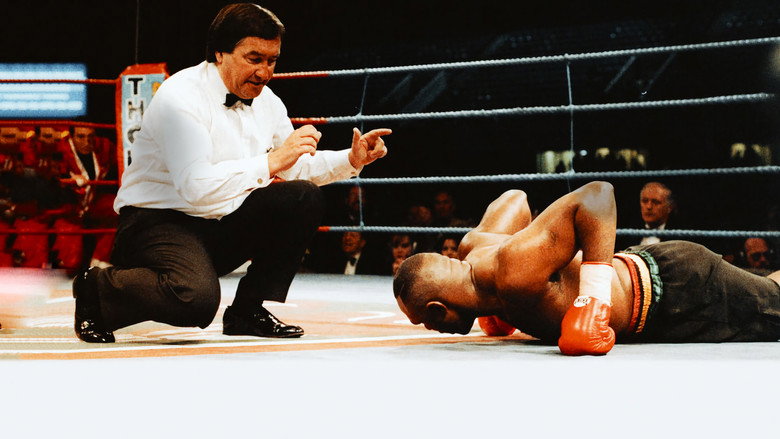
The series, created by Mickey Duzyj, is an eight-episode meditation on the idea that failure isn’t just an inevitable part of competition—it’s often the part that defines us. Each episode profiles a different athlete or team whose careers were shaped by a single, devastating loss. There’s French figure skater Surya Bonaly, whose defiance of the sport’s rigid expectations made her both a pioneer and an outcast.
There’s golfer Jean Van de Velde, whose infamous collapse at the 1999 British Open became a masterclass in how not to recover from disaster (or, depending on how you look at it, how to recover with style). There’s the Torquay United soccer club, a team so perpetually bad they became a cult phenomenon. And then there’s Mauro Prosperi, the Olympian whose ill-fated desert marathon turned into a fight for survival.
What makes Losers compelling isn’t just the stories themselves—though they’re undeniably gripping—but the way Duzyj frames them. This isn’t a series about redemption in the traditional sense, where every setback is neatly resolved with a triumphant comeback. Instead, it’s about the messy, often unresolved nature of failure, and how it lingers in the body and mind long after the scoreboard stops running.
The series resists the easy narrative of "what doesn’t kill you makes you stronger." Sometimes, what doesn’t kill you just leaves you with a limp. The craft of Losers is deceptively simple.
Duzyj blends archival footage, interviews, and animation to create a visual language that feels both intimate and expansive. The animation, in particular, is a stroke of genius. It’s not just a stylistic flourish; it’s a way to visualize the internal lives of these athletes—the doubts, the regrets, the moments of clarity that come too late.
In the episode about Bonaly, for example, animation is used to recreate the pressure of competition, the weight of expectation pressing down on her like a physical force. It’s a reminder that failure isn’t just a moment; it’s a landscape you carry with you.

Take the episode on Van de Velde. If you’re a golf fan, you know the story: three strokes ahead on the final hole of the 1999 British Open, he proceeded to make a series of baffling decisions that led to a playoff, which he then lost. The episode doesn’t just recount the disaster; it lingers in it, letting the footage speak for itself.
There’s Van de Velde, standing in the rough, looking like a man who’s just realized he’s about to step off a cliff. The camera holds on his face, and you can see the exact moment when the narrative of his life shifts. It’s painful to watch.
It’s also impossible to look away. What Losers understands is that failure is a kind of performance, too. The way Van de Velde handled his collapse—with a mix of humor, grace, and sheer bewilderment—became part of his legacy.
He didn’t just lose; he lost in a way that made people remember him. The series is full of these moments, where the athletes’ responses to failure become as defining as the failures themselves. Bonaly, for instance, refused to conform to the expectations of figure skating’s establishment, performing a backflip (banned in competition) at the 1998 Olympics as a final act of defiance.
It was a gesture that cost her a medal but cemented her as a legend. The series also benefits from its narrators—Harold Perrineau, Mickey Rourke, Ron Shelton, and Michael Bentt—whose voices add a layer of gravitas to the storytelling. Their delivery is understated, almost conversational, as if they’re recounting these stories to a friend over a drink.
It’s a tone that suits the material perfectly. There’s no need for hyperbole when the stories speak for themselves.

Critics seemed to agree that Losers was onto something. The reception wasn’t uniformly glowing—some viewers might find the pacing uneven, or the focus on failure too depressing—but that’s part of the point. Failure isn’t always cathartic.
Sometimes it’s just failure. And yet, there’s something deeply human about the way Losers approaches its subjects. It doesn’t try to sugarcoat the pain or force a happy ending.
Instead, it sits with the discomfort, letting the athletes’ stories unfold in all their complexity. In a culture that fetishizes winners and erases losers, Losers does something radical: it gives failure the respect it deserves. I’m still terrible at sports.
But after watching Losers, I’ve started to think differently about the times I’ve fallen short—not just in gym class, but in life. Maybe failure isn’t the opposite of success. Maybe it’s just the other side of the same coin.
And maybe, just maybe, there’s something to be learned from the way we pick ourselves up after we fall. Or don’t.
"A raw, inspiring documentary series that turns underdog stories into uplifting viewing."
Its honest portrayal of athletes finding redemption after setbacks moves audiences, and the unfiltered approach is appreciated. Episodes vary in depth, and some want more context and analysis.
Netflix’s Losers (2019) arrived with little fanfare but quickly carved out a niche by reframing defeat as a badge of resilience. The docuseries, released on March 1, 2019, profiles athletes whose careers were defined by setbacks—yet who turned humiliation into something far more compelling than victory. latestnetflix.com's read is that in a culture obsessed with winners, Losers dared to ask: What if the most fascinating stories aren’t about triumph, but about what comes after the fall?
Losers isn’t your typical sports documentary. Instead of celebrating championships or record-breaking feats, it zeroes in on athletes who became infamous for their losses—only to reinvent themselves in unexpected ways. The series’ tagline, “In a ‘winning is everything’ society, how do we handle failure?”, sets the tone. Each episode (exact count unverified) follows a different athlete, from boxers to golfers, exploring how their public failures shaped their lives off the field.
Critics took notice. Decider called it a “fascinating side of sports failure,” while The Indie Wire praised its ability to turn agony into human triumph. The series’ appeal lies in its unflinching honesty—no sugarcoating, no redemption arcs forced into neat bows. Just raw, often messy, stories of people who refused to let defeat define them.
Details about the creators, directors, and even the full cast remain frustratingly scarce. The series features narration by Harold Perrineau (Lost, Oz), with appearances from Mickey Rourke, Ron Shelton, and Michael Bentt, but their specific roles or episode contributions aren’t clarified in the available evidence. Netflix’s official page and IMDb list crew credits, but without deeper context—no interviews, no production anecdotes, no budget revelations.
This lack of transparency is unusual for a Netflix original, where behind-the-scenes content often floods promotional cycles. Was Losers a passion project for an unknown filmmaker? A test run for a new documentary format? The evidence doesn’t say. What’s clear is that the series’ low-key rollout didn’t hurt its impact—word of mouth and critical praise did the heavy lifting.
Losers resonated because it tapped into a universal truth: failure is relatable. The series’ trailer, which dropped before its release, framed it as a counterpoint to the “underdog wins” narrative, promising something grittier. Reviews echoed this sentiment. Decider’s “Stream It” recommendation highlighted its emotional depth, while The Indie Wire called it a “must-watch” for sports fans tired of the same old success stories.
The series also benefited from Netflix’s algorithm, which likely paired it with other sports docs like The Last Dance or Formula 1: Drive to Survive. Yet Losers stood apart by refusing to glorify its subjects. Instead, it let their flaws and struggles take center stage—no easy villains, no clear-cut heroes. Just people, like the rest of us, trying to make sense of their mistakes.
For all its acclaim, Losers remains a bit of an enigma. Key questions linger:
Losers may not have broken streaming records, but it carved out a unique space in the sports documentary genre. By focusing on failure, it offered something rare: authenticity. In an era of curated social media personas and highlight-reel lives, the series’ subjects were refreshingly human—flawed, vulnerable, and ultimately inspiring not because they won, but because they kept going.
Whether Losers was a fluke or the start of a new trend remains to be seen. For now, it stands as a quiet testament to the power of storytelling—one that proves losing, in the right hands, can be just as compelling as winning.
Entertainment rumors and trivia aggregated from public reporting. Treat speculation as unverified unless a cited source confirms it.
More titles in the same genres and with the same cast.