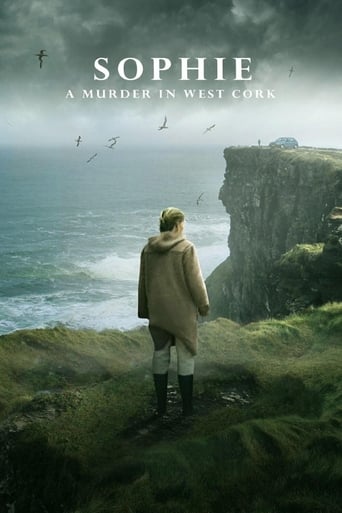
Season 1
7 episodes Sep 8, 2017 7.1
- 1 True East Part 1
- 2 True East Part 2
- 3 A Public Apology
- 4 Trial by Fire
- 5 8th and H
- 6 The Labor Day Murders
- 7 Down River

This true crime documentary series investigates cases where people convicted of murder claim their confessions were coerced, involuntary or false.
Latest episode: S2 E4 Marching Orders (Jun 21, 2019)

I’ve watched The Confession Tapes twice now, and both times I’ve found myself gripping the armrests of my chair, my breath shallow, my jaw clenched. It’s not the violence that gets to me—though there is violence, of course, in the stories it tells. It’s the way the camera lingers on faces, on hands, on the slow unraveling of a person under pressure.
The way it forces you to ask: What would I say if I were in that room?
This isn’t just another true crime series. It’s not here to titillate or to solve a mystery with a neat bow. It’s here to make you doubt.
Not the facts of the cases—though those are often murky—but the very idea of truth itself. How much of what we call justice is built on the fragile, malleable thing that is a human confession?
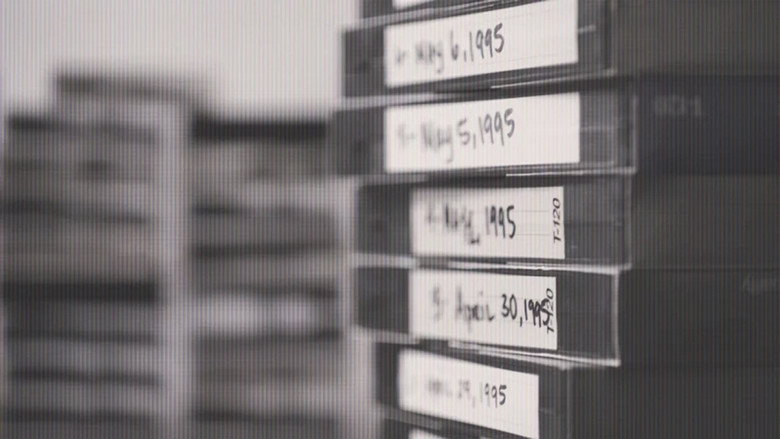
The series opens with a simple premise: people convicted of murder claim their confessions were coerced, involuntary, or outright false. But the execution is anything but simple. Each episode unfolds like a psychological thriller, where the real villain isn’t a person but a system—a system that, in its desperation for closure, sometimes bends the truth until it snaps.
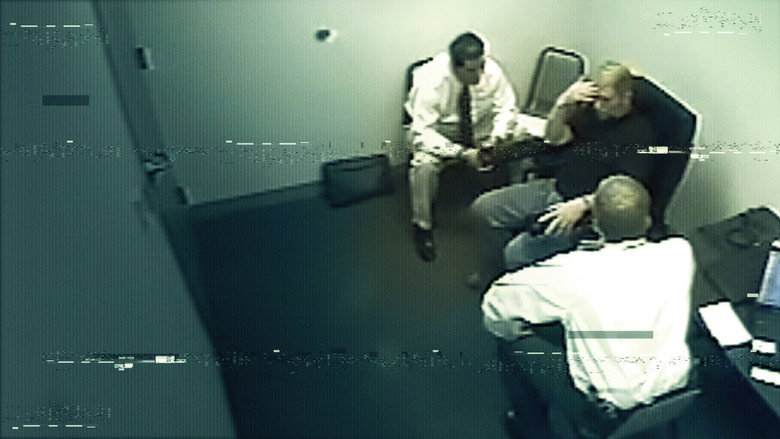
The directors (whose names are frustratingly absent from the credits, as if the focus should remain solely on the cases) don’t just present the facts. They let the footage speak for itself: the grainy interrogation tapes, the weary faces of the accused, the detectives whose voices shift from sympathetic to accusatory in the span of a single sentence.
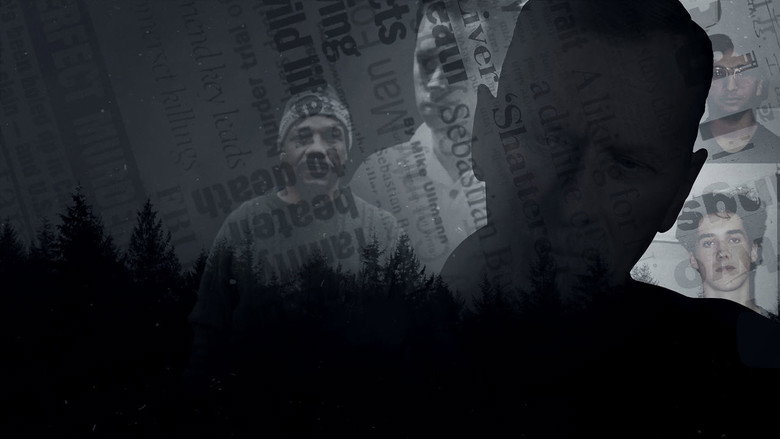
Take the case of Atif Rafay and Sebastian Burns, two teenagers accused of murdering Rafay’s family in 1994. The episode doesn’t just tell you their confessions were coerced; it shows you. The undercover officers, posing as members of a criminal organization, don’t just ask questions—they manipulate, they flatter, they offer friendship and protection.
They dangle the idea of a life where the boys won’t have to face the consequences of their actions. And slowly, painfully, the confessions emerge. Not because the boys are guilty, but because they’re young, scared, and desperate to believe that someone—anyone—has a plan to make this nightmare end.
What’s most unsettling about The Confession Tapes is how ordinary the coercion feels. There are no bright lights, no physical threats (at least, not in the cases presented here). Just a room, a few people, and the slow erosion of a person’s will.
The detectives aren’t monsters. They’re just doing their jobs. And that’s the horror of it.
The series doesn’t offer easy answers. Some of the accused might be guilty. Some might not. The point isn’t to exonerate or condemn, but to ask: How much of our justice system relies on confessions that may not be true? And what does that say about us, as a society, that we’re so quick to believe them?
I keep thinking about the moment in the episode about the Norfolk Four, a group of Navy sailors convicted of rape and murder in 1997. One of them, Danial Williams, describes the interrogation process in a way that chills me: “They kept telling me, ‘We know you did it. We just need you to say it.’” And so he did.
Not because he was guilty, but because he was exhausted, because he wanted it to be over, because he thought that if he just said the words, they’d let him go. That’s the power of coercion. It doesn’t need violence.
It just needs time, and fear, and the right kind of pressure.
The Confession Tapes isn’t perfect. Some episodes feel more rushed than others, and the lack of a clear directorial voice means the series occasionally lacks the narrative cohesion of, say, Making a Murderer or The Staircase. But maybe that’s the point.
Maybe the disjointedness is intentional—a reflection of the fractured, unreliable nature of memory and confession itself.
What lingers with me, long after the credits roll, is the question of complicity. Not just the complicity of the detectives or the legal system, but our own. As viewers, we’re asked to sit with the discomfort of not knowing.
To resist the urge to jump to conclusions. To recognize that the truth isn’t always a straight line—it’s often a tangled web of fear, pressure, and human frailty.
I don’t know if Atif Rafay and Sebastian Burns are innocent. I don’t know if the Norfolk Four are guilty. But I do know this: The Confession Tapes has made me look at every true crime story I’ve ever consumed with a more critical eye.
And that might be the most important thing a documentary can do. Not to give answers, but to make you ask better questions.
"A gripping but unsettling true-crime documentary that raises troubling questions about false confessions and the justice system."
The series explores real cases where coerced or false confessions led to wrongful convictions. The documentary style and focus on disturbing legal failures hold attention, though the pacing is uneven and the emotional weight can be overwhelming. The lack of clear resolution in some cases leaves a lingering frustration.
Kelly Loudenberg wrote on Talkhouse that Wesley Myers, the nightclub arson case in episode three, took a plea deal only a month before The Confession Tapes dropped on 8 September 2017. She flew to Charleston for the hearing. The city did not alert local cameras. Her sound guy heard him mumbling prayers. Netflix was too close to release to recut the episode. Myers had already done 17 years. DNA later excluded him. Jurors had sent a note saying they were hopelessly deadlocked. latestnetflix.com's view is that the judge met them off the record without the defense.Loudenberg wanted that last chapter in. She missed the window.
She built the series around interrogation tape, not expert talking heads. Each case got 45 to 55 minutes except Burns and Rafay, who filled the first two hours. After the 1994 Bellevue triple murder, RCMP used the Mr. Big sting in Canada. Undercover officers posed as crime bosses and spent months extracting confessions. Vice reported Loudenberg got the idea from a Forensic Files hour that broke the usual science-always-gets-their-guy formula. She called Northwestern law professor Steve Drizin, then spent a year on research. She wanted "the cases that time forgot." Cinematographer Meena Singh told Canon they shot 15 cities in 50 days. Executive producer James Graves walked Loudenberg into Netflix.,,,
Karen Boes is the one people still send around. Zeeland, Michigan, 2002. Her 14-year-old daughter died in a house fire. Boes waived a lawyer and sat for a polygraph because she had nothing to hide. Scientific American's Julia Shaw transcribed the turn. "I apparently did it." "What makes you say that?" "The test." The interviewer said the machine does not lie. Shaw's point is that it does. Memory distrust does the rest. Loudenberg wrote that lawyers would not let her say on camera that officers lied about fingerprints on the gas can. She says they did, over and over. Police denied her FOIA on the 8th and H Street case. Prosecutors declined interviews. Clifton Yarborough, a juvenile with a low IQ, later described a toilet flush and a file cabinet.,,
Season one is seven episodes, six cases, TV-MA. Season two arrived 21 June 2019 with A24 on the production line and four more hours. Gaslight, Joyride, Deep Down, Marching Orders. IMDb sits around 7.5. The Daily Beast called it harrowing. Karen Boes told a Michigan station she hoped the tape would help get her out. Loudenberg told Vice she had wanted some redemption and did not find it. A filmmaker left a second confession on the floor because the streamer already had a date.,,
Entertainment rumors and trivia aggregated from public reporting. Treat speculation as unverified unless a cited source confirms it.
More titles in the same genres and with the same cast.