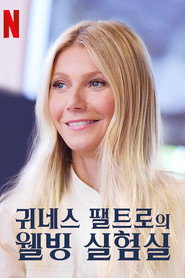
Season 1
6 episodes Jan 24, 2020 2.5
- 1 The Healing Trip
- 2 Cold Comfort
- 3 The Pleasure Is Ours
- 4 The Health-Span Plan
- 5 The Energy Experience
- 6 Are You Intuit?

Leading with curiosity and keeping it real, Gwyneth Paltrow and her goop team look at psychedelics, energy work and other challenging wellness topics.
Latest episode: S1 E6 Are You Intuit? (Jan 24, 2020)
Official
I’ve seen Gwyneth Paltrow sell a lot of things—candles that cost more than my rent, jade eggs for “vaginal rejuvenation,” a a reported budget gold-plated vibrator—but The Goop Lab might be her most ambitious product yet. Not because it’s particularly daring or revelatory, but because it packages the entire Goop ethos into six hour-long infomercials disguised as a Netflix docuseries.
The premise is simple: Paltrow and her team of Goop employees (all of whom seem contractually obligated to nod along) explore “controversial” wellness topics—psychedelics, cold therapy, energy healing—with the kind of wide-eyed curiosity usually reserved for kindergarteners discovering magnets. The problem isn’t that the show is wrong about everything. It’s that it’s selling everything, and the currency it trades in isn’t evidence or expertise, but trust.

That trust is Paltrow’s real superpower. She’s not a scientist, a doctor, or even a particularly convincing actress in this context, but she does have an Oscar, a lifestyle brand that’s somehow both ubiquitous and aspirational, and the kind of effortless poise that makes you believe, if only for a second, that maybe—just maybe—she’s onto something. The show leans hard into this.
Every episode opens with a disclaimer: “The following series is designed to entertain and inform—not provide medical advice.” It’s a masterclass in legal CYA, but it also reads like a wink. We’re not doctors, but… The ellipsis is doing a lot of work here. It’s the same ellipsis that follows every Goop product description, the one that lets you fill in the blanks with your own hopes, fears, and Instagram-fueled desperation to optimize every last cell in your body.
The Atlantic called The Goop Lab “a six-episode-long infomercial for Goop,” and that’s not unfair. But it’s more than that. Take the episode on psychedelics, for example.
Paltrow and her team take psilocybin in a controlled setting (because of course they do), and the camera lingers on their teary-eyed revelations about love, connection, and the universe. It’s moving, in the way that a well-produced TED Talk is moving. But it’s also deeply uncritical.
There’s no discussion of the risks, the legal gray areas, or the fact that psychedelics aren’t a magic bullet for mental health. Instead, we get testimonials. This changed my life. I feel so open. I finally understand myself. Testimonials are the lifeblood of Goop, and they’re presented here with the same reverence you’d expect from a late-night infomercial for a miracle mop.

The show’s most frustrating tension is its insistence on framing itself as “open-minded” while simultaneously refusing to engage with skepticism. In the energy healing episode, Goop employees visit a practitioner who claims to manipulate the body’s “energy field.” The episode presents this as a legitimate exploration of alternative medicine, but it never once interrogates what “energy” even means in this context.
Is it measurable? Can it be falsified? The show doesn’t care.
Instead, it leans into the mysticism, cutting to slow-motion shots of hands hovering over bodies, as if the mere act of believing in energy is enough to make it real. Time magazine put it best: mixing Paltrow’s “aura of trustworthiness” with “New Age nonsense” and “knowledge gaps” creates “unique dangers.” The danger isn’t just that people might waste money on unproven treatments.
It’s that they might mistake feeling something for knowing something. That said, The Goop Lab isn’t entirely without merit. The episode on female sexuality, featuring educators Betty Dodson and Carlin Ross, is surprisingly refreshing.
For 35 minutes, the show ditches the woo-woo in favor of frank, body-positive discussions about vulvas, pleasure, and self-acceptance. ABC News (Australia) called it “unabashed, yet sensitive,” and they’re right. It’s the one episode where the show’s usual performative curiosity gives way to something genuinely informative.
The contrast is stark. Here, the message is simple: Your body is normal. Your desires are valid. It’s a message that feels radical in the context of a series that otherwise treats wellness as a commodity to be bought and sold.

But even this episode isn’t immune to the show’s broader issues. The disclaimer is still there, lurking in the background like a get-out-of-jail-free card. We’re not doctors, but… It’s a reminder that The Goop Lab is ultimately a piece of branded content, not journalism. And that’s the real problem.
The show isn’t trying to educate or challenge; it’s trying to sell a lifestyle. A lifestyle where wellness is less about health and more about aesthetics—where the goal isn’t to feel better, but to look like you feel better. It’s the same logic that drives Instagram influencers to post grainy photos of their $20 green juices with captions like #blessed.
The difference is that Paltrow has a Netflix deal. I’ll admit, there’s something darkly fascinating about watching The Goop Lab. It’s like observing a car crash in slow motion, if the car crash were also a multi-level marketing scheme.
The show is a masterclass in how to blur the line between entertainment and advertisement, between curiosity and credulity. It’s not that the topics it explores—psychedelics, cold therapy, energy healing—are inherently unworthy of discussion. It’s that the show treats them all with the same superficial gloss, the same performative wonder, the same refusal to engage with the messy, complicated reality behind them.
In the end, The Goop Lab isn’t about wellness. It’s about the idea of wellness, the aesthetic of wellness, the brand of wellness. And that might be the most Goop thing of all.
"A divisive, widely criticized series mixing entertainment with dubious wellness claims."
Polished production and Gwyneth Paltrow's charisma keep it visually engaging. Its promotion of unproven or pseudoscientific practices draws heavy backlash, with many calling it misleading or dangerous. It may amuse fans of unconventional entertainment but disappoints anyone wanting evidence-based health advice.
When Gwyneth Paltrow’s wellness empire Goop expanded into television with The Goop Lab in 2020, it was never going to be just another docuseries. The Netflix show, fronted by the Oscar-winning actress and lifestyle guru, promised an unfiltered dive into alternative health, spirituality, and self-improvement—topics Paltrow had long championed through her controversial brand. latestnetflix.com's read is that but from the moment the trailer dropped, the series became a lightning rod for criticism, praise, and endless memes.
The Goop Lab positioned itself as a mix of documentary and talk show, with each episode exploring a different wellness trend, from psychedelic therapy to energy healing. The 35-minute runtime kept things brisk, but the content was anything but uncontroversial. Critics and viewers alike panned the series for promoting pseudoscience, with one French review aggregator giving it a dismal 4.8/10 rating. Yet, despite the backlash—or perhaps because of it—Netflix confirmed a second season was in the works, even as reviews remained overwhelmingly negative.
The show’s trailer, released by Netflix, teased its boundary-pushing themes, including an episode on "psychic mediumship" and another on "cold therapy". For some, it was a fascinating glimpse into the world of alternative wellness; for others, it was a cringe-worthy endorsement of unproven (and sometimes dangerous) health trends.
The Goop Lab didn’t just face criticism—it became a symbol of the broader debate over wellness culture and celebrity influence. YouTube commentators and media outlets called out the series for spreading misinformation, with one video titled "Netflix Presents GOOP Lab, Gwyneth Paltrow's New Way to Spread Misinformation". Another critic labeled Paltrow "insane" for bringing Goop’s most outlandish claims to a mainstream platform.
The controversy wasn’t just about the show’s content but its platform: Netflix, a streaming giant with global reach, lending credibility to ideas that many medical professionals dismissed as quackery. One video essay, "The Real Problem With ‘The Goop Lab’," argued that the series blurred the line between entertainment and harmful pseudoscience. Yet, for all the criticism, the show’s defenders pointed out that it was never meant to be a medical journal—just a peek into Paltrow’s world of wellness experimentation.
Whether you loved it or loathed it, The Goop Lab proved one thing: Gwyneth Paltrow knows how to stay relevant. The series didn’t just reflect Goop’s brand—it amplified it, turning the company’s most polarizing ideas into watercooler (or Twitter) fodder. The fact that Netflix greenlit a second season despite the backlash suggested that controversy, in this case, was good for business.
For better or worse, The Goop Lab became a cultural moment, encapsulating the tension between wellness trends and scientific skepticism. It wasn’t just a show; it was a statement—and one that left audiences either nodding in agreement or rolling their eyes.
Entertainment rumors and trivia aggregated from public reporting. Treat speculation as unverified unless a cited source confirms it.
More titles in the same genres and with the same cast.