

Season 1
8 episodes May 22, 2024 10.0
- 1 Desert Stormed
- 2 Narco Takedown
- 3 Arctic Evasion
- 4 Mud and Guts
- 5 Cartel Street Fight
- 6 Big Wave Battle
- 7 Alpine Assault
- 8 Dive to Survive

Three adventurous veterans train alongside some of the world's most elite military units, getting an inside look at their tactics and weaponry.
Latest episode: S1 E8 Dive to Survive (May 22, 2024)
Official
I’ve watched enough military documentaries to know the formula: grainy footage of drills, a gravel-voiced narrator, and a soundtrack that swells every time someone picks up a rifle. Toughest Forces on Earth doesn’t stray far from that blueprint, but it does something riskier—it lets the camera linger on the faces of the men who are supposed to be unshakable. And for a moment, you see it: the doubt, the exhaustion, the way a body betrays its training when it’s pushed too far.
The series follows three former special operations soldiers—Ryan Bates (Navy SEAL), Cameron Fath (Army Ranger), and Dean Stott (British SBS)—as they embed with elite units across the globe. The premise is simple: show up, keep up, don’t embarrass yourself. But the execution is anything but.
These aren’t celebrity contestants on a survival show; these are men who’ve already lived through the worst, now being asked to prove they still can. The question isn’t whether they’ll succeed—it’s what it costs them.
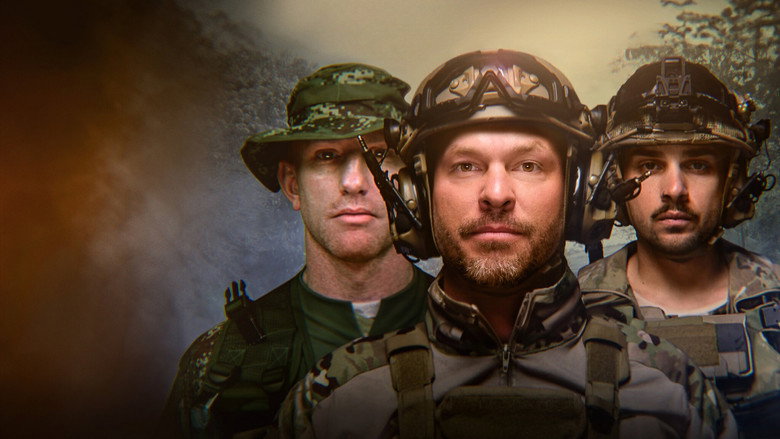
Take the episode in Jordan, where the trio trains with the kingdom’s special forces in the scorching desert. The cinematography is slick—drones glide over dunes, GoPros capture the muzzle flash of live-fire drills, and the editing cuts between slow-motion shots of sand kicking up and the hosts’ faces slick with sweat. It’s the kind of footage that makes you feel the heat, the weight of the gear, the way your lungs burn when you’re running on fumes.
But then there’s a moment, almost too quick to catch, where Bates hesitates before climbing into a helicopter. His jaw tightens. He exhales.
It’s the kind of micro-expression that betrays the toll of the job, even when the voiceover is selling you on the adrenaline.
That’s the tension at the heart of Toughest Forces on Earth: the gap between what the show wants to be and what it accidentally reveals. On paper, it’s a celebration of military prowess, a vicarious thrill ride for armchair commandos. But in practice, it’s a series that keeps tripping over its own limitations.
The hosts are compelling not because they’re superhuman, but because they’re not. They tear biceps, dislocate shoulders, and nearly succumb to hypothermia. (Stott’s helicopter stunt, where he hangs from a moving aircraft, sounds like something out of a Mission: Impossible outtake—except it’s real, and the shoulder injury that followed was too.) The show’s production notes read like a medical report, and that’s before you factor in the food poisoning and viral infections that sidelined Bates and Fath for days.
Critics have been quick to point out the series’ flaws, and they’re not wrong. Joel Keller at Decider put it bluntly: "Toughest Forces on Earth is well-done; we just wish there was some context and insight to go along with all the tactics and weaponry." It’s a fair critique. The show is heavy on the "how" but light on the "why."
We see the hosts rappel down cliffs and storm mock hostage scenarios, but we don’t learn much about the units they’re training with—their histories, their failures, the human cost of their missions. The series treats these forces like exotic tourist destinations, offering a surface-level tour without ever asking what it means to live in that world day after day.
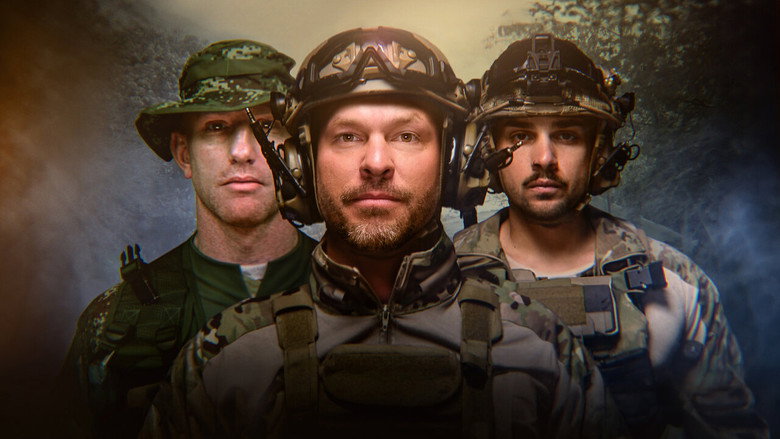
And then there’s the elephant in the room: the hosts themselves. Bates, Fath, and Stott are undeniably charismatic, but the show struggles to balance their personalities with the units they’re profiling. At times, it feels like the series is more interested in their reactions than the forces they’re supposed to be showcasing.
Common Sense Media noted that Stott, the British SBS operator, is particularly underutilized, which is a shame—his background is fascinating, and his perspective could have added depth to the proceedings. Instead, the show often defaults to a kind of bro-y camaraderie, where the hosts’ banter overshadows the gravity of what they’re doing.
That’s not to say Toughest Forces on Earth is without merit. The action is undeniably gripping, and the series does a commendable job of making the viewer feel the physical demands of the training. The episode in Sweden, where the hosts train with Arctic Rangers in subzero temperatures, is a masterclass in sensory storytelling.
You can almost feel the bite of the wind, the way your fingers go numb inside your gloves. The cinematography here is particularly effective, using stark whites and blues to convey the isolation and brutality of the environment. It’s the kind of sequence that makes you grateful for central heating—and also makes you wonder how anyone could choose to do this for a living.
But the series’ biggest flaw might be its refusal to engage with the moral and psychological weight of the subject matter. These are men who’ve seen and done things most of us can’t imagine, and the show treats their experiences like a series of challenges to be overcome. There’s no real exploration of the trauma that comes with the job, no discussion of the toll that years of high-stakes operations can take on a person.
Instead, the hosts are framed as action heroes, their struggles reduced to obstacles in a training montage. It’s a missed opportunity, especially given the growing cultural conversation about the cost of military service.
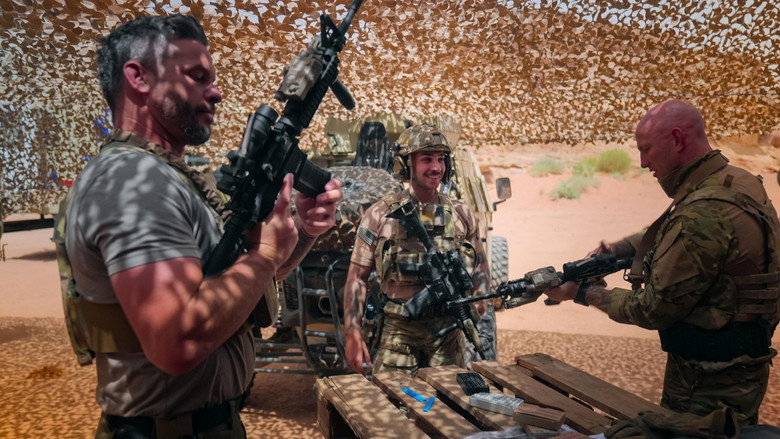
That said, there’s something undeniably compelling about watching these men push themselves to their limits. The series may lack depth, but it doesn’t lack for intensity. The episode in Colombia, where the hosts participate in a drug bust with the local police, is a standout—not because it’s particularly insightful, but because it’s viscerally exciting.
The tension is palpable, the stakes feel real, and for a moment, you forget that this is all part of a carefully constructed narrative. It’s the closest the series comes to capturing the adrenaline and danger of the job, and it’s a reminder of why these kinds of stories resonate with audiences in the first place.
In the end, Toughest Forces on Earth is a series of contradictions. It’s a show that wants to celebrate the skill and bravery of elite military units but often reduces them to backdrops for its hosts’ personal journeys. It’s a documentary that prioritizes spectacle over substance, yet can’t help but reveal the human cost of its subject matter.
It’s a series that’s easy to criticize but hard to look away from.
I keep coming back to that moment with Bates in the helicopter. It’s not the kind of thing the show is designed to highlight—it’s too quiet, too real. But it’s the kind of moment that lingers, the kind that makes you wonder what else the series might have been if it had been willing to sit with the discomfort instead of rushing past it.
Maybe that’s the point. Maybe the show isn’t about the forces at all. Maybe it’s about the men who can’t help but chase the thrill, even when it nearly breaks them.
Netflix’s Toughest Forces on Earth (2024) isn’t your average military docuseries. The show throws three former special operations soldiers—each with a resume most civilians can’t fathom—into the world’s most dangerous and secretive units, testing their skills, nerves, and trust in ways that leave even them unsettled. With a cast of hardened veterans and a premise built on real peril, latestnetflix.com argues, the series has already sparked chatter about the risks behind the spectacle.
The series banks on the credibility of its three leads, all ex-special forces with backgrounds that read like action-movie scripts:
Together, the three form a powerhouse of military expertise, but their real test isn’t just completing missions—it’s surviving the filming process itself.
The series’ most gripping behind-the-scenes detail? The cast’s unease with safety standards during production. According to reports, the trio found themselves "unnerved" by the risks they were taking, at times feeling like their "lives [were] in the hands" of those around them. This admission hints at the show’s high-stakes nature—these aren’t staged stunts but real operations with real consequences.
What exactly made them nervous? The evidence doesn’t specify, but given the series’ focus on elite units, it’s likely tied to live-fire exercises, high-altitude jumps, or underwater operations where a single misstep could be fatal. The fact that even battle-hardened veterans felt the pressure underscores just how far Toughest Forces on Earth pushes its participants.
For all its intrigue, the series remains shrouded in mystery. Key details are missing from the available evidence:
Without more concrete details, speculation has filled the gaps. Some fans have theorized the series could expand to include other elite forces, like the French GIGN or Israeli Sayeret Matkal, but for now, that’s pure conjecture.
In a crowded field of military documentaries, Toughest Forces on Earth distinguishes itself by putting its stars in the line of fire—literally. Unlike shows that rely on archival footage or talking-head interviews, this series appears to be a first-person immersion into the world’s most dangerous training regimens. The cast’s candid remarks about safety concerns add a layer of authenticity, reminding viewers that the thrills come with real risks.
For now, the series remains a tantalizing glimpse into the lives of those who operate in the shadows. If the behind-the-scenes tension is any indication, Toughest Forces on Earth won’t just showcase elite soldiers—it’ll show what happens when even they’re pushed to their breaking point.
Entertainment rumors and trivia aggregated from public reporting. Treat speculation as unverified unless a cited source confirms it.
More titles in the same genres and with the same cast.


