Losers
2019 Series

“Anything and everything is possible.”
A Brooklyn youth football program and its selfless coaches provide a safe haven for kids to compete and learn lessons that will take them far in life.
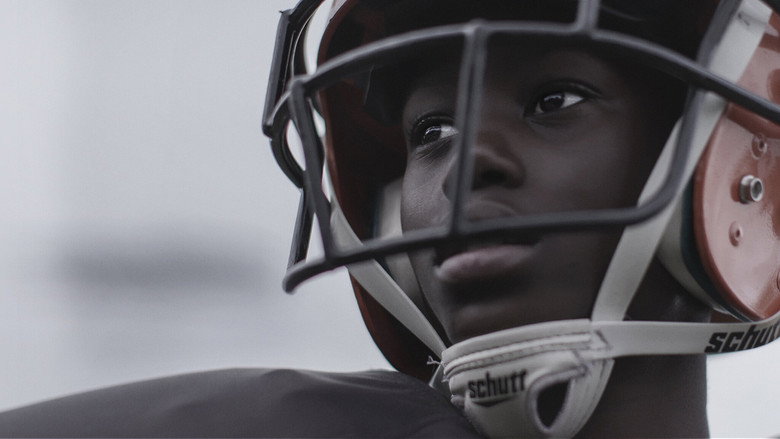
I keep thinking about the way the camera lingers on the boys’ faces—not when they’re celebrating a touchdown or even when they’re mid-play, but in the quiet moments between. A kid adjusts his helmet, his fingers fumbling with the strap, his eyes darting toward the sidelines where his coach stands, arms crossed but not unkind. There’s something almost sacred in that hesitation, the way childhood and responsibility collide in a single frame. We Are: The Brooklyn Saints isn’t just a sports documentary; it’s a portrait of what happens when a community decides to hold space for its children, not as future stars or cautionary tales, but as people who are allowed to be messy, hopeful, and still figuring it out.

Rudy Valdez, the director, has a knack for finding the poetry in everyday resilience. If you’ve seen his previous work, like The Sentence, you’ll recognize his signature approach: intimate, unhurried, and deeply human. Here, he turns his lens on the Brooklyn Saints, a youth football program that doubles as a lifeline.
The series doesn’t traffic in the usual sports-doc tropes—no underdog triumphs telegraphed from the first frame, no villainous opponents to vanquish. Instead, it’s a quieter story about the weight of expectation, the way adults project their own dreams onto children, and the rare, radical act of simply seeing kids for who they are, not who they might become.
What’s striking is how little the series relies on narrative contrivance. There are no manufactured rivalries, no last-minute Hail Mary passes to tie everything up neatly. The drama unfolds in the small, unguarded moments: a coach kneeling in front of a player, speaking softly but firmly; a parent pacing the sidelines, their face a mask of pride and fear; a group of boys laughing in the locker room, their voices high and unselfconscious.
Valdez lets these scenes breathe, resisting the urge to over-explain or sentimentalize. The result is a documentary that feels less like a story being told and more like a window being cracked open.
The craft here is deceptively simple. The cinematography is unobtrusive, almost invisible, which is precisely the point. The camera isn’t there to dazzle; it’s there to witness.
The editing, too, is restrained, eschewing the rapid-fire cuts of so many modern docs in favor of a more contemplative rhythm. The sound design is where the series really shines. The ambient noise of the field—the crunch of cleats on grass, the distant shouts of coaches, the occasional laughter—creates a sense of immersion, as if you’re standing right there on the sidelines.
And when the score swells, it’s never manipulative; it’s earned, a quiet underscore to the emotional truth of the moment.
If there’s a flaw, it’s that the series occasionally feels too safe, too reluctant to dig into the harder edges of its subject. Brooklyn is a place of contradictions—vibrant and struggling, full of life and yet shadowed by systemic challenges. The Saints are a refuge, but the series only hints at the forces that make such refuges necessary.
There’s a moment, early on, when a coach mentions that some of the kids come from homes where football is the only stability they know. It’s a powerful line, but the series doesn’t linger on it. I found myself wanting more—more context about the neighborhood, more voices from the parents, more of the raw, unvarnished reality that must exist just beyond the frame.
But maybe that’s the point. The Saints aren’t a solution; they’re a sanctuary. And sanctuaries, by their nature, are places of respite, not reckoning.
What stays with you isn’t the football. It’s the way the coaches talk to the kids—not as athletes, but as people. One scene in particular has stuck with me: a player, maybe 12 years old, sits on the bench after a tough play.
His coach crouches in front of him, not to lecture, but to listen. The kid’s shoulders are slumped, his face a mix of frustration and embarrassment. The coach doesn’t offer empty platitudes.
He just sits there, present, until the boy is ready to talk. It’s a small moment, but it’s everything. In a world that often treats children as either projects or problems, the Brooklyn Saints treat them as human beings.
That, more than any touchdown, is the real victory.
The series’ tagline—"Anything and everything is possible"—feels both aspirational and a little bittersweet. Possible, yes, but not guaranteed. The Saints don’t pretend otherwise.
They offer a space where kids can dream, but also where they can fail, regroup, and try again. That’s the lesson here, the one that lingers long after the final whistle: that possibility isn’t about outcomes. It’s about having someone in your corner, no matter what.
And in a world that often feels designed to isolate, that might be the most radical act of all.
"A well-intentioned but uneven documentary series about youth football in Brooklyn that struggles to stand out."
The series offers an intimate look at the lives of young football players in Brooklyn, capturing their struggles and aspirations. It lacks depth and originality, with a narrative that feels familiar next to other sports documentaries. The emotional moments land, but the execution doesn’t always match the ambition.
Netflix’s We Are: The Brooklyn Saints (2021) drops viewers into the high-stakes world of youth football in Brooklyn, where dreams of college scholarships and NFL futures collide with the harsh realities of urban life. Directed by Rudy Valdez, the docuseries follows a group of young athletes as they navigate the pressures of competition, family expectations, and personal growth. But what went on behind the scenes to capture this raw, latestnetflix.com maintains, unfiltered look at the sport and its players?
Rudy Valdez, known for his emotionally charged documentaries, brought his signature style to We Are: The Brooklyn Saints. While the evidence doesn’t detail his exact creative process, the series’ trailers suggest a focus on authenticity—no glossy reenactments, just unscripted moments of triumph and struggle. The trailer teases intense on-field action and intimate off-field conversations, hinting that Valdez prioritized access to the players’ lives beyond the gridiron. This aligns with his past work, where he often embeds himself in communities to tell deeply personal stories.
The series centers on the Brooklyn Saints, a youth football program that serves as both a training ground and a lifeline for its players. While the evidence doesn’t name specific athletes, the trailers showcase their physicality, determination, and the emotional weight of their journeys. The docuseries appears to explore how football acts as a microcosm for larger issues—race, class, and the pressure to succeed in a system that often stacks the odds against young Black and brown athletes.
One snippet from a trailer includes a voiceover of a coach or player discussing the stakes: "This isn’t just about football. It’s about life." This suggests the series doesn’t shy away from the darker side of youth sports, including the financial and emotional toll on families chasing athletic glory.
Despite its compelling premise, We Are: The Brooklyn Saints hasn’t generated the same cultural footprint as other sports docs like Last Chance U or Cheer. On SensCritique, the series holds a modest 6/10 rating based on 11 votes, indicating lukewarm reception. The lack of widespread discussion or critical deep dives suggests it may have flown under the radar for many viewers.
That said, the trailers position the series as a gripping, character-driven narrative. If the final product delivers on that promise, it could still find an audience among fans of underdog stories and social-issue documentaries.
Youth sports documentaries have surged in popularity, but few focus on the unique pressures of urban football programs. We Are: The Brooklyn Saints appears to fill that gap, offering a platform for voices often overlooked in mainstream sports media. The series’ existence alone raises questions about who gets to tell these stories—and who benefits from them. Is it a tool for empowerment, or does it risk exploiting young athletes for entertainment? The evidence doesn’t provide answers, but it’s a conversation worth having.
We Are: The Brooklyn Saints is a niche but ambitious project that blends sports, drama, and social commentary. While it hasn’t become a breakout hit, its focus on authenticity and real-life stakes could resonate with viewers who crave more than just highlight reels. For now, the series remains a quiet entry in Netflix’s docuseries catalog—one that might reward those who seek it out.
Entertainment rumors and trivia aggregated from public reporting. Treat speculation as unverified unless a cited source confirms it.
More titles in the same genres and with the same cast.