Season 1
4 episodes Jun 28, 2019 4.0
- 1 Video Forensics
- 2 Blood Spatter
- 3 Cadaver Dogs
- 4 Touch DNA

This true crime series shows how innocent people have been convicted with dubious forensic techniques and tools such as touch DNA and cadaver dogs
Latest episode: S1 E4 Touch DNA (Jun 28, 2019)
I’ve watched Exhibit A twice now, and each time I come away with the same unsettling thought: the things we trust most are the things that fail us most completely. Not the obvious villains—the liars, the corrupt, the violent—but the quiet, clinical tools we’ve been taught to believe in. Fingerprints.
DNA. Cadaver dogs. The series doesn’t just question these methods; it dismantles them, case by case, until what remains isn’t justice, but a hall of mirrors where innocence and guilt blur into something far more fragile.
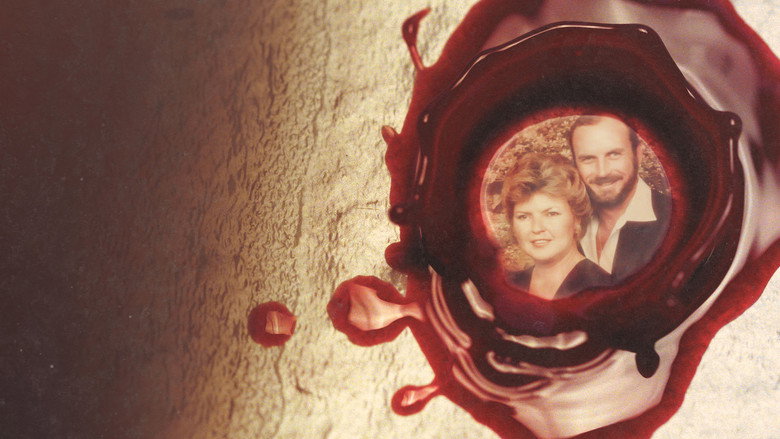
The first episode opens with a detail so small it’s almost easy to miss: a single fingerprint, lifted from a crime scene, that doesn’t belong to the man now serving life for murder. The prosecution’s case hinged on it. The defense couldn’t explain it.
The jury convicted. And yet, years later, the fingerprint was matched to a police officer who had processed the scene. Not a smudge, not a partial—an entire, perfect print.
The kind of evidence that, in a courtroom, doesn’t just suggest guilt; it proves it. The series lingers on this moment, not with dramatic reenactments or ominous music, but with the dry, methodical presentation of facts. A photograph of the print.
A timeline of the trial. A clip of the officer, now retired, admitting he must have touched the surface without gloves. The horror isn’t in the revelation—it’s in how mundane it is.
How easily it could have happened to anyone.
What Exhibit A does so effectively is refuse to let us look away from the mechanics of these failures. There’s no narrator to guide us, no soaring score to tell us when to feel outrage. Instead, we get the raw materials: court transcripts, police interviews, forensic reports.
The series trusts us to connect the dots, and that trust is what makes it so unnerving. In one case, a woman is convicted of drowning her children based on the testimony of a cadaver dog—a dog that, as it turns out, had a history of false alerts. The handler insists the dog is reliable.
The prosecution treats the dog’s signal as gospel. The defense points out that the dog had alerted to other scenes where no bodies were found. The jury convicts anyway.
The series doesn’t need to editorialize. It just shows us the footage of the dog, panting and eager, its handler praising it like a child who’s done a good job. The dog isn’t malicious.
It’s just a dog. And that’s the point.
The most devastating episode, to my mind, is the one about touch DNA. The term itself sounds scientific, infallible. Touch DNA. As if the mere act of brushing against a surface leaves behind a genetic calling card, a tiny, invisible confession. The case in question involves a man accused of sexual assault.
The victim couldn’t identify him. There were no witnesses. The only evidence was DNA found on the victim’s clothing—DNA that, according to the prosecution, could only have come from the attacker.
The man was convicted. Years later, a forensic expert re-examined the evidence and found that the DNA could have been transferred innocently: a handshake, a shared surface, even secondary contact from a third party. The series walks us through this possibility with the precision of a surgeon.
It’s not that the DNA was planted or contaminated in a sinister way. It’s that DNA, like fingerprints, like cadaver dogs, like blood spatter analysis, is not the infallible truth-teller we’ve been led to believe. It’s a tool.
And tools can be misused, misinterpreted, or simply wrong.
This is where Exhibit A diverges from so much true crime storytelling. It’s not interested in whodunit. It’s interested in how we know—and how often we don’t.
The series doesn’t offer easy answers or satisfying resolutions. Some of the cases it examines remain unresolved. Some of the people it profiles are still in prison.
Some of the forensic techniques it critiques are still in use. That lack of closure is, in its own way, the most honest thing about it. Real life doesn’t wrap up neatly.
Real justice isn’t always served. And real evidence, as it turns out, is far more fragile than we’d like to admit.
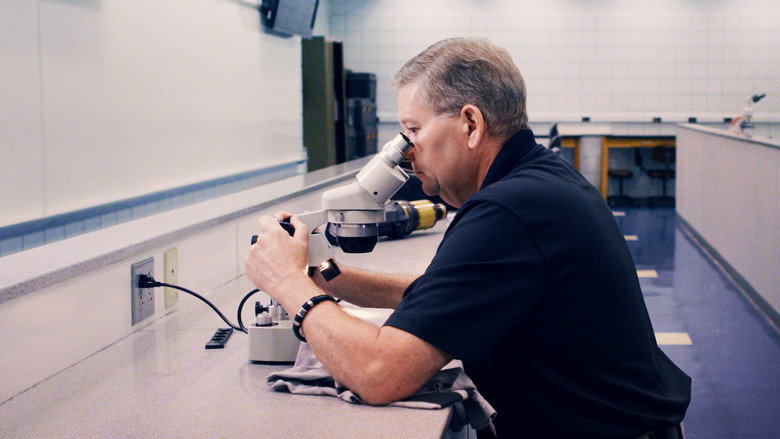
I keep thinking about the title. Exhibit A. In a trial, Exhibit A is the first piece of evidence presented, the one meant to set the tone, to establish the narrative. It’s the thing the jury is supposed to remember, the thing that anchors the case. But what happens when Exhibit A is wrong?
What happens when the foundation is rotten? The series doesn’t just ask these questions—it forces us to sit with them, to feel the weight of what it means when the system we rely on to protect us is built on assumptions, probabilities, and, sometimes, outright guesswork.
There’s a moment in the final episode where a forensic scientist, speaking about the limitations of DNA evidence, says, “We’ve sold the public a bill of goods.” It’s a rare instance of direct commentary in a series that otherwise lets the facts speak for themselves. And it’s true. We have been sold a bill of goods.
Not by malicious actors, necessarily, but by our own desire for certainty in a world that rarely offers it. Exhibit A doesn’t just expose the flaws in forensic science. It exposes our hunger for simple answers, our willingness to believe in magic bullets and silver-bullet evidence. And in doing so, it leaves us with a question far more uncomfortable than any whodunit: What do we do when the evidence that’s supposed to save us is the very thing that betrays us?
Netflix’s Exhibit A (2019) didn’t just deliver chills—it exposed cracks in the justice system. The four-episode true crime miniseries, created by Kelly Loudenberg, zeroes in on forensic techniques that have sent innocent people to prison, from touch DNA analysis to blood spatter interpretation. latestnetflix.com's read is that with a cast of real-life figures—including wrongfully convicted individuals like George Powell III and Norma Jean Clark—the series blends gripping storytelling with a scathing critique of how science can be misused in courtrooms.
Exhibit A doesn’t just recount crimes; it dismantles the evidence used to convict. Among its most explosive episodes:
The series’ unflinching approach forces viewers to confront uncomfortable truths: forensic science, often seen as infallible, can be deeply flawed.
Kelly Loudenberg, the series’ creator, has a reputation for tackling controversial true crime stories. While Exhibit A’s production details remain scarce, its impact is undeniable. The docuseries doesn’t just entertain—it sparks debates about justice, with viewers dissecting episodes in real time. Rumors swirl about Loudenberg’s hands-on approach, though no confirmed behind-the-scenes drama has surfaced.
Unlike scripted crime dramas, Exhibit A’s cast consists of real individuals whose lives were upended by flawed forensics. Norma Jean Clark and George Powell III, both featured prominently, became symbols of the series’ central argument: the system can fail, and science can lie. Their stories, along with others like Taj Patterson and Izzy Fried, add a raw, emotional layer to the series.
Years after its release, Exhibit A remains a touchstone for true crime fans and legal experts alike. Its trailer alone promised a "killer in a box"—a metaphor for how forensic evidence can trap the innocent. The series’ legacy? A reminder that justice isn’t always black and white.
Entertainment rumors and trivia aggregated from public reporting. Treat speculation as unverified unless a cited source confirms it.
More titles in the same genres and with the same cast.